CMA CGM advances regular ethanol bunkering at Port of Santos
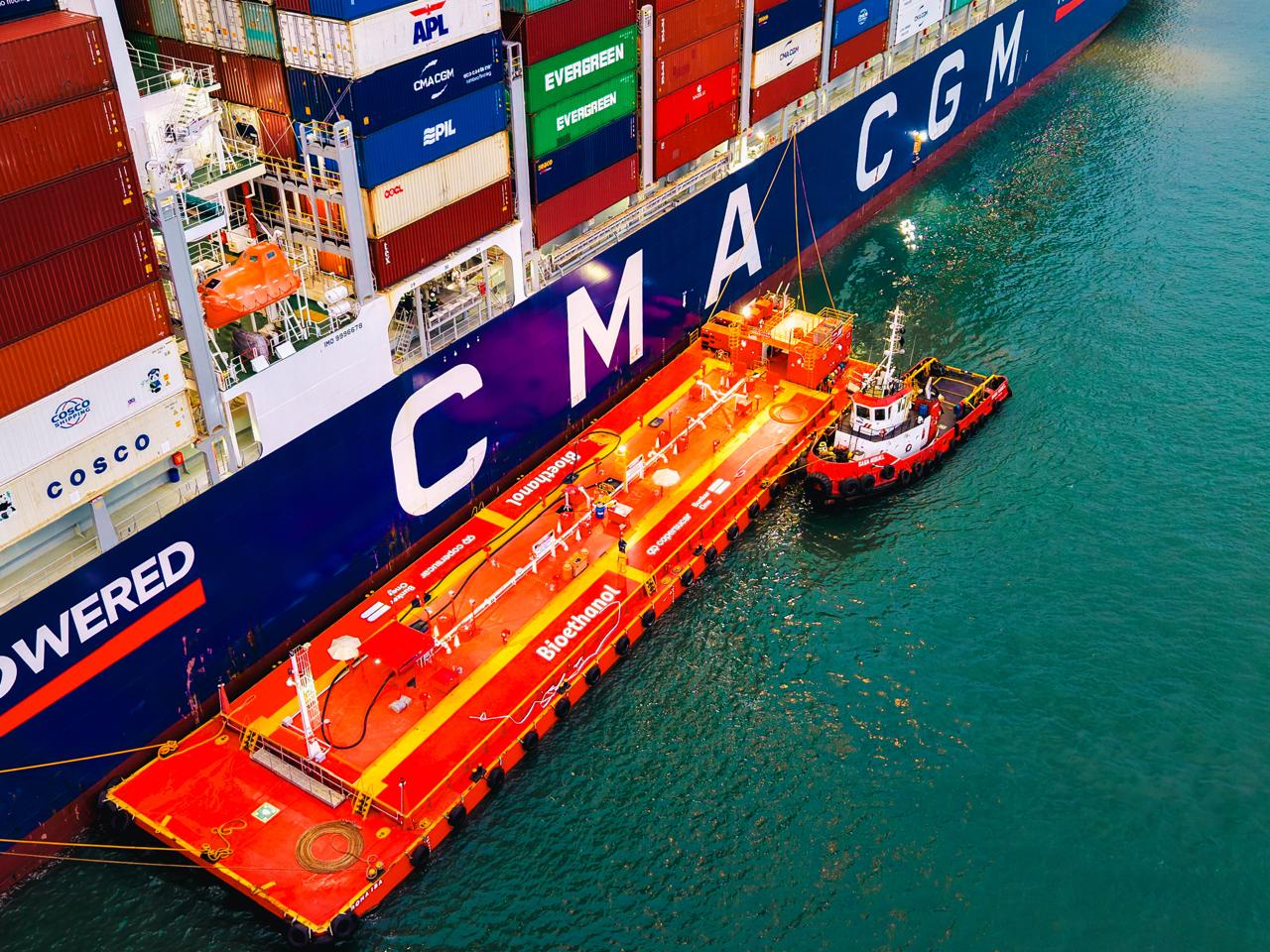
The Port of Santos in Brazil has begun regular ethanol bunkering operations for commercial vessels, following a joint initiative involving CMA CGM, Copersucar, Bunker One and the Santos Port Authority.
The first operation under the new arrangement took place on 19 October, when the 13,000-TEU containership CMA CGM IRON received ethanol at the port. The vessel is equipped with an Everllence-B&W G95ME-C10.5-LGIM tri-fuel engine certified to operate with ethanol.
The development follows an initial bunkering operation conducted in July 2026 and marks the transition towards a regular commercial supply model. Additional ethanol bunkering operations involving CMA CGM vessels and fuel supplied by Copersucar are planned before the end of the year.
Establishing a regular ethanol supply chain
The initiative brings together several companies responsible for different stages of the fuel supply chain, from ethanol production and transportation to storage and delivery aboard vessels.
Ethanol produced by mills associated with Copersucar is supplied and transported to Santos by Evolua Etanol, a company within the Copersucar ecosystem. The fuel is then stored at AGEO Terminais before being made available for bunkering operations.
The vessel refuelling takes place at Santos Brasil’s Tecon Santos terminal, where Bunker One has developed a specialised operational protocol for handling ethanol.
According to the companies, the protocol was established following months of technical studies and crew training, with particular attention to the fuel’s low flash point and associated safety requirements.
Giovani Grassi, CEO of CMA CGM Brazil, said the transition from the initial operation to regular bunkering demonstrates the potential for ethanol to be incorporated into commercial maritime operations.
The companies intend to use the established logistics network to support further deliveries as demand for alternative marine fuels develops.
Brazil positions itself in the alternative fuels market
The partners see the initiative as an opportunity to connect Brazil’s established ethanol production industry with the international shipping sector.
Copersucar said its ethanol supply chain is supported by certification and sustainability requirements, including those associated with Brazil’s RenovaBio programme.
Tomás Manzano, President of Copersucar, described the initiative as the beginning of a new market for Brazilian ethanol, linking domestic production and logistics capabilities with the maritime industry’s efforts to reduce greenhouse gas emissions.
The companies estimate that replacing 10% of global marine fuel consumption with ethanol, on an energy-equivalent basis, could create potential demand of approximately 50 billion litres annually.
This figure represents an illustrative market scenario rather than an existing level of maritime ethanol consumption or a confirmed demand forecast.
Further bunkering operations planned
The Port of Santos is seeking to strengthen its position as a hub for lower-carbon marine fuels, supported by its established logistics infrastructure and access to Brazil’s ethanol production network.
The participation of CMA CGM, Copersucar, Bunker One, AGEO Terminais, Santos Brasil and the Santos Port Authority demonstrates the coordination required to establish an operational supply chain for alternative marine fuels.
The companies expect additional CMA CGM vessels to receive ethanol at Santos before the end of 2026, extending the initiative beyond the initial trial and the October operation.
The expansion will provide further opportunities to assess ethanol’s practical use in commercial shipping, although its wider adoption will depend on compatible vessel technology, fuel availability and safe bunkering infrastructure.