Top 10 container shipping companies: The powerful giants moving global trade
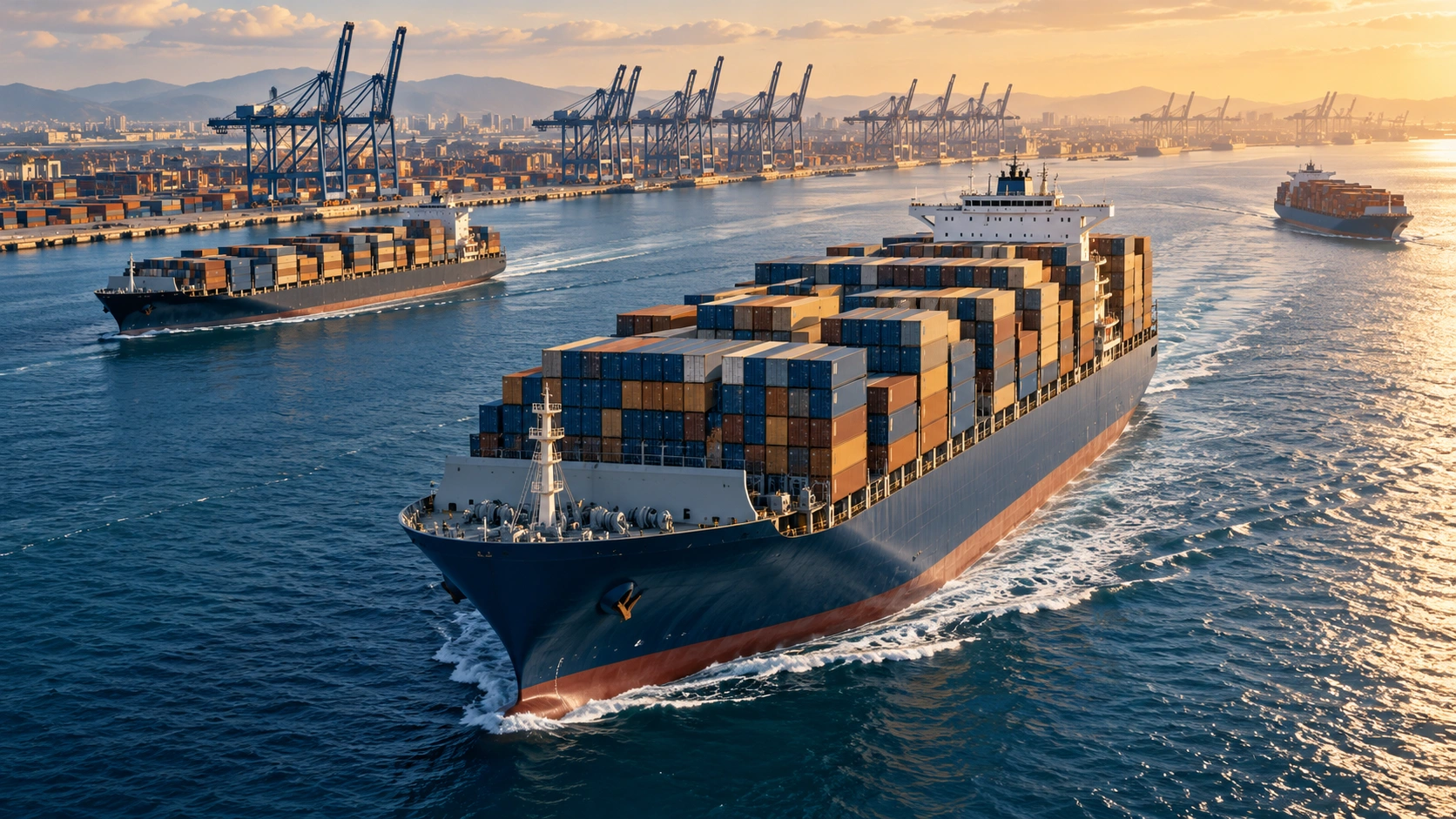
The top 10 container shipping companies connect manufacturers, suppliers and consumers across global markets. MSC leads the ranking by fleet capacity, followed by Maersk, CMA CGM Group and COSCO Group. Together, these four operators account for 58.6% of global container fleet capacity, based on the rounded market shares in the Alphaliner data supplied for this overview.
However, scale takes different forms across the leading carriers. Some operate larger numbers of ships, while others carry more capacity across fewer vessels. Their orderbooks also vary considerably, revealing differences in the number and size of ships awaiting delivery.
This ranking compares the largest container shipping companies by twenty-foot equivalent unit capacity, commonly known as TEU. It covers owned and chartered vessels, while presenting ships on order separately. Market share refers to fleet capacity, rather than revenue or cargo volumes transported.
The top 10 container shipping companies at a glance
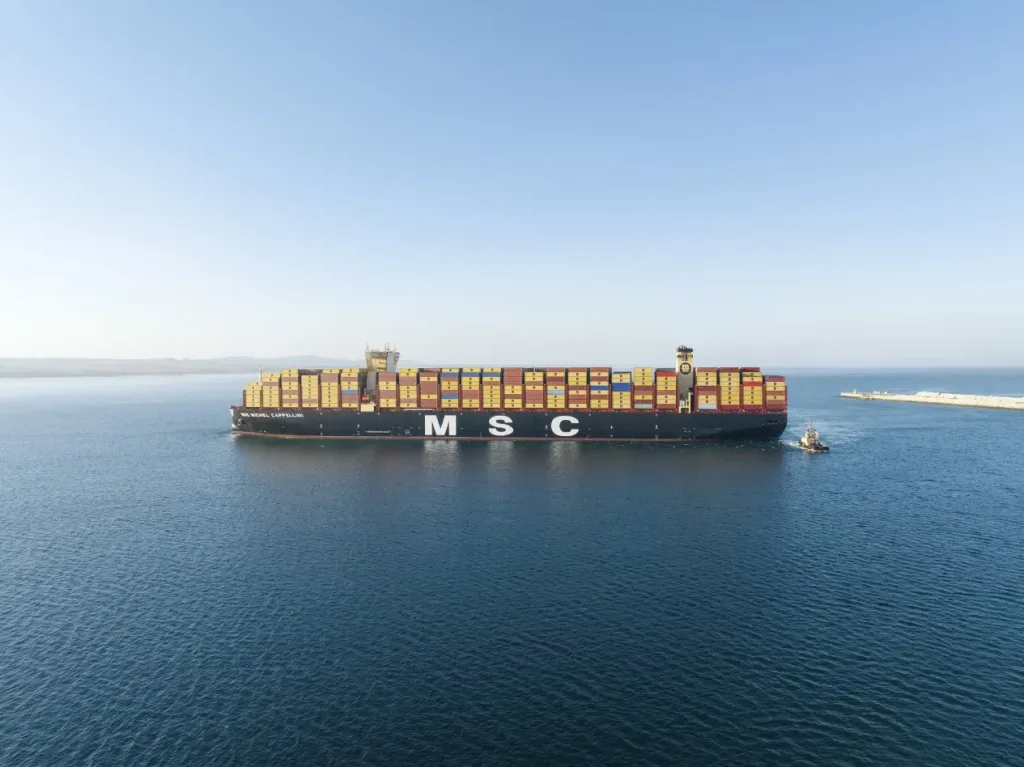
1. MSC: The largest container shipping company
MSC holds first place with 7,464,018 TEU across 1,018 ships, representing a 21.5% market share. Its container fleet capacity exceeds Maersk’s by approximately 2.75 million TEU. MSC also has the largest orderbook among the ten carriers, with 183 ships totalling 3,379,018 TEU.
The company’s scale sits alongside continued changes to individual services. As previously reported by pelavox, MSC and ONE are to continue the Ipanema service without Hapag-Lloyd. Such changes illustrate why a carrier’s overall size and its participation in a particular service are separate considerations.
2. Maersk: A substantial second-place fleet
Maersk ranks second with 4,717,299 TEU across 749 ships and a 13.6% market share. Its orderbook comprises 138 vessels with a combined capacity of 1,811,602 TEU. Although Maersk has fewer ships on order than CMA CGM, its orderbook is larger when measured by capacity.
Network coverage provides another dimension to the comparison. Pelavox has reported on Maersk’s planned ME2 and AE12 service changes, including a new Jeddah call and the transfer of Colombo from AE15 to AE12. Those adjustments are scheduled to begin through rotations in December 2026 and January 2027.
3. CMA CGM Group: Close behind Maersk
CMA CGM Group occupies third place with 4,489,970 TEU across 731 ships. Its 12.9% market share places it 0.7 percentage points behind Maersk in the supplied figures. The capacity gap between the two operators stands at 227,329 TEU.
The group has 157 vessels on order, representing 1,653,855 TEU. That gives CMA CGM the second-largest orderbook among these carriers by vessel count. By orderbook capacity, however, it follows MSC, COSCO Group and Maersk, showing how rankings change depending on the measure used.
4. COSCO Group: A large orderbook relative to its fleet
COSCO Group ranks fourth with 3,673,704 TEU across 566 ships and a 10.6% market share. Its orderbook contains 155 vessels totalling 1,884,798 TEU. This is the second-largest orderbook by TEU among the ten operators.
The capacity on order equals 51.3% of COSCO Group’s existing fleet capacity, according to the supplied Alphaliner table. That is the highest orderbook-to-fleet capacity ratio in this group. However, it does not establish a future fleet size, which will also depend on deliveries, vessel departures and other fleet changes.
5. Hapag-Lloyd: Fifth by fleet capacity
Hapag-Lloyd holds fifth place with 2,410,123 TEU across 289 ships, giving it a 6.9% market share. Its fleet comprises 134 owned vessels and 155 chartered ships. The company’s capacity exceeds sixth-placed ONE by 210,525 TEU.
Hapag-Lloyd has 62 vessels on order, representing 489,224 TEU. Its orderbook equals 20.3% of existing fleet capacity, the lowest proportion among the ten carriers in this snapshot. This provides a different perspective from its current position as the world’s fifth-largest container operator.
6. ONE: A fleet above two million TEU
Ocean Network Express, commonly known as ONE, ranks sixth with 2,199,598 TEU across 272 ships. Its share of global fleet capacity stands at 6.3%. Chartered vessels account for 51.8% of its capacity, compared with 39.6% for Hapag-Lloyd.
ONE’s orderbook consists of 50 ships totalling 582,932 TEU. Despite having fewer vessels on order than Hapag-Lloyd, ONE has more TEU capacity awaiting delivery. The comparison again highlights the importance of looking beyond ship numbers when assessing fleet scale.
7. Evergreen Line: A sizeable pipeline of new capacity
Evergreen Line ranks seventh with 2,040,707 TEU across 243 ships and a 5.9% market share. Its owned fleet contributes 1,496,083 TEU, while chartered vessels provide 544,624 TEU. Evergreen is the seventh and final carrier in the ranking with existing capacity above two million TEU.
Its orderbook comprises 75 vessels with a combined capacity of 851,904 TEU. This equals 41.7% of its current fleet capacity. Among the ten operators, Evergreen has the fifth-largest orderbook by both vessel count and TEU capacity.
8. HMM: Above the million-TEU threshold
HMM holds eighth place with 1,034,348 TEU across 97 vessels, representing a 3.0% market share. Its orderbook includes 44 ships totalling 324,642 TEU. Owned vessels account for most of its existing capacity, with chartered ships contributing 18.1%.
Separately, pelavox has reported on HMM’s approval of a containership investment programme. The approval covers newbuilding and resale acquisition plans, but does not establish that all individual contracts have been executed. It should therefore be distinguished from the orderbook figures presented here, rather than automatically added to them.
9. Yang Ming: A smaller fleet with a substantial orderbook
Yang Ming ranks ninth with 771,280 TEU across 99 ships and a 2.2% market share. Its capacity is divided between 397,896 TEU in owned vessels and 373,384 TEU in chartered tonnage. Chartering therefore accounts for 48.4% of its existing capacity.
The company has 20 vessels on order, representing 256,660 TEU. This is the smallest orderbook by ship count among the ten carriers. Nevertheless, its orderbook capacity exceeds ZIM’s, despite ZIM having 12 more vessels on order.
10. ZIM: A fleet dominated by chartered capacity
ZIM completes the top 10 with 699,460 TEU across 114 ships, giving it a 2.0% market share. Chartered vessels provide 606,526 TEU, or 86.7% of its fleet capacity. That is the highest chartered capacity share among the ten operators.
Its owned fleet consists of 15 ships with a combined capacity of 92,934 TEU. ZIM also has 32 vessels on order, totalling 245,216 TEU. Although it operates more ships than HMM or Yang Ming, it ranks below both by total TEU capacity.
What the rankings reveal
The figures show a clear concentration of capacity at the top. MSC alone accounts for more than one-fifth of the market, while the ten carriers together represent approximately 84.9%, based on their rounded shares. However, the distance between individual companies varies sharply, from MSC’s substantial lead to the narrower gap between Maersk and CMA CGM.
Orderbooks add another layer to the picture. MSC leads by both ships and capacity on order, while COSCO Group has the largest orderbook relative to its existing fleet. Vessel counts tell only part of the story because ships differ in size, and scheduled deliveries do not translate directly into net fleet growth.