Capital Tankers’ fleet expansion: The financial strategy behind its VLCC ambitions
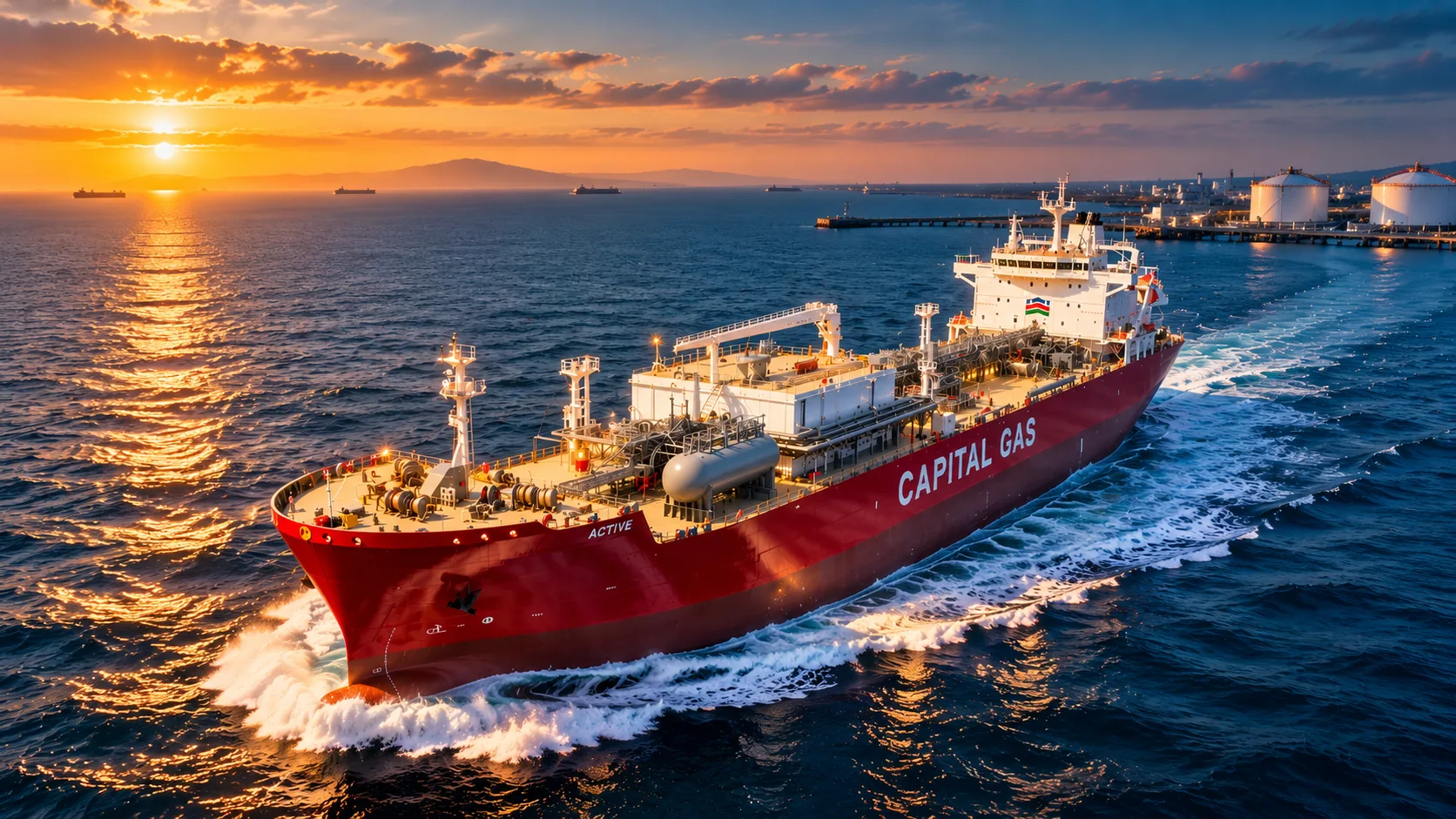
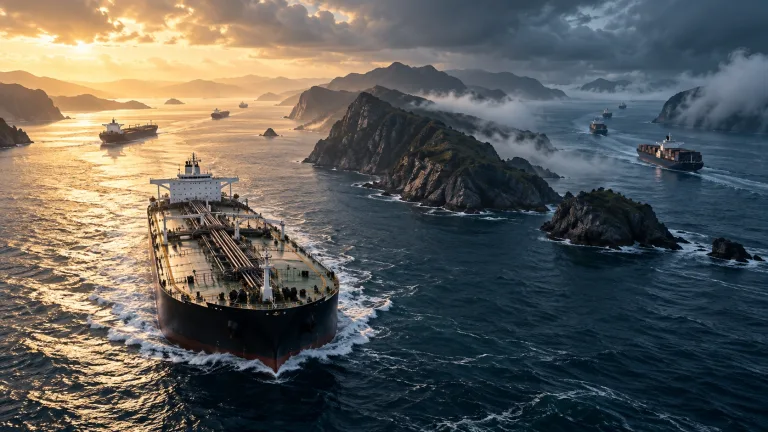
Capital Tankers is entering a significant phase of its fleet development strategy. The shipping company is preparing to expand its operating fleet substantially over the next two years, with particular emphasis on very large crude carriers (VLCCs), supported by financing arrangements for vessels under construction in South Korea and China.
As previously reported by pelavox., Capital Tankers has entered into financing arrangements with expected proceeds totalling approximately US$930.3 million for 11 VLCC newbuildings. Combined with the delivery of the Suezmax tanker Amor, the development illustrates how the company is aligning its vessel acquisition programme with longer-term financing commitments.
The strategic significance extends beyond the financing amount. Capital Tankers is moving from a fleet primarily comprising Suezmax, Aframax and LR2 tankers towards a substantially larger operation in which VLCCs will represent the largest individual vessel segment.
This transformation could materially change the company’s earnings exposure, investment requirements and position within the international crude oil transportation market. Its success will depend not only on vessel deliveries but also on freight market conditions, financing costs and the ability to manage a much larger fleet.
A major transformation in fleet composition
According to the company’s official fleet and financing announcement, Capital Tankers currently operates 17 vessels, comprising one VLCC, eight Suezmax tankers, four Aframax tankers and four LR2 vessels.
The company expects another ten vessels to be delivered through 2027 and six additional vessels by mid-2028. Assuming the contracted programme proceeds as planned, its operating fleet would increase to 33 tankers, including 15 VLCCs, ten Suezmax tankers and eight Aframax/LR2 vessels.
This would represent a substantial change in fleet composition. VLCCs currently account for just one of the company’s 17 operating vessels but would represent approximately 45% of its 33-vessel fleet following the scheduled deliveries.
The shift matters because different tanker classes serve different cargo sizes, trading routes and chartering requirements. VLCCs are primarily associated with large-volume crude oil movements, while Suezmax and Aframax vessels provide access to different regional and long-haul trading patterns.
A larger VLCC fleet would increase Capital Tankers’ participation in major crude oil transportation routes while reducing the relative contribution of smaller tanker segments to its overall vessel count.
The strategy therefore represents more than fleet growth. It is a deliberate change in the company’s commercial exposure.
Financing the expansion
The latest financing arrangements cover 11 VLCCs under construction at three Asian shipyards.
Three 320,000-dwt vessels being built by Hanwha Ocean in South Korea are covered by arrangements with expected financing proceeds totalling US$241.8 million. Five 307,000-dwt vessels at Dalian Shipbuilding Industry Co. in China account for approximately US$450.6 million, while three 306,000-dwt tankers at Hengli Shipbuilding are associated with another US$237.9 million.
Together, the arrangements amount to approximately US$930.3 million.
The distinction between arranging financing and drawing funds is important. The company’s announcement describes expected financing amounts under agreements entered into between 29 September and 12 October 2026. It does not establish that the entire amount has already been received or that all remaining delivery-related funding requirements have been eliminated.
The agreements also differ in their repayment structures. Financing for the Hanwha vessels is scheduled to be repaid through 20 quarterly instalments and substantial balloon payments at maturity. The arrangements for the Dalian and Hengli vessels generally provide for 40 quarterly instalments, also accompanied by balloon payments.
These structures spread scheduled principal repayments over several years but leave material amounts outstanding at maturity. Consequently, they create future repayment or refinancing requirements that must be managed alongside the company’s other financial commitments.
The financial strategy therefore combines support for the vessel delivery programme with longer-term exposure to refinancing conditions and tanker asset values.
Why balloon payments matter
Balloon payments are a significant feature of the new financing arrangements.
For the three Hanwha-built VLCCs, the final balloon payments range from US$59.4 million to US$60.9 million per vessel. The Dalian-built vessels carry final payments of approximately US$44.8 million to US$45.5 million, while the Hengli arrangements provide for US$39.7 million per vessel.
Across the 11 VLCC facilities, the scheduled balloon payments total approximately US$525.7 million, calculated from the individual amounts disclosed by Capital Tankers.
That figure does not represent an immediate liability falling due in 2026. The payments are scheduled for the respective maturities of the financing arrangements, following years of quarterly instalments.
Nevertheless, their scale is relevant when evaluating the company’s long-term financial structure. Capital Tankers will need to manage these obligations through operating cash flow, refinancing, vessel sales or other available sources of capital as the relevant maturities approach.
The terms also illustrate the relationship between ship finance and asset values. A lender’s willingness to refinance a vessel may depend on its market valuation, age, employment prospects and the wider availability of shipping credit at the time.
Consequently, the commercial performance of the VLCC fleet and the future condition of the second-hand tanker market could influence the company’s financial flexibility.
Strong earnings provide a foundation, but not a guarantee
Capital Tankers entered the current expansion phase following a period of strong operating results.
In its second-quarter 2026 financial results, published on 1 September, the company reported revenue of US$148.6 million, adjusted EBITDA of US$104.2 million and net income of US$92.9 million.
Fleetwide time charter equivalent earnings averaged US$116,260 per day during the quarter, reflecting the strong tanker market conditions described in the company’s report.
At 30 June 2026, Capital Tankers reported US$356.7 million in cash and cash equivalents, including restricted cash, against US$523.9 million of interest-bearing debt. Its reported net debt position was US$167.2 million.
These figures provide a reference point for the company’s financial position before the latest vessel deliveries and financing announcements. They should not, however, be interpreted as a current October balance sheet.
Since June, the company has continued receiving vessels and arranging financing, while operating results and capital expenditure may also have changed its cash and debt positions.
The second-quarter earnings demonstrate the cash-generating potential of the operating fleet under favourable freight conditions. They do not establish that comparable earnings will persist throughout the delivery programme.
For a shipping company expanding during a strong market, the central financial challenge is to ensure that the fleet remains commercially and financially resilient if freight rates subsequently weaken.
Tanker market opportunities and risks
Capital Tankers’ expansion is taking place against a tanker market shaped by changing crude oil trade flows, geopolitical disruption and a growing orderbook.
In its second-quarter report, the company described exceptionally strong freight conditions during the period, partly associated with disruptions to established oil transportation routes and longer voyages required to connect alternative supply sources with importing markets.
Such developments can increase demand for tanker transportation measured in tonne-miles, even when changes in the physical volume of oil traded are more limited.
For VLCC operators, longer crude oil voyages can absorb vessel capacity for extended periods. This may support freight rates when the available supply of ships is constrained.
However, these conditions are not necessarily permanent. Changes in geopolitical circumstances, oil production, trade routes or vessel availability can alter the balance between tanker supply and demand.
The newbuilding orderbook adds another dimension. Capital Tankers’ own market discussion identifies substantial global crude tanker ordering activity, while also highlighting the advanced age of a significant portion of the existing fleet.
This creates competing considerations. New vessels entering service increase available capacity, but older ships may face commercial, regulatory or technical constraints, potentially affecting the effective supply of tankers available to mainstream charterers.
The extent to which new deliveries will represent genuine fleet growth rather than replacement capacity remains uncertain.
Capital Tankers’ investment programme therefore positions the company to benefit from sustained demand for modern crude tankers while increasing its exposure to any deterioration in the freight market.
Modern vessels and fuel flexibility
Fleet modernisation is another component of the strategy.
Capital Tankers states that 23 of the 33 vessels in its contracted fleet are LNG dual-fuel ready or capable. The distinction is important: a vessel described as LNG-ready or LNG-capable should not automatically be treated as operating on LNG or as having identical technical specifications.
The company’s fleet also includes vessels fitted with exhaust gas cleaning systems, commonly known as scrubbers.
These characteristics may provide operational flexibility or affect compliance costs under particular fuel-price and regulatory conditions. However, the financial benefit depends on factors such as fuel spreads, actual operating configuration, chartering arrangements and future environmental requirements.
The recent delivery of the 155,348-dwt Amor illustrates the company’s investment in modern tanker tonnage. The Suezmax was delivered from New Times Shipbuilding in China and partly financed through a US$64.5 million sale-and-leaseback arrangement.
That facility includes 28 quarterly instalments of US$900,000 and a US$40 million balloon payment scheduled for October 2033.
The transaction reflects the broader approach used by Capital Tankers: combining the acquisition of modern vessels with asset-backed financing arrangements that spread repayment obligations over several years.
The strategy may support fleet expansion while preserving some immediate liquidity, but it also creates continuing financial commitments that must be serviced regardless of short-term freight market performance.
Additional options could extend the strategy
Beyond its existing fleet and contracted delivery programme, Capital Tankers holds options relating to 13 additional vessels associated with Capital Maritime & Trading Corp.
According to the company’s published second-quarter report, the options comprise 11 VLCCs and two Suezmax tankers. The options are available at shipbuilding contract prices until 31 December 2026, after which the company retains a right of first refusal under the disclosed arrangements.
These vessels should not be included in the company’s firm 33-vessel fleet. Their acquisition remains optional and would require separate corporate decisions.
The distinction is particularly relevant because exercising the options could significantly increase the scale of Capital Tankers’ investment programme.
If all 13 options were exercised and the relevant vessels subsequently delivered, the fleet could potentially reach 46 tankers. That outcome is a scenario, not a confirmed fleet development.
The options nevertheless provide the company with potential access to additional shipbuilding capacity without necessarily requiring immediate commitment to every vessel.
This flexibility could be valuable if market conditions remain attractive, but exercising the options would also increase future capital requirements and exposure to the tanker cycle.
What the expansion means for Capital Tankers
The planned fleet transformation presents Capital Tankers with a different operating and financial profile from the one reflected in its current 17-vessel fleet.
A larger VLCC presence could strengthen its position in long-haul crude oil transportation and increase its capacity to participate in major international cargo movements.
At the same time, the growing concentration in VLCCs would make the company’s results more sensitive to conditions in that segment. Strong earnings in one tanker class do not necessarily imply equivalent performance across all vessel types.
The financing arrangements provide an important foundation for the delivery programme, but they do not remove the need to manage future repayments, refinancing exposure and ongoing capital expenditure.
The company will also need to integrate a substantial number of new vessels into its commercial and technical operations over a relatively short period.
Successful execution could improve fleet scale and modernity. Delays, weaker freight conditions or changes in financing markets could reduce the expected financial benefits.
These are risks associated with the structure and timing of the strategy, rather than evidence that such outcomes will occur.
A larger fleet brings a larger financial commitment
Capital Tankers’ latest financing announcement marks an important step in the development of its contracted fleet.
The company has established financing arrangements for 11 VLCC newbuildings while continuing to take delivery of modern tanker tonnage. Its scheduled expansion would increase the operating fleet from 17 to 33 vessels and substantially increase the role of VLCCs within its business.
The strategic opportunity lies in building a larger fleet capable of participating more extensively in international crude oil transportation. The financial challenge lies in ensuring that the resulting debt obligations and capital commitments remain manageable across different freight market conditions.
The latest agreements reduce uncertainty around part of the newbuilding financing programme, but they do not determine future earnings or eliminate refinancing exposure.
Ultimately, the success of Capital Tankers’ VLCC expansion will be measured not simply by the number of vessels delivered, but by the returns those vessels generate relative to their financing costs and the risks assumed during the investment cycle.