DHL’s profit surge: How much of the improvement is sustainable?
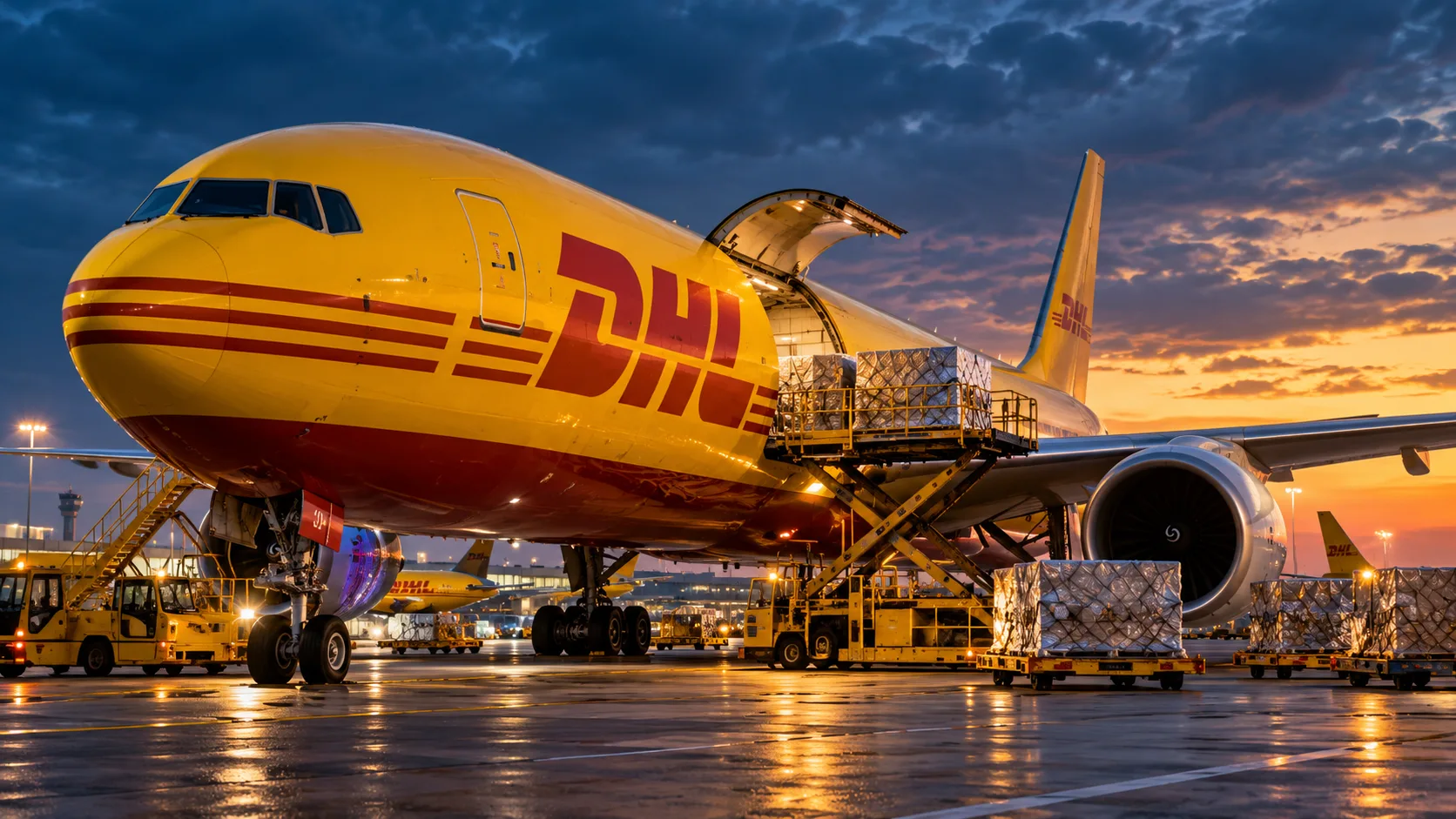
DHL Group’s decision to raise its full-year earnings outlook for the second time in 2026 reflects a significant improvement in profitability, led by its international Express business. Yet the latest financial figures also raise an important question about the durability of that improvement, particularly as part of the earnings growth has been supported by capacity constraints in the air freight market.
The German logistics group now expects earnings before interest and taxes (EBIT) to exceed €7 billion in 2026, compared with its previous guidance of more than €6.5 billion. Preliminary third-quarter revenue increased by more than 12% year on year to approximately €22.6 billion, while operating profit rose by around 16% to €1.71 billion.
As previously reported by pelavox. in its coverage of DHL Group’s earnings upgrade, the latest figures point to stronger operating momentum. However, the underlying performance differs considerably across the group’s business divisions, making the composition of earnings growth as important as the headline figures.
Express drives the improvement
The DHL Express division remains the principal driver of the group’s stronger profitability. According to DHL’s preliminary third-quarter results, Express generated EBIT of approximately €1.04 billion, compared with €692 million in the corresponding period of 2025.
The increase reflects several factors, including higher transported shipment weight, improvements in pricing and yield management, and the continued benefits of cost-reduction measures. Higher volumes can also improve the utilisation of an established international network, allowing additional revenue to contribute more strongly to operating profit when fixed infrastructure and transport capacity are used more efficiently.
However, DHL also identified approximately €100 million of positive earnings support from capacity constraints in the air freight market during the quarter. This is an important distinction because the benefit is linked partly to external market conditions rather than exclusively to improvements in the company’s underlying operating structure.
The contribution represents approximately 10% of Express’s reported third-quarter EBIT. It is also equivalent to roughly 29% of the division’s €343 million year-on-year increase in operating profit, although this comparison does not adjust for non-recurring effects in the prior-year period.
These calculations illustrate the significance of the air freight market contribution without establishing how much of the remaining improvement is structural. The company’s disclosure does not provide a complete reconciliation separating every temporary and recurring factor.
Air freight conditions create opportunities and uncertainty
The influence of air freight capacity constraints is not limited to the third quarter.
In July, DHL had already identified approximately €150 million of positive earnings support from constrained air freight capacity during the second quarter. Its subsequently published first-half financial results also highlighted stronger shipment weights, disciplined capacity management and the benefits of its Fit for Growth programme.
The recurrence of these effects demonstrates how DHL’s international transport network can benefit from changing supply-demand conditions in the air freight market. When capacity becomes constrained, operators with established networks and available transport resources may be better positioned to accommodate demand and manage pricing.
Nevertheless, the financial benefits associated with such conditions may change if additional capacity becomes available or demand moderates. The extent and timing of any adjustment cannot be determined from DHL’s preliminary results alone.
This creates two distinct components of the company’s earnings performance. Operational improvements, including cost discipline and network utilisation, may provide benefits beyond the current market environment. By contrast, earnings supported by unusually constrained transport capacity depend more directly on conditions outside the company’s control.
The sustainability of Express profitability will therefore depend partly on whether volume growth and operational efficiency can compensate for any reduction in the benefits associated with air freight market tightness.
Performance across the group remains uneven
Although Express accounts for much of the earnings momentum, DHL’s other divisions present a more varied picture.
DHL Global Forwarding reported preliminary third-quarter EBIT of approximately €260 million, compared with €195 million a year earlier. The prior-year figure included €14 million of negative restructuring-related effects, meaning the reported increase should be assessed with that comparison in mind.
DHL Supply Chain generated approximately €300 million in operating profit, up from €278 million. Its performance suggests continued earnings resilience in contract logistics, although the preliminary figures do not provide sufficient detail to assess the relative contribution of individual regions, customer industries or new contracts.
The eCommerce division reported EBIT of approximately €50 million, compared with €176 million in the previous year. However, the 2025 result included €123 million of positive non-recurring effects, substantially affecting the year-on-year comparison.
Post & Parcel Germany recorded EBIT of approximately €150 million, down from €218 million a year earlier. This weaker performance contrasts with the improvement in the international DHL divisions and underlines the different conditions affecting the group’s business activities.
The divisional results suggest that DHL’s profitability is not improving at the same pace throughout the organisation. International Express operations are delivering particularly strong gains, while domestic postal activities remain a weaker contributor.
For an integrated logistics group, such differences are important because the overall financial performance depends on the combined contribution of businesses with distinct demand patterns, operating structures and competitive pressures.
Investment increases alongside earnings expectations
DHL’s revised outlook also reflects a decision to increase investment rather than direct all additional financial capacity towards near-term cash generation.
The company now expects capital expenditure of approximately €3.6 billion in 2026, compared with its previous forecast of €3 billion to €3.3 billion. At the same time, management has increased its free cash flow guidance, excluding net mergers and acquisitions, to more than €3.2 billion from approximately €3 billion.
The combination of higher expected investment and stronger cash flow is significant. It indicates that management expects sufficient financial capacity to support additional expenditure while maintaining an improved cash generation outlook.
However, the preliminary announcement does not provide a complete breakdown of the additional investment by project or division. It would therefore be premature to attribute the entire increase to particular growth markets or infrastructure programmes.
DHL’s broader investment strategy provides useful context. In its August financial update, the company identified network modernisation, digitalisation, automation and specialised logistics services as important areas of development.
These include investments associated with the Express fleet, automated warehousing and sorting systems, and logistics capabilities serving industries such as healthcare, energy and data centres.
Such projects may support longer-term productivity and commercial opportunities, but their financial contribution will depend on implementation costs, customer demand and the returns generated over time.
The higher capital expenditure forecast should therefore be interpreted as an indication of management’s investment intentions rather than evidence that all planned projects will deliver stronger profitability.
The significance of a second guidance upgrade
The October announcement follows an earlier earnings upgrade in July, when DHL increased its full-year EBIT outlook from more than €6.2 billion to more than €6.5 billion.
The latest revision to more than €7 billion represents a further increase in management’s expectations following stronger operating performance and indications of a robust seasonal peak during the fourth quarter.
The sequence is relevant because it shows that the improved outlook is not based solely on one quarter’s results. The company reported significant earnings growth during the second quarter and subsequently maintained positive momentum into the third.
However, the strength of the seasonal peak remains an expectation rather than an established outcome. The fourth quarter is particularly important for parcel and express networks because of increased activity associated with year-end commercial demand.
DHL has also indicated that it will review its medium-term guidance in March 2027. Its existing target of more than €7 billion in annual EBIT under a normalised macroeconomic environment was established before the latest full-year upgrade.
The fact that the revised 2026 forecast now exceeds that threshold does not automatically establish a new sustainable earnings level. The relationship between current market conditions and a normalised operating environment remains central to the company’s longer-term outlook.
Cash flow provides another measure of performance
Profitability alone does not provide a complete picture of financial performance. Cash generation is particularly important for a logistics group operating capital-intensive transport networks and investing in infrastructure.
DHL reported preliminary third-quarter free cash flow, excluding net mergers and acquisitions, of approximately €900 million.
The figure included around €255 million of net cash outflows associated with IEEPA-related measures. According to the company, free cash flow would have been correspondingly higher without those outflows.
This qualification matters when comparing cash generation across periods. Timing differences involving working capital, investment expenditure and exceptional cash movements can influence quarterly figures without necessarily reflecting equivalent changes in underlying profitability.
The increase in full-year free cash flow guidance suggests that management expects cash generation to remain sufficiently strong to accommodate its higher investment plans.
Nevertheless, the relationship between reported earnings, capital expenditure and cash conversion will become clearer when the full third-quarter financial statements are published.
What will determine the durability of earnings growth?
DHL’s latest results provide evidence of stronger demand, improved operating leverage and continued benefits from cost management. The performance of Express in particular demonstrates how additional transport volumes can improve profitability within an established global network.
At the same time, the company has identified material earnings support from constrained air freight capacity. That contribution complicates any attempt to distinguish permanent improvements in profitability from benefits associated with current market conditions.
The uneven results across divisions introduce another consideration. Stronger international earnings can improve group performance even when other activities face weaker conditions, but this does not eliminate the underlying challenges within those businesses.
Several developments will therefore be important when assessing the sustainability of DHL’s financial improvement.
The first is whether Express can maintain stronger shipment volumes and operating efficiency if air freight capacity conditions change. The second is whether Global Forwarding and Supply Chain can continue generating earnings growth beyond the effects of prior-year comparison factors.
The third is whether the group’s increased investment programme supports productivity and growth without placing disproportionate pressure on cash flow.
Finally, the performance of Post & Parcel Germany will remain relevant to the overall earnings mix, particularly given the division’s weaker third-quarter result.
DHL’s preliminary results do not resolve these questions, but they establish a clearer framework for evaluating the company’s progress.
Stronger profitability, with important qualifications
DHL Group’s second earnings upgrade of 2026 reflects a substantial improvement in operating performance, supported by stronger international demand, cost discipline and increased network utilisation.
The latest figures also demonstrate the advantages of operating across several logistics segments, although the contribution of those businesses remains uneven.
The central qualification concerns the composition of earnings growth. Part of the improvement in Express profitability has been supported by capacity constraints in the air freight market, while reported comparisons in other divisions are affected by non-recurring items.
These factors do not diminish the financial progress already achieved, but they limit the conclusions that can be drawn about the sustainability of current earnings levels.
The full third-quarter report, scheduled for 5 November, should provide further detail on divisional performance and cash generation. The subsequent review of medium-term guidance in March 2027 will offer another indication of how management assesses the longer-term implications of the improved results.
For now, DHL’s performance points to stronger profitability and increased financial flexibility. Whether those gains represent a lasting improvement in the group’s earnings capacity will depend on the persistence of operational efficiencies, the evolution of air freight market conditions and the returns generated by its investment programme.