Wasaline secures biogas supply agreement for Aurora Botnia ferry
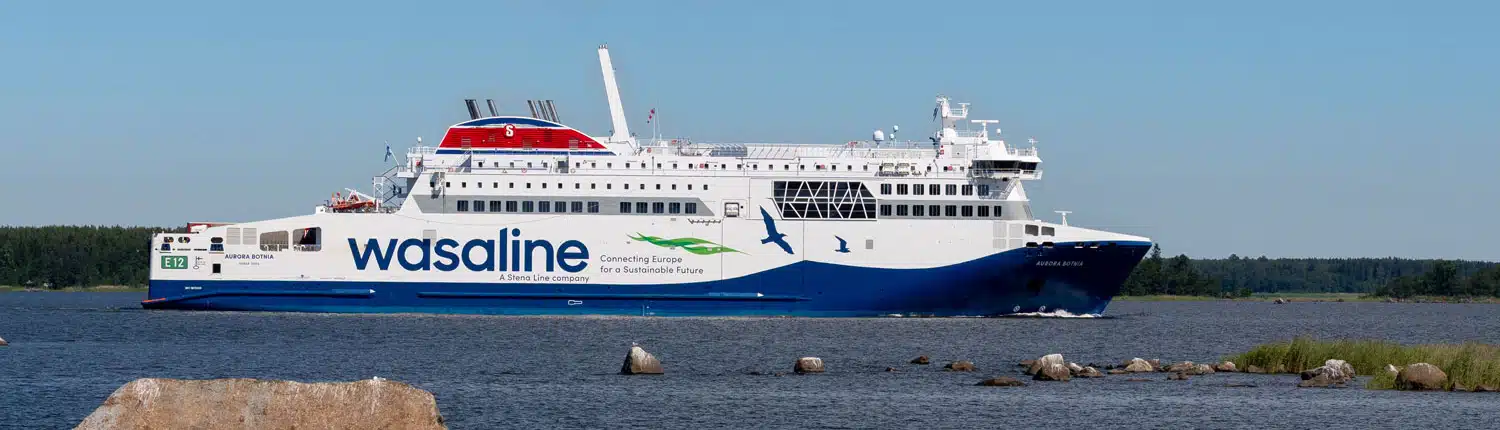
Wasaline has signed a two-year agreement with St1 Biokraft for the annual supply of 42 GWh of liquefied biogas (LBG), strengthening renewable fuel arrangements for its Aurora Botnia ferry operating between Vaasa, Finland, and Umeå, Sweden.
Deliveries are scheduled to begin in January 2028, with the fuel supplied to the vessel during bunkering operations at the Port of Vaasa. Wasaline aims to source most of the biogas from Suomen Lantakaasu’s new production facility in Nurmo, approximately 80 kilometres from the port.
The agreement builds on Wasaline’s existing use of biogas and is intended to support the company’s efforts to reduce emissions from its ferry operations across the Kvarken Strait.
Regional biogas supply chain
Under the agreement, liquefied biogas will be transported by tanker trucks from St1 Biokraft’s production facilities and terminals to the Port of Vaasa, where it will be bunkered aboard Aurora Botnia.
Wasaline’s ambition is to use primarily locally produced biogas from the new Nurmo facility, operated by Suomen Lantakaasu, a joint venture between St1 Biokraft and Finnish dairy company Valio.
The regional supply arrangement is expected to support the use of manure and other organic residual materials in renewable fuel production, strengthening the connection between local agricultural resources and maritime transport.
For St1 Biokraft, the agreement represents its first major marine biogas supply contract.
“This is our first major marine biogas agreement and an important milestone for St1 Biokraft,” said Johan Zakrisson, Head of Business Development at St1 Biokraft.
He added that the company’s expanding Nordic production and infrastructure network would support the supply of biogas to additional applications, including shipping.
Supporting lower-emission ferry operations
Aurora Botnia already uses biogas, battery technology and shore power as part of its onboard energy system. The new agreement is intended to provide continued access to renewable fuel while strengthening the regional supply chain.
“Being able to use locally produced biogas is an important step forward for us,” said Jonas Teir, Technical Director at Wasaline.
According to Teir, sourcing fuel from the surrounding region would contribute to energy supply security and support the circular economy by creating additional opportunities to utilise organic residual streams.
Wasaline also sees the agreement as part of its wider efforts to improve the environmental performance of its ferry operations and respond to increasingly stringent European Union shipping regulations.
The supply agreement will run for two years beginning in January 2028. Although the company intends to rely mainly on locally produced biogas from Nurmo, it has not specified a guaranteed proportion of the contracted volume that will originate from the facility.