MEDLOG and Spanish ports secure Júndiz rail terminal operating contract
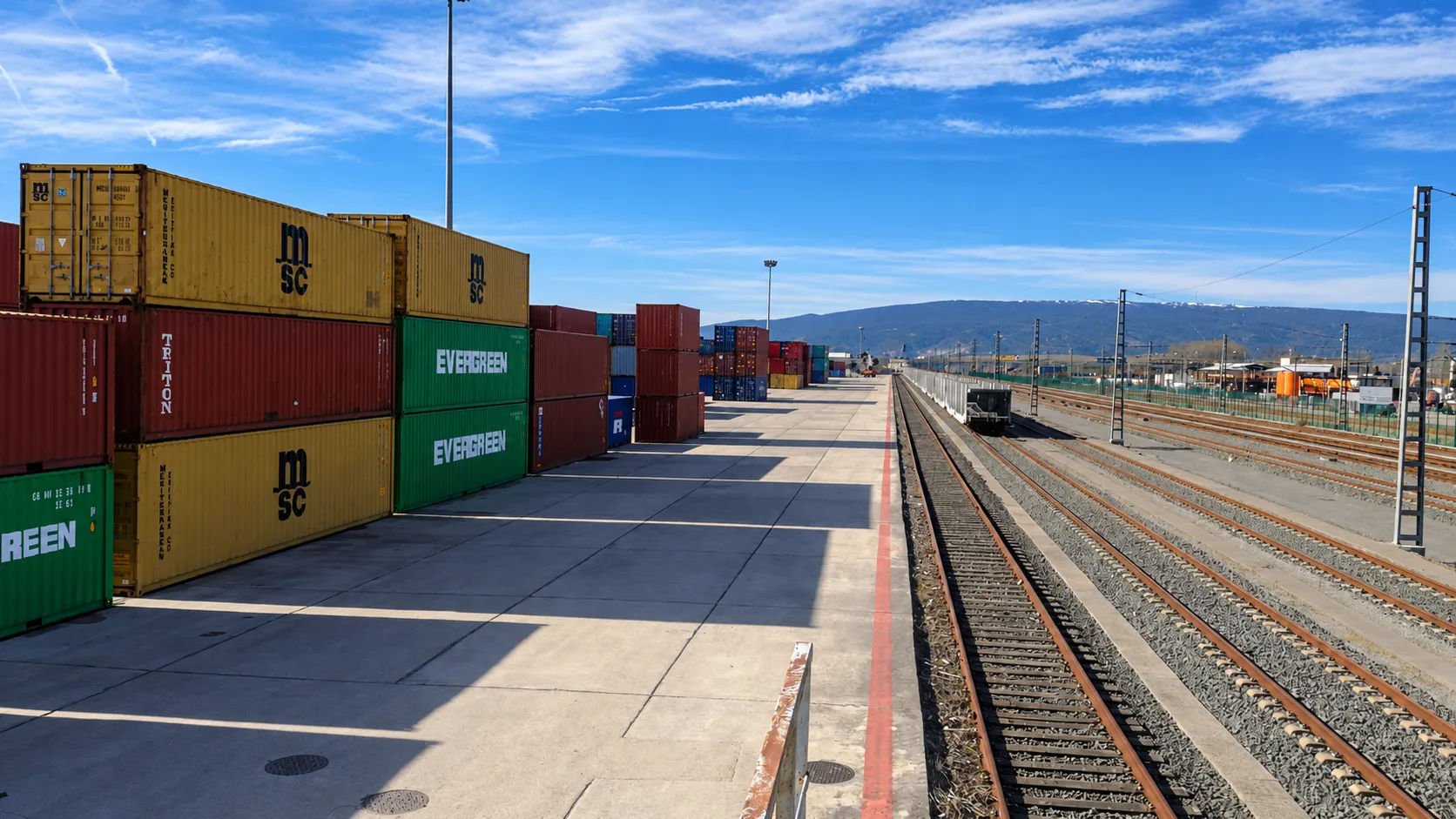
Spain’s railway infrastructure manager Adif has awarded the operating contract for the Vitoria-Júndiz rail terminal to TERMINAL INTERMODAL JÚNDIZ, a joint venture bringing together MEDLOG Spain Logistic, part of the MSC Group, the port authorities of Bilbao and Pasaia, and regional institutions in Álava.
The contract covers an initial six-year operating period, with the possibility of extensions up to a maximum of 20 years. The agreement represents a development for the intermodal facility, which is positioned to support freight movements between the Basque Country, the wider Iberian Peninsula and European transport networks.
The joint venture expects to handle approximately 300,000 intermodal transport units (ITUs) during the initial six-year period. These units include containers, swap bodies, semi-trailers and rolling platforms designed for transport across different modes without unloading the cargo during transfers.
MEDLOG takes largest stake in terminal venture
MEDLOG holds a 40% stake in TERMINAL INTERMODAL JÚNDIZ, making it the largest individual shareholder in the consortium. The Bilbao Port Authority holds 25%, while the Vitoria-Gasteiz Intermodal Transport Centre (CTV) and the Álava Chamber of Commerce, Industry and Services each hold 15%.
The remaining shares are divided equally between the Pasaia Port Authority and Servicios Intermodales Bilbaoport (Sibport), each with 2.5%.
Under the joint venture’s traffic projections, the terminal is expected to handle 15,000 ITUs during its first year of operation, increasing to 45,000 in the second year. Throughput is then projected to reach 60,000 ITUs annually over the following four years.
These forecasts represent a substantial increase compared with the 4,723 ITUs handled at Júndiz during 2025. The projected volumes remain operational targets rather than confirmed future traffic.
The terminal covers approximately 55,000 square metres, including a 36,000-square-metre concrete operating area and three dead-end railway tracks equipped with electrification at their termini for loading and unloading activities.
The site also includes internal roads, an administration and services building, and parking facilities for heavy and light vehicles.
Strengthening rail links between ports and inland markets
The Júndiz logistics hub forms part of the Trans-European Transport Network (TEN-T) and occupies a strategic position along the Atlantic Corridor.
Its location is particularly relevant to the cross-border Vitoria–San Sebastián–Bayonne–Bordeaux section, which connects transport networks in Spain and France.
For the Port of Bilbao, the terminal offers an opportunity to strengthen railway connectivity, extend its inland market reach and develop additional logistics services through the integration of maritime and rail transport.
The participation of the Port of Pasaia and regional institutions also reflects the project’s broader objective of supporting freight transport and logistics activity across Álava and the Basque Country.
The consortium aims to increase the use of rail freight, improve logistics competitiveness and reinforce Júndiz as an inland distribution hub serving both regional industries and international trade routes.
Bilbao Port Authority highlights strategic importance
Iván Jiménez Aira, President of the Bilbao Port Authority, welcomed the award and emphasised the importance of cooperation between public institutions and private businesses.
He described the contract as recognition of a joint project intended to strengthen logistics and economic activity in Álava and the wider Basque Country.
According to Jiménez, Júndiz provides an opportunity for the Port of Bilbao to improve its rail connections and expand its hinterland while offering more competitive and sustainable logistics solutions.
The next stage will focus on developing traffic through the facility and translating the consortium’s operating projections into freight movements.
The contract award establishes a framework for the terminal’s future management, with the participating organisations seeking to strengthen rail-based intermodal connections between Spanish ports, inland logistics markets and the European Atlantic Corridor.