Can SOLAS become a shaping layer in Hormuz?
The IMO’s push to enforce safety rules in the Strait of Hormuz won’t stop the attacks. It could still reshape who sails there, and whose authority counts.
When Arsenio Dominguez, Secretary-General of the International Maritime Organization, called on 11 November for strict enforcement of safety rules in the Strait of Hormuz, the statement looked routine.
For eight months the IMO had mainly condemned attacks on shipping, which by 10 November it had verified in 133 incidents, with at least 25 seafarers killed.
This time Dominguez named a different problem: ships hiding their IMO numbers, flying fraudulent flags or sailing in substandard condition. He asked flag, port and coastal states to act against them.
The question is no longer only who is attacking ships, but who the ships are.
That shift matters because Hormuz is already governed by competing rulebooks. Iran’s Persian Gulf Strait Authority issues permits and notices and keeps a blacklist of ‘non-compliant vessels’, which has grown from 44 to 124 since August.
The United States enforces a blockade of Iranian ports and sanctions fraudulent ship registries. The IMO’s call adds a third rulebook, the treaty-based order of SOLAS and the Law of the Sea.
All three now speak the language of compliance, and each defines a ‘non-compliant’ ship differently.
Regulation will not reopen the strait: a drone does not check certificates. Its power lies elsewhere, at the points every ship must pass through far from the Gulf. These include registries, ports, classification societies and insurers.
Analysts count nearly 300 Iranian-linked ships sailing under fraudulent flags, and a ship flying a false flag can be treated as stateless and boarded on the high seas. In this sense, rules become a quiet filter.
They do not stop traffic, but they decide which identities can keep operating, and they make the deceptive fleet serving Iran’s side of the strait more costly to run.
Regulation will not reopen the strait. It decides which ships are allowed to keep using it.
Yet the same pressure can backfire. In the same statement, Dominguez urged shipowners to refrain from commercial activity in the strait. Mainstream operators, their insurers and crew unions will take that advice.
The shadow fleet, by design, will not. If enforcement stays mostly on paper, the result could be a strait increasingly used by dark tonnage aligned with Tehran.
Iran’s claim to administer the waterway would be strengthened by a call meant to weaken it. Call it the compliance trap: rules weigh most on those who already obey them.
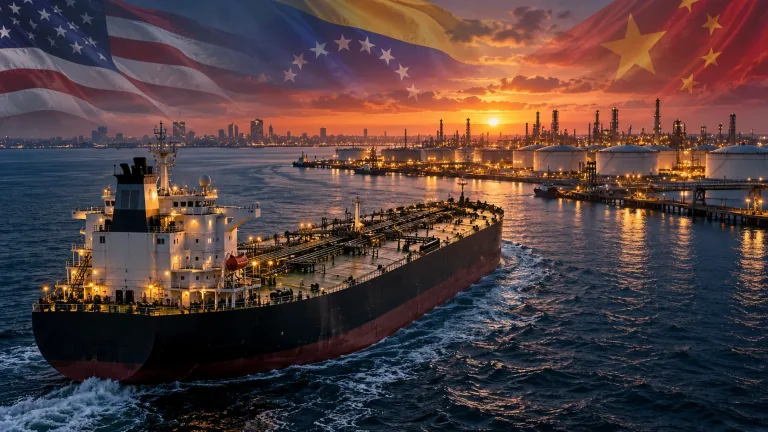
There is a second, quieter twist. More than 50 non-sanctioned tankers, partly drawn from former Iranian, Russian and Venezuelan trades, have moved into carrying Gulf Arab exports since the war began.
A hard crackdown on substandard, identity-ambiguous ships would squeeze Iran’s channel.
It would also shrink the fleet lifting Saudi, Emirati and Iraqi oil, the very exporters the IMO’s resolutions aim to protect.
Do not be surprised if Gulf states quietly favour ‘calibrated’ enforcement.
The most likely path is regulation that stays largely declaratory but hardens into occasional coordinated action against false-flag tankers far from the strait.
Iran and Oman could try to present their joint transit arrangement to the IMO as a legitimate routeing scheme, seeking legal cover for the tollbooth.
Or, if Western navies begin boarding stateless tankers, Iran could mirror the move with its own ‘safety inspections’. Either way, maritime law is becoming a battleground in its own right.
It cannot end the Hormuz crisis, but it can decide whose rules the world ends up following once the shooting stops.