The ships Washington could push toward China
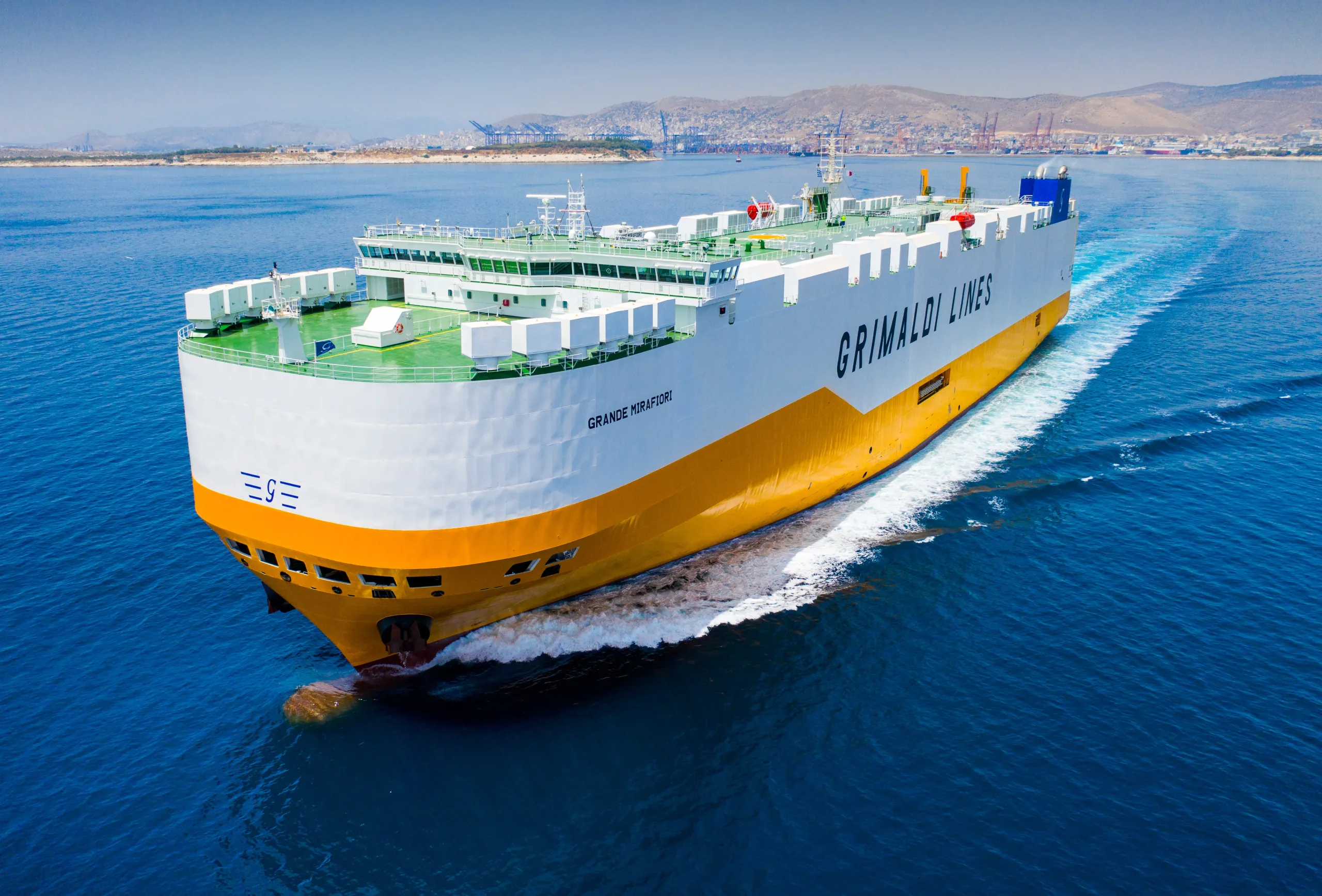
Grimaldi’s warning over US port fees is a lobbying signal, not a trade shock. Its significance lies in where the ships would go.
When Grimaldi Group told the US Trade Representative that American customers fear it could move its ships out of US trades, it raised a question bigger than one company’s fee bill.
Could a charge designed to counter China’s maritime dominance end up strengthening it?
The warning alone will not upset global trade, however, expose a weakness in Washington’s strategy, and that weakness becomes geopolitical if the US-China truce breaks down.
The dispute centres on Annex III of the Section 301 action, which charges foreign-built vehicle carriers US$46 per net ton, up to five times a year per ship. Unlike the measures aimed at Chinese-owned and Chinese-built vessels, it applies whoever owns the ship and wherever it was built.
The fees were collected for less than four weeks before being suspended in November 2025 under the Trump-Xi deal.
USTR now proposes extending that pause to January 9, 2027, but the suspension still legally ends on November 9 unless a final notice is published. Grimaldi wants the vehicle-carrier fee suspended permanently.
Grimaldi attributes the concern to its customers and announces no decision to leave.
Atlantic Container Line, which voiced similar fears, has been reported as a Grimaldi subsidiary, so it is hardly independent corroboration. The volumes are also modest: about 985,000 tons of exports and 1.31 million tons of imports over three years.
Norway’s Siem Car Carriers offers a more independent echo, warning that US fees could push ships to other markets, subject to existing contracts.
Still, the market makes the threat credible. One-year charters for a 6,500-CEU carrier reached about US$95,000 a day in September, while Wallenius Wilhelmsen and Höegh Autoliners describe sold-out fleets and Chinese exporters signing multi-year contracts. On a rough estimate, the fee could cost such a ship about US$4.5 million a year, or 13% of its annual charter earnings.
That is not enough to force an exit from the United States, but it is enough to shift marginal capacity. The likelier result is fewer sailings and consolidated port calls, with some ships reassigned elsewhere.
History explains why the instrument looks misplaced. The tonnage duties of 1789 favoured American ships when American yards could compete, and later gave way to reciprocity.
The Jones Act protected domestic trades, while subsidies bought capacity for foreign trade and sealift. Annex III returns to discrimination without the industrial base that once supported it: only 39 of 1,466 vehicle carriers were US-built in 2025.
Meanwhile, Chinese yards won nearly 97% of car-carrier orders from January to August, and China’s vehicle exports rose 65% in the first half.
A ship priced out of American ports may therefore be Chinese-built and carrying Chinese cars.
The resulting turbulence would be real but bounded. US vehicle and ro-ro services face moderate disruption, though a cost of US$200–300 per vehicle is small beside tariff costs of US$4,000–6,000.
Friction with allies is low to moderate, given Seoul’s 2025 exemption request and Washington’s reliance on allied yards. Global trade risk is low, since this is rerouting within one specialist segment, not a chokepoint shock.
The stakes rise if the truce fails and Chinese fees return, or if the Maritime Action Plan’s universal fee on foreign-built ships is enacted at a high rate.