Piracy and armed robbery in Asia: Dramatic 2026 drop offers hope
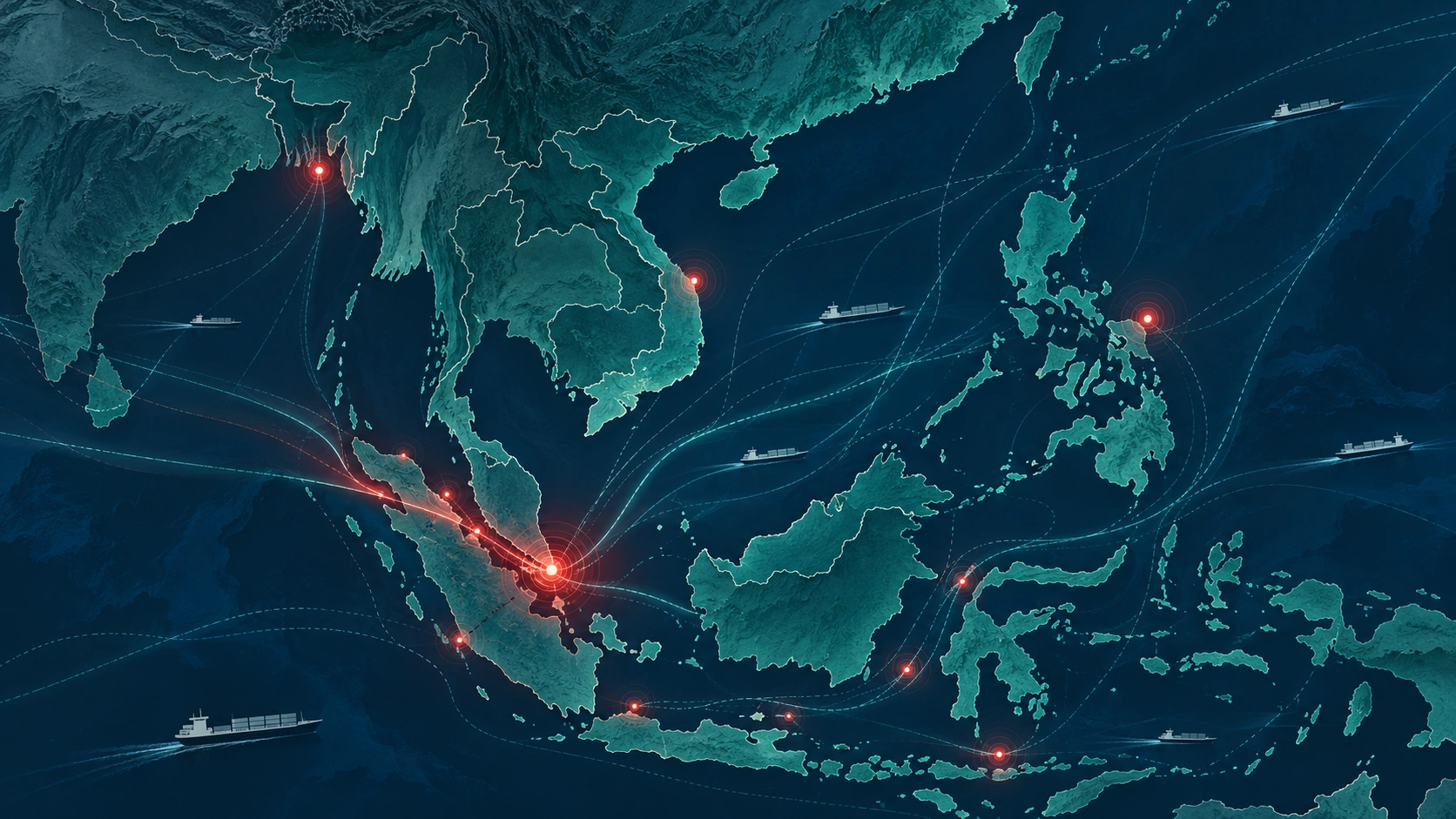
Table of Contents
Asia is heading towards a substantial reduction in reported piracy and armed robbery incidents against ships in 2026, potentially marking one of the region’s most significant improvements in maritime security in recent years. According to the ReCAAP Information Sharing Centre (ISC), 53 incidents had been recorded as of 4 November, considerably below the 133 incidents registered during the whole of 2025. With less than two months remaining in the year, the figures suggest that 2026 could finish well below the annual totals recorded throughout the previous six years.
The emerging trend stands in contrast to the levels observed during much of the past decade. ReCAAP recorded 107 incidents in 2024, 101 in 2023, 84 in 2022, 82 in 2021 and 97 in 2020, while the historical peak was reached in 2015 with 203 incidents. The current 2026 total is already 60% below the completed 2025 figure and approximately 74% below the 2015 peak, although these comparisons involve a partial year against full-year totals. Should the present trajectory continue, 2026 could record the lowest annual number of incidents among the years since 2020.
Piracy and armed robbery incidents across Asia
The geographical distribution of piracy and armed robbery incidents reveals that the Straits of Malacca and Singapore remain the region’s principal area of concern, despite the substantial improvement in overall security conditions. Of the 53 incidents recorded in 2026, 25 occurred in these waterways, representing approximately 47% of the regional total. The Philippines accounted for another 12 incidents, followed by seven in Indonesian ports and anchorages outside the straits, four in Bangladesh, two in Vietnam, two in the South China Sea and one in Malaysia.
Malacca and Singapore Straits record sharp decline
The situation in the Straits of Malacca and Singapore is particularly noteworthy given their importance to international shipping. The area recorded 108 incidents of piracy and armed robbery throughout 2025, compared with just 25 during 2026 up to the beginning of November. ReCAAP previously associated the sharp decline observed in the second half of 2025 with arrests carried out by Indonesian authorities in July and August of that year, which the organisation identified as having a deterrent effect on perpetrators. The reduced number of incidents in 2026 suggests that the improvement has continued, although the straits remain the largest concentration of reported cases in Asia.
Philippines sees a contrasting increase
The Philippines, however, presents a different picture. The country has already registered 12 piracy and armed robbery incidents in 2026, compared with only two during the whole of 2025, demonstrating that the broader regional decline has not been uniform. Several incidents involved vessels at anchor near Manila and Batangas, including container ships, bulk carriers and passenger or Ro-Ro vessels. The increase highlights the persistence of localised security vulnerabilities even as the overall number of incidents across Asia falls.

Vessel types affected by piracy and armed robbery
An examination of ReCAAP’s individual incident records shows that bulk carriers were involved in 24 of the 53 reported cases, representing approximately 45% of the total. Container ships followed with nine incidents, while tugboats towing barges accounted for eight. Six incidents involved tankers of different types, including oil, chemical and gas carriers, while the remaining cases affected Ro-Ro cargo ships, a passenger ship, a general cargo vessel, a work vessel and an individual tugboat.
Flag states of affected vessels
The flag distribution also illustrates the international nature of the vessels affected. Singapore-flagged ships accounted for the largest number of reported incidents, with 16, followed by vessels registered in the Marshall Islands with eight, Panama with seven and Liberia with five. Ships flying several other flags, including Malaysia, Malta, Hong Kong, Cyprus and Belgium, also appeared in the records. These figures represent the distribution of reported incidents rather than a measure of relative risk, which would require consideration of fleet exposure and vessel traffic.
Incident severity and crew safety
In terms of severity, most incidents were classified in ReCAAP’s lower categories. Of the 53 recorded cases, 32 were classified as Category 4, the least significant category, while 16 were Category 3 and five were Category 2. No Category 1 incidents, the organisation’s highest severity classification, or attempted incidents were recorded during the period.
The majority of cases in Asia involved unauthorised boarding and theft of ship equipment, stores or other accessible materials. Engine spare parts, paint, scrap metal, cables and other onboard items featured repeatedly in the incident descriptions, with several perpetrators escaping after being discovered by crew members. Nevertheless, not every incident was limited to opportunistic theft: in June, a crew member aboard the bulk carrier SDM Shenyang was found tied up following an intrusion at Belawan Anchorage, while a crew member aboard Hellasship sustained a minor head injury during an incident in the Singapore Strait in March.
Piracy versus armed robbery: The legal distinction
An important distinction also emerges from ReCAAP’s classification of the incidents. The organisation identified two piracy incidents in the South China Sea, while the remaining 51 cases were classified as armed robbery against ships, reflecting the different legal definitions applicable to incidents occurring on the high seas and within waters under coastal-state jurisdiction. This distinction is important when assessing the nature of maritime security threats across the region.
Maritime security outlook for the remainder of 2026
The figures indicate a significant improvement in maritime security across parts of Asia, particularly in waterways that experienced exceptionally high incident levels in 2025. However, the concentration of cases in the Straits of Malacca and Singapore, together with the increase reported in the Philippines, suggests that security challenges have not disappeared but remain unevenly distributed.
Although the final annual picture will only become clear at the end of December, the current data place 2026 on course for a markedly lower number of incidents in Asia than in recent years.