Everllence engines selected for six chemical tankers under construction in India
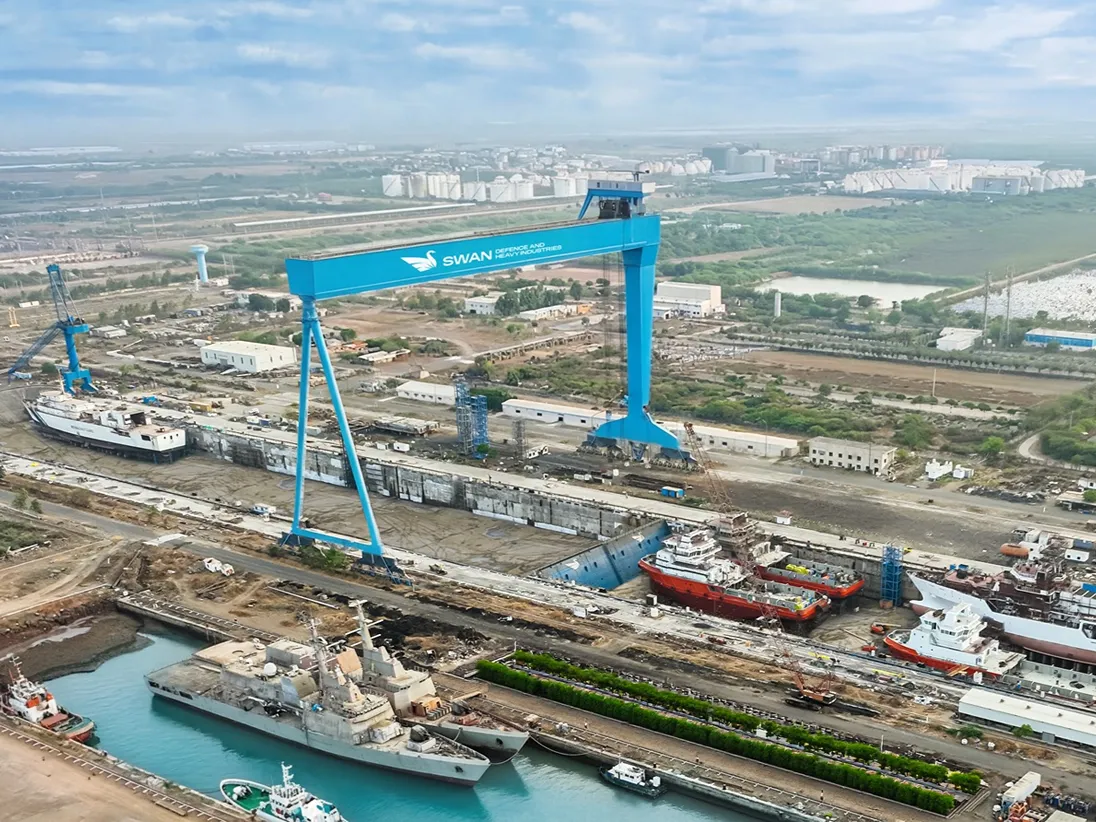
Everllence and Japanese engine manufacturer MITSUI E&S have secured a propulsion equipment order for six chemical tankers being built by Swan Defence and Heavy Industries (SDHI) at its Pipavav shipyard in Gujarat, India.
The order covers six LNG dual-fuel, two-stroke engines for a series of 18,000-dwt IMO Type II chemical tankers. MITSUI E&S will manufacture the engines under its longstanding licensing agreement with Everllence, marking its first marine engine order from an Indian shipyard.
The vessels form part of an existing shipbuilding programme awarded to SDHI by Norwegian shipowner Rederiet Stenersen AS. The six-vessel construction contract, valued at approximately USD 227 million, was announced in January 2026 and includes an option for six additional tankers.
The latest announcement confirms the selection of propulsion technology for the programme rather than a new shipbuilding contract.
LNG dual-fuel propulsion for chemical tankers
The first vessel will be equipped with an Everllence B&W 6S50ME-C9.7-GI-EGRBP two-stroke engine manufactured by MITSUI E&S.
The ME-GI engine technology allows operation on LNG and conventional marine fuel, providing flexibility in fuel selection. The specified engine will also incorporate exhaust-gas recirculation technology to meet IMO Tier III nitrogen oxide emissions requirements.
The propulsion arrangement includes a controllable-pitch propeller, while the tankers will be built to DNV classification standards and Ice Class 1A requirements.
The ice-class specification reflects the vessels’ intended operations in Northern European waters, where winter conditions can impose additional demands on hull construction and onboard equipment.
The selection of LNG dual-fuel engines represents a further technical development in the shipbuilding programme, which was originally announced with provisions for alternative-fuel propulsion and hybrid systems.
Rear Admiral Vipin Kumar Saxena (retired), Chief Executive Officer of SDHI, said the engine order marks the shipyard’s first two-stroke newbuilding contract since the revitalisation of its Pipavav facility.
The shipyard is seeking to expand its commercial vessel construction activities following its return to operation under Swan Corp Limited.
MITSUI E&S strengthens its presence in Indian shipbuilding
For MITSUI E&S, the order represents its first supply of large marine engines to an Indian shipyard, providing an entry into a market where domestic shipbuilding capacity is receiving increased attention.
The Japanese manufacturer has maintained a two-stroke engine licensing relationship with Everllence for 100 years. Over that period, it has manufactured more than 7,500 B&W engines, representing cumulative production exceeding 120 million horsepower.
Takeshi Iizuka, Executive Officer and General Manager of the Marine Propulsion Systems Division at MITSUI E&S, said the company intends to apply its experience in large marine engines to the Indian newbuilding programme.
The contract also strengthens cooperation between the engine designer, its manufacturing licensee and SDHI as the Indian shipbuilder develops its commercial vessel portfolio.
Bjarne Foldager, Head of Two-Stroke Business at Everllence, said the project brings together the company’s propulsion technology, MITSUI E&S’ manufacturing experience and the requirements of an established European tanker operator.
The six chemical tankers form part of SDHI’s efforts to establish Pipavav as a centre for the construction of specialised merchant vessels. The project combines Indian shipbuilding capacity with Japanese engine manufacturing and European vessel design and classification requirements.
The companies did not disclose the financial value of the engine order or a separate delivery schedule for the propulsion equipment.