DSV and Google Cloud agree sustainable aviation fuel pilot for air freight
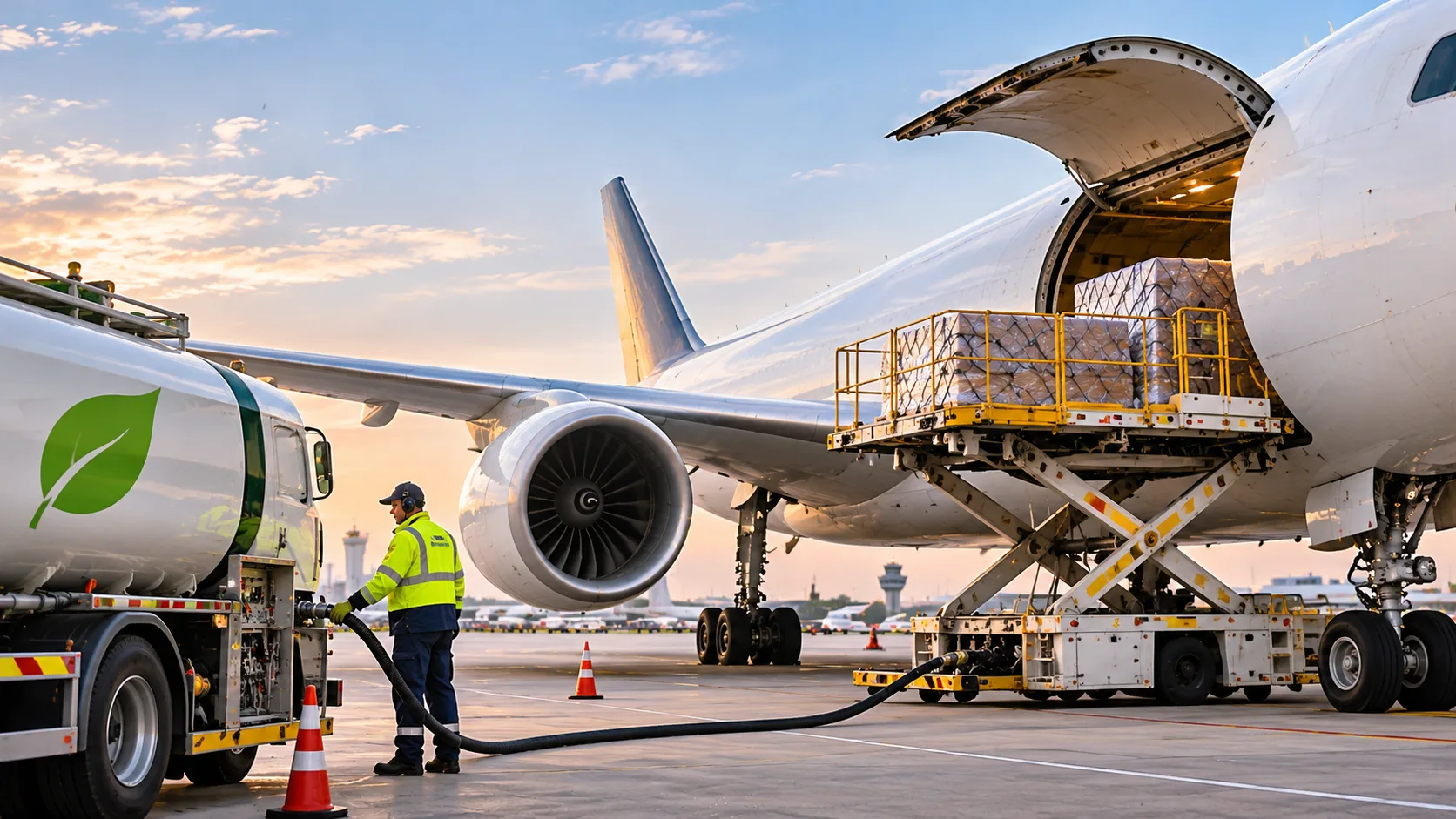
DSV and Google Cloud have entered into a pilot agreement covering sustainable aviation fuel (SAF) for international air freight, targeting reductions of 25,000 tonnes of lifecycle greenhouse gas emissions associated with Google Cloud’s cargo shipments.
The collaboration involves securing up to 9.7 million litres of SAF, equivalent to approximately 2.5 million US gallons, through DSV’s sustainable aviation fuel programme. The agreement covers a key air freight route used by Google Cloud and is intended to establish a basis for wider cooperation between the companies.
According to DSV, the fuel will be produced from waste and residue feedstocks and is expected to deliver an 85% reduction in lifecycle greenhouse gas emissions compared with conventional fossil jet fuel.
The companies have not disclosed the financial value of the agreement, its duration or the specific transport route covered by the pilot.
Book-and-claim model supports emissions reductions
The collaboration will operate through a book-and-claim system, allowing the environmental benefits associated with SAF to be allocated to Google Cloud independently of where the fuel is physically used.
Under this approach, SAF can be supplied to the aviation fuel system at one location while the resulting emissions reductions are attributed to a participating customer elsewhere in the network.
The arrangement is intended to address one of the practical limitations of sustainable aviation fuel deployment: the restricted availability of SAF at individual airports and along specific air freight routes.
Rather than requiring SAF to be physically supplied to every flight carrying Google Cloud shipments, the system provides a mechanism for allocating the environmental attributes of qualifying fuel use.
Frank Sobotka, CEO of DSV’s Air & Sea Division, said the collaboration is intended to provide customers with a practical mechanism for reducing the emissions attributed to their air freight activities.
The pilot does not mean that all Google Cloud shipments will physically travel on SAF-powered aircraft. Nor does the announcement establish that the targeted 25,000 tonnes of CO₂e reductions have already been achieved.
Certification and emissions accounting
DSV said the SAF covered by the agreement will be produced exclusively from waste and residue materials, excluding palm oil and palm-derived feedstocks.
The fuel will be subject to third-party certification under the International Sustainability and Carbon Certification (ISCC) system.
Environmental attributes associated with the fuel will be issued, transferred and retired through the independent Sustainable Aviation Fuel Certificate Registry, supported by DSV’s internal tracking procedures.
The process is designed to assign each emissions reduction to a specific customer and prevent the same environmental benefit from being claimed more than once.
Brian Stewart, Senior Director, Logistics at Google Cloud, said the agreement forms part of the company’s efforts to address emissions associated with its international logistics operations.
The certification and registry arrangements are intended to provide an auditable record of the environmental attributes allocated to Google Cloud, although the companies have not announced a completed accounting period or independently verified final reduction total under the pilot.
SAF demand and air freight decarbonisation
Sustainable aviation fuel remains an important option for reducing lifecycle emissions from aviation, but its availability continues to be constrained by production capacity, feedstock supply and cost.
Commercial arrangements using book-and-claim systems allow freight customers to participate in SAF programmes without requiring corresponding supplies at every airport serving their shipments.
For logistics providers, these agreements also offer a way to aggregate demand from cargo owners and support the commercial development of alternative aviation fuels.
The DSV–Google Cloud agreement represents another example of how major freight customers are seeking to address emissions associated with international supply chains while maintaining access to air transport.
The pilot’s longer-term significance will depend on the actual volume of SAF supplied, the verified emissions reductions allocated to Google Cloud and whether the companies subsequently expand the arrangement to additional shipments or transport routes.