ClassNK introduces new framework for onboard carbon capture
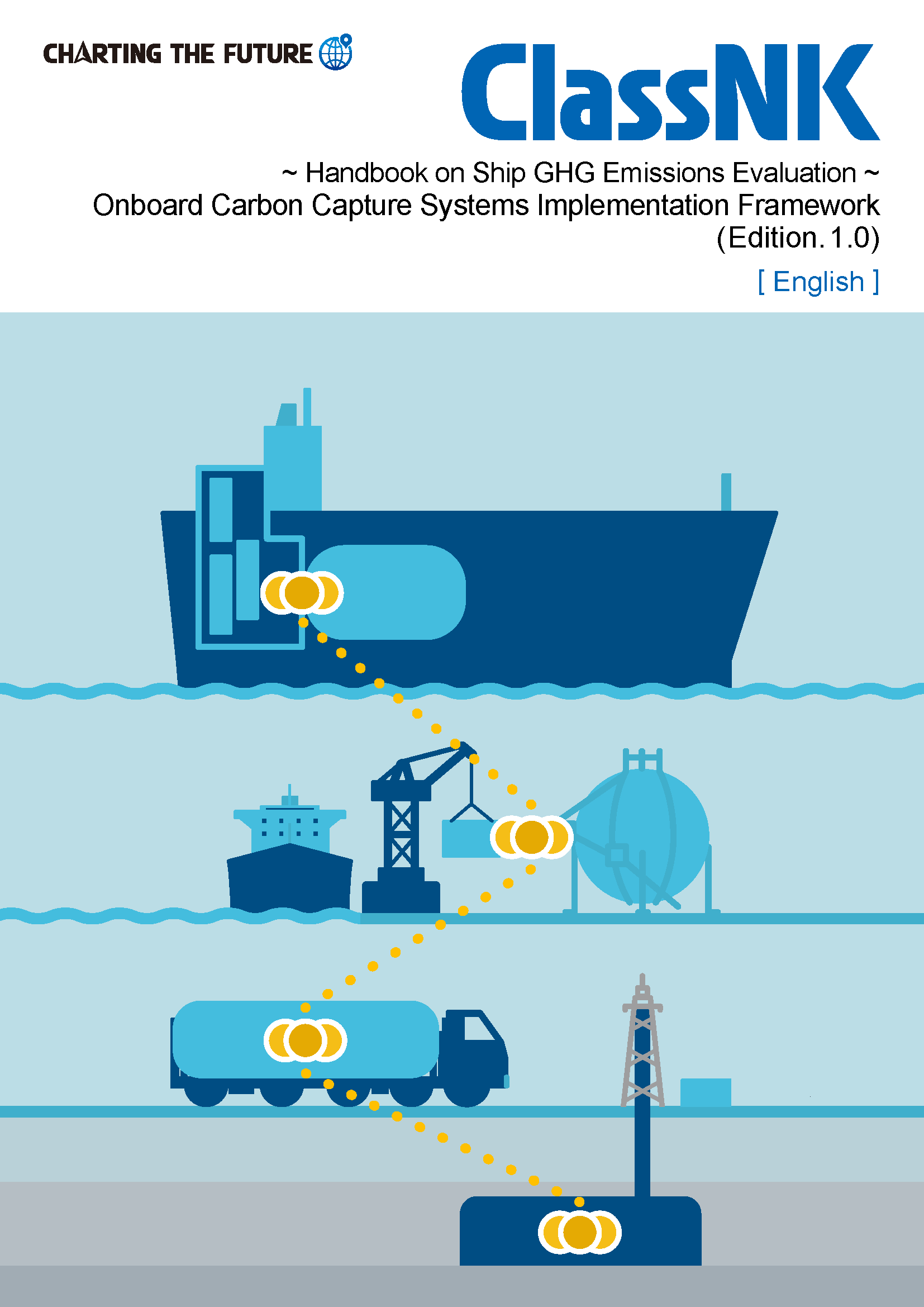
Japanese classification society ClassNK has released a new handbook providing practical guidance for the implementation of onboard carbon capture systems (OCCS), bringing together the technical, regulatory and infrastructure considerations associated with capturing and managing carbon dioxide from ships.
Entitled Onboard Carbon Capture Systems Implementation Framework, the publication forms part of ClassNK’s Handbook on Ship GHG Emissions Evaluation series. It is intended to support shipowners, operators and other maritime stakeholders evaluating the introduction of carbon capture technology aboard commercial vessels.
The handbook takes a project-wide approach, examining not only the equipment required to capture CO₂ from ship exhaust gases but also the arrangements necessary to transport, store, sequester or utilise the captured carbon dioxide after it has been unloaded.
It also addresses the mechanisms required to quantify and verify emissions reductions, reflecting the need to consider the entire carbon capture value chain when assessing the potential contribution of OCCS to maritime decarbonisation.
Addressing the complete carbon capture value chain
Onboard carbon capture has attracted increasing attention as the maritime industry examines technologies and operational measures to reduce greenhouse gas emissions.
The technology involves capturing CO₂ from a vessel’s exhaust gases, processing it and temporarily storing it on board before transferring it to appropriate facilities for further handling.
However, ClassNK emphasises that installing carbon capture equipment is only one element of an OCCS project. Effective implementation also requires arrangements for unloading captured CO₂ and ensuring that it can subsequently be transported, stored, permanently sequestered or utilised.
These requirements introduce considerations extending beyond the vessel itself, including the availability of supporting infrastructure and the coordination of stakeholders involved in handling captured carbon dioxide.
The new handbook brings these elements together to help maritime companies understand the practical requirements of an OCCS project and support discussions among shipowners, operators and other relevant parties.
It also examines regulatory considerations and the assessment of emissions reductions, recognising that the introduction of capture technology must be accompanied by appropriate methods for accounting for the CO₂ collected and managed.
Monitoring and verification form part of the framework
A central element of the publication is the need for reliable systems to quantify and verify emissions reductions associated with onboard carbon capture.
ClassNK identifies Monitoring, Reporting and Verification (MRV) as one of the mechanisms relevant to assessing the emissions performance of OCCS projects.
MRV provides a framework for continuously monitoring, reporting and verifying emissions or emissions reductions, supporting the assessment of outcomes associated with the technology.
The handbook also addresses Chain of Custody (CoC), which provides a framework for transferring, tracking and managing captured CO₂ and its associated attribute information throughout the supply chain.
These mechanisms are relevant because captured carbon dioxide may pass through several stages after leaving a vessel, involving different infrastructure operators and treatment arrangements.
By incorporating MRV and CoC considerations, the handbook supports a broader assessment of how captured CO₂ is managed and how associated emissions reductions can be quantified and verified.
The publication does not establish a new mandatory international regulatory framework or independently demonstrate emissions reductions from a specific installation. Instead, it provides guidance to help stakeholders evaluate the requirements involved in developing and implementing OCCS projects.
Building on existing technical guidance
The new handbook builds on ClassNK’s previous work in developing technical and safety requirements for onboard carbon capture and storage systems.
The classification society has already published its Guidelines for Onboard CO₂ Capture and Storage Systems, establishing requirements intended to support the safe application of such technologies aboard ships.
ClassNK has also accumulated knowledge through demonstration projects and experience gained from greenhouse gas certification services.
Drawing on these activities, the latest publication expands the discussion beyond the onboard equipment to encompass the wider infrastructure, regulatory and emissions-assessment considerations associated with implementing carbon capture projects.
The handbook is intended to facilitate discussions among the various stakeholders involved and provide a common reference for evaluating specific OCCS applications.
As the maritime industry continues to explore operational improvements, energy-efficiency technologies and alternative fuels to address greenhouse gas emissions, onboard carbon capture remains one of the technologies under consideration.
ClassNK stated that it will continue supporting maritime decarbonisation efforts through the provision of relevant technical information.
The Onboard Carbon Capture Systems Implementation Framework is available through the classification society’s Transition Support Services webpage and its MyPage technical publications platform.