Hupac inaugurates Barcelona intermodal terminal to strengthen European rail freight links
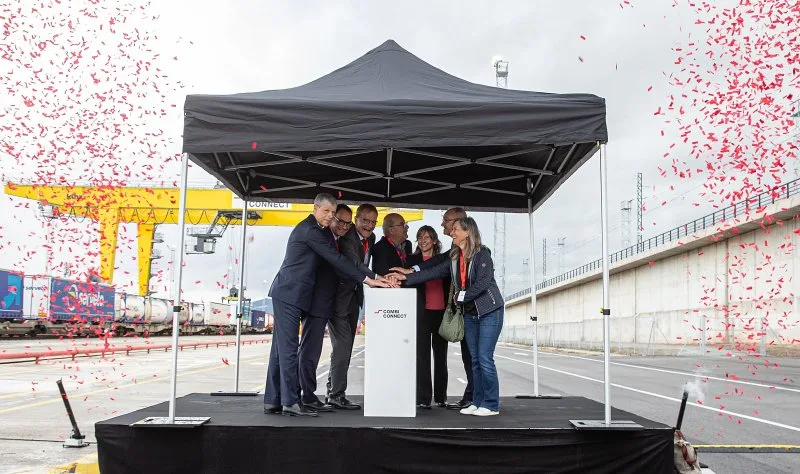
Swiss intermodal transport operator Hupac has officially inaugurated the Barcelona Combiconnect terminal in La Llagosta, Spain, strengthening rail freight infrastructure and intermodal connections between the Iberian Peninsula and the rest of Europe.
The terminal, which began operations in early 2026, is operated through a partnership between Hupac and TPNOVA. Located on land belonging to Spanish railway infrastructure manager ADIF, the facility covers approximately 105,400 square metres and is designed to accommodate container and semi-trailer traffic.
The inauguration marks a further step in the development of intermodal freight capacity in the Barcelona area, providing infrastructure for the transfer of cargo between road and rail.
Terminal designed for European intermodal traffic
Barcelona Combiconnect is equipped with four 700-metre transshipment tracks capable of accommodating both standard European and Iberian railway gauges.
The facility also features two gantry cranes and a mobile crane for handling intermodal loading units. Its depot has a stated storage capacity of approximately 720 TEU.
According to Hupac, the terminal is designed to handle up to ten pairs of trains per day, supporting the movement of containers and semi-trailers between Spain and European logistics markets.
The combination of rail infrastructure, cargo-handling equipment and storage facilities is intended to support more efficient transfers between transport modes.
New connections support freight flows across Europe
The terminal has already been incorporated into Hupac’s European intermodal network.
A Duisburg–Barcelona service was introduced in June 2026, linking the Spanish facility with one of Germany’s major inland logistics hubs. A Busto–Barcelona connection was also announced in October, extending the terminal’s links with the Italian intermodal network.
These services provide additional rail freight options for cargo moving between Spain and major industrial and distribution centres in Central Europe.
The development of Barcelona Combiconnect forms part of wider efforts to improve cross-border rail freight connectivity and provide alternatives to long-distance road transport.
With its infrastructure already operational, the terminal’s official inauguration highlights the expansion of intermodal handling capacity in the Barcelona region and its growing integration into European freight corridors.