Royal Caribbean, Carnival and MSC Cruises: Who will dominate the next era of cruising?
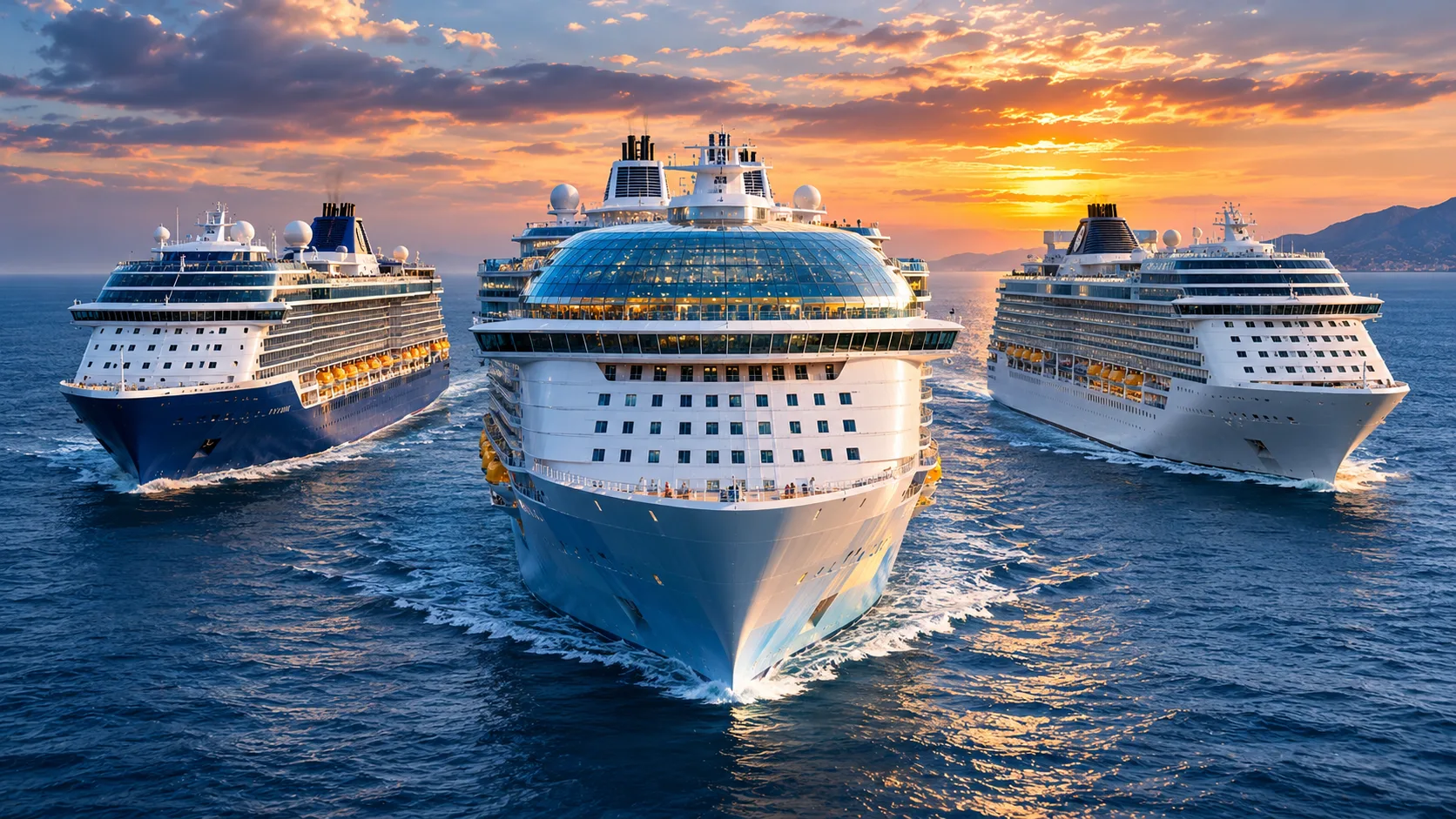
The global cruise industry is entering a new phase of competition as its largest operators invest in bigger ships, exclusive destinations and increasingly sophisticated vacation experiences. Royal Caribbean Group, Carnival Corporation and MSC Cruises are pursuing different strategies to capture demand, strengthen customer loyalty and generate returns from an expanding international cruise market.
The competition is no longer defined solely by the number of ships a company operates or the passengers it can accommodate. Cruise companies are increasingly seeking to control more of the vacation experience, from onboard spending and destination access to private islands, digital services and premium accommodation.
This shift raises an important strategic question. As the industry commits substantial capital to fleet development and destination infrastructure, which business model is best positioned to generate sustainable growth?
Recent financial results and investment announcements provide some clues. Royal Caribbean is combining strong earnings with an increasingly integrated vacation platform. Carnival is focusing on pricing, operational efficiency and destination investment while maintaining a measured approach to capacity growth. MSC Cruises, meanwhile, is using its expanding World Class fleet and international network to strengthen its position in major cruise markets.
The three approaches could reshape competition over the coming years.
Royal Caribbean: Building a vacation ecosystem beyond the ship
Royal Caribbean Group has increasingly positioned itself as more than a cruise operator. Its strategy combines large, experience-focused vessels with exclusive destinations, customer loyalty initiatives and a broader range of vacation products.
The financial performance of the group provides evidence of the strength of its current model.
According to its third-quarter 2026 financial results, Royal Caribbean generated revenue of approximately $5.6 billion, an increase of 9% year-on-year. Net income reached approximately $1.7 billion, while adjusted EBITDA stood at $2.5 billion.
Passenger capacity increased by 8% during the quarter, while the company carried approximately 2.7 million guests, representing growth of 9%. Occupancy reached 112%, reflecting the industry’s practice of measuring occupancy against standard lower-berth capacity, with additional guests contributing to figures above 100%.
These results demonstrate that Royal Caribbean has been able to increase capacity while maintaining strong demand. However, the more important strategic development may be how the company intends to generate additional value from each guest.
Its business model increasingly combines cruise fares with onboard purchases, premium experiences, destination spending and repeat bookings. This creates opportunities to increase revenue without relying exclusively on the introduction of additional vessels.
Fleet expansion remains central to this strategy. As pelavox. recently reported on the arrival of Legend of the Seas at Port Everglades, the development of the Icon Class continues to support Royal Caribbean’s ambitions in the Caribbean cruise market.
The company’s private destination strategy is equally important. Rather than depending entirely on traditional port calls, Royal Caribbean is developing destinations designed around its own products and passenger experience.
Such investments can offer greater control over itinerary planning, shore-based activities and the commercial environment surrounding a cruise. They can also create operational advantages by accommodating larger ships, managing passenger flows and providing more predictable destination experiences.
However, the approach requires substantial capital and creates additional exposure to destination development, infrastructure maintenance and environmental considerations.
Royal Caribbean has also moved beyond traditional cruising through its announced agreement to acquire a 50% interest in Sandals and Beaches Resorts. The transaction, announced in September 2026, would expand the group’s vacation platform into all-inclusive resorts, subject to completion.
This represents a potentially significant strategic shift. By extending its reach into land-based vacations, Royal Caribbean could create opportunities to deepen customer relationships and encourage travelers to purchase different types of holidays within the same corporate ecosystem.
The challenge will be ensuring that these investments generate returns that justify their cost while maintaining the profitability of the core cruise business.
Carnival: Turning scale and destination investment into stronger returns
Carnival Corporation is approaching the next phase of cruise industry competition from a different position.
As one of the industry’s largest operators, Carnival already manages a substantial portfolio of cruise brands serving different geographic markets and customer segments. Its strategy places considerable emphasis on improving returns from existing operations while investing selectively in new capacity and destination infrastructure.
The company’s third-quarter 2026 financial results underline the strength of its commercial performance.
Carnival reported record quarterly revenue of approximately $8.4 billion and net income attributable to the company of approximately $1.9 billion. Adjusted EBITDA reached approximately $3 billion, broadly in line with the previous year’s record level.
Net yields increased by 2.4% in constant currency, while customer deposits reached a third-quarter record of $7.6 billion.
Perhaps more important for the company’s medium-term outlook, Carnival reported that booked occupancy and pricing for 2027 were at record levels.
These indicators suggest that the company has been able to support revenue growth through pricing and demand management rather than relying primarily on rapid fleet expansion.
That distinction matters because new cruise ships require substantial capital commitments and can increase financial exposure if passenger demand weakens.
Carnival’s investment strategy also extends beyond vessels.
The development of Celebration Key in Grand Bahama represents a major component of its destination strategy, providing dedicated infrastructure for Carnival guests and supporting a greater concentration of cruise calls.
According to the company’s third-quarter 2026 earnings presentation, Celebration Key is expected to receive approximately 2.7 million guests in 2026, rising to around 3.5 million in 2027.
Carnival is also expanding its destination offering through RelaxAway, Half Moon Cay and Isla Tropicale in Roatán.
These investments suggest that the company views destination infrastructure as an increasingly important source of competitive differentiation.
The financial logic is straightforward. A cruise company that can offer distinctive destinations may strengthen its pricing position, improve guest satisfaction and develop additional spending opportunities.
However, the benefits are not automatic. Destination investments introduce fixed costs and require sufficient passenger volumes to generate attractive returns.
Carnival’s challenge is therefore to convert its scale and established customer base into stronger profitability without allowing capital expenditure to outpace the returns generated by its fleet and destination network.
MSC Cruises: Fleet expansion and the pursuit of global market share
MSC Cruises represents a different competitive model.
Unlike Royal Caribbean Group and Carnival Corporation, MSC Cruises is privately owned and does not publish the same level of standalone financial information as the two listed operators.
This limits direct comparisons of revenue, profitability and investment returns. Nevertheless, its fleet development and destination strategy provide clear evidence of its growth ambitions.
MSC Cruises has expanded its presence across Europe, the Caribbean and other international markets, using increasingly large vessels to develop its offering and reach a broader passenger base.
The introduction of MSC World America illustrates the company’s emphasis on large-scale vessels designed to appeal to multiple customer segments.
The ship combines family-oriented facilities, entertainment, dining and premium accommodation within a single platform, reflecting the industry’s broader movement towards ships that function as destinations in their own right.
MSC’s World Class programme also provides a foundation for further expansion.
The company has announced MSC World Atlantic, scheduled to begin operating from Port Canaveral in winter 2027.
The vessel’s planned Caribbean deployment demonstrates MSC Cruises’ ambition to strengthen its competitive position in one of the industry’s most important markets.
This expansion places MSC in more direct competition with established North American operators, particularly Royal Caribbean and Carnival.
However, competing in the Caribbean requires more than deploying modern vessels.
Operators must establish distribution networks, build brand recognition, secure attractive itineraries and provide destination experiences that encourage passengers to choose their products over competing alternatives.
MSC Cruises has addressed part of this challenge through Ocean Cay MSC Marine Reserve in the Bahamas, an exclusive destination incorporated into its Caribbean itineraries.
Its plans for additional exclusive island experiences, including Sandy Cay, indicate that destination development is becoming an increasingly important element of its strategy.
The approach has similarities with those of Royal Caribbean and Carnival, but MSC enters the competition with a different corporate structure and international customer base.
Its privately held ownership may allow greater flexibility in the timing of certain investment decisions, although the absence of comparable public financial disclosures makes it difficult to assess how effectively its expansion is translating into financial returns.
For MSC Cruises, the central question is whether continued fleet investment and destination development can generate sufficient demand, pricing strength and repeat business to support its growing capacity.
Why private destinations are becoming a strategic battleground
One of the clearest similarities between the three operators is their increasing investment in exclusive destinations.
Royal Caribbean, Carnival and MSC Cruises are all seeking greater control over parts of the shore-side experience, particularly in the Caribbean.
This development reflects an important change in cruise industry economics.
Traditionally, cruise operators relied heavily on established ports and independent shore excursion providers. Although those relationships remain important, exclusive destinations allow companies to design more of the passenger experience around their own brands.
The potential benefits extend beyond additional revenue.
Dedicated facilities can help accommodate larger vessels, reduce certain operational constraints and create recognizable destinations that influence booking decisions.
They may also support customer loyalty by offering experiences unavailable through competing cruise lines.
The trend is also reshaping the wider cruise port sector. As pelavox. reported on Global Ports Holding’s concession agreement for St. Vincent Cruise Port, investment in destination infrastructure is attracting specialized port operators seeking long-term positions in the cruise market.
This creates an important distinction between exclusive destinations developed by cruise companies and independent port infrastructure serving multiple operators.
For traditional cruise ports, the growth of private destinations could increase competition for itineraries and passenger spending. At the same time, infrastructure investment may create opportunities for established ports to accommodate larger ships and attract additional calls.
However, the strategy also creates a new form of competition among cruise companies.
As more operators develop exclusive destinations, the ability to offer a private island or dedicated resort environment may become less distinctive.
Companies could then face pressure to invest continuously in additional attractions, infrastructure and passenger facilities to maintain their competitive advantage.
This raises the possibility of an investment cycle in which destination development becomes increasingly expensive while differentiation becomes more difficult.
The commercial success of these projects will depend on passenger demand, operating efficiency, the quality of the experience and the ability to generate attractive returns on invested capital.
The capacity question: Can demand keep pace with larger fleets?
Fleet expansion remains one of the most important uncertainties facing the cruise industry.
Large newbuildings can provide significant economies of scale. Modern ships may accommodate more passengers, offer a wider range of revenue-generating facilities and incorporate technologies designed to improve operating efficiency.
However, their commercial success depends on maintaining high occupancy and sufficient revenue per passenger.
Royal Caribbean’s recent performance demonstrates that capacity growth can be absorbed when demand remains strong. Its third-quarter results showed passenger growth broadly aligned with the increase in available capacity.
Carnival, meanwhile, has emphasized a more measured approach to capacity growth while focusing on improving yields and operating performance.
MSC Cruises is pursuing expansion through major newbuilding programmes, creating opportunities to enter or strengthen its position in established markets.
These strategies may all prove successful under supportive demand conditions.
Recent port traffic figures also demonstrate the scale of passenger demand in major cruise markets. As pelavox. reported, Port Everglades recorded its third consecutive cruise passenger record, highlighting the importance of established Caribbean gateways in accommodating expanding cruise operations.
However, strong passenger traffic at individual ports does not necessarily establish that the wider industry can absorb unlimited fleet growth.
The risk emerges if new capacity enters service during a period of weaker consumer spending, increased competition or higher operating costs.
Cruise operators cannot easily reduce the financial commitments associated with new vessels once construction contracts are in place.
Large ships also require suitable port infrastructure, sufficient passenger demand and efficient itinerary planning.
Consequently, the industry must consider not only the number of passengers expected to travel but also the geographic distribution of demand and the ability of individual markets to accommodate additional capacity.
The Caribbean may remain a major growth opportunity, but increasing concentration of large vessels could intensify competition for passengers, destinations and attractive sailing schedules.
The same principle applies to the Mediterranean, where port capacity, seasonal demand and destination management are increasingly important considerations.
Norwegian Cruise Line Holdings: A fourth competitor with a different challenge
Although Royal Caribbean, Carnival and MSC Cruises provide the central comparison, Norwegian Cruise Line Holdings remains an important part of the competitive landscape.
The company operates Norwegian Cruise Line, Oceania Cruises and Regent Seven Seas Cruises, combining contemporary cruising with premium and luxury products.
Its third-quarter 2026 financial results illustrate both the opportunities and challenges facing operators pursuing growth.
Norwegian reported revenue of approximately $2.9 billion and adjusted EBITDA of $937 million, exceeding its guidance for the quarter.
However, net yield declined by 6.7% in constant currency compared with the previous year, demonstrating that the industry’s favorable demand environment does not translate into identical pricing performance across operators.
The company also reported that its booked position for the following twelve months had improved modestly but remained below its optimal range.
At the same time, Norwegian continues to invest in fleet development and exclusive destination infrastructure, including enhancements to Great Stirrup Cay.
Its position illustrates why the cruise industry’s next competitive phase may be determined as much by revenue management and operating efficiency as by fleet size.
Companies expanding capacity must ensure that their commercial strategies can support the additional accommodation they introduce.
Growth does not always translate into higher profitability
An important distinction in cruise industry analysis is the difference between rising passenger demand and improving financial performance.
Higher occupancy can support revenue growth, but it does not automatically guarantee stronger operating margins. Fuel expenses, vessel maintenance, labor costs, financing obligations and destination investments can all influence profitability.
This distinction is visible beyond the industry’s largest operators.
In its coverage of Bonheur’s third-quarter 2026 results, pelavox. examined developments affecting Fred. Olsen Cruise Lines, where improved occupancy and booking activity did not translate into higher quarterly EBITDA for the cruise business.
Although Fred. Olsen operates in a different market segment from the largest contemporary cruise brands, the example illustrates a broader financial principle.
Passenger demand is only one component of profitability. Operators must also manage the costs associated with delivering the cruise experience and financing their fleets.
The challenge becomes particularly important when companies are committing substantial capital to new ships and destination infrastructure.
If demand remains strong but operating costs rise faster than revenue, the financial benefits of expansion may be weaker than expected.
Conversely, operators that improve revenue management, operating efficiency and customer spending may generate stronger returns without expanding capacity at the same pace as competitors.
For investors and industry participants, this makes profitability, cash generation and return on invested capital more meaningful long-term indicators than passenger growth alone.
Which business model is best positioned for the next decade?
The strategies of Royal Caribbean, Carnival and MSC Cruises reflect three approaches to the same opportunity.
Royal Caribbean is developing a broader vacation ecosystem built around premium experiences, exclusive destinations, customer loyalty and an expanding portfolio of travel products.
Carnival is seeking to improve returns from its substantial existing scale through pricing, operational efficiency, selective fleet investment and destination development.
MSC Cruises is strengthening its international competitive position through fleet expansion, large newbuildings and the development of its Caribbean offering.
Each model has potential advantages.
Royal Caribbean’s approach may provide greater opportunities to increase spending per guest and strengthen long-term customer relationships. Carnival’s emphasis on measured capacity growth and commercial performance may support capital efficiency. MSC’s expansion could allow it to capture additional market share and develop stronger economies of scale.
But each also carries risks.
Royal Caribbean must ensure that investments beyond traditional cruising deliver attractive returns. Carnival must maintain pricing strength while managing a large and diverse fleet. MSC must demonstrate that its expanding capacity can be supported by sustainable demand and commercial performance.
The differences are particularly important because financial results are not equally transparent across the three companies.
Royal Caribbean and Carnival provide detailed public financial disclosures, while MSC Cruises’ private ownership limits the scope for direct profitability comparisons.
It would therefore be misleading to identify a definitive financial winner using incomplete or non-equivalent information.
Who will dominate the next era of cruising?
The next phase of cruise industry competition is likely to be defined by more than the delivery of larger ships.
Fleet size will remain important, but the ability to generate attractive revenue from each passenger, manage operating costs and build differentiated vacation experiences may become increasingly decisive.
Royal Caribbean currently demonstrates the financial strength of a model combining capacity growth with premium experiences and broader vacation offerings.
Carnival’s recent results highlight the value of strong demand management, disciplined investment and destination development across an established global portfolio.
MSC Cruises represents an ambitious expansion strategy that could strengthen competition in major markets, particularly as additional World Class vessels enter service.
The industry’s growth prospects remain substantial, but increasing investment also raises the importance of capital discipline.
Private destinations, new ships and premium experiences can strengthen competitive positions, yet they also require operators to maintain sufficient demand and pricing power over many years.
Ultimately, the company that dominates the next era of cruising may not be the one operating the largest ships or announcing the most ambitious expansion programme.
It may be the operator that converts those investments into the most sustainable combination of passenger demand, customer loyalty and long-term financial returns.