Are shipping companies building the next growth cycle or the next overcapacity crisis?
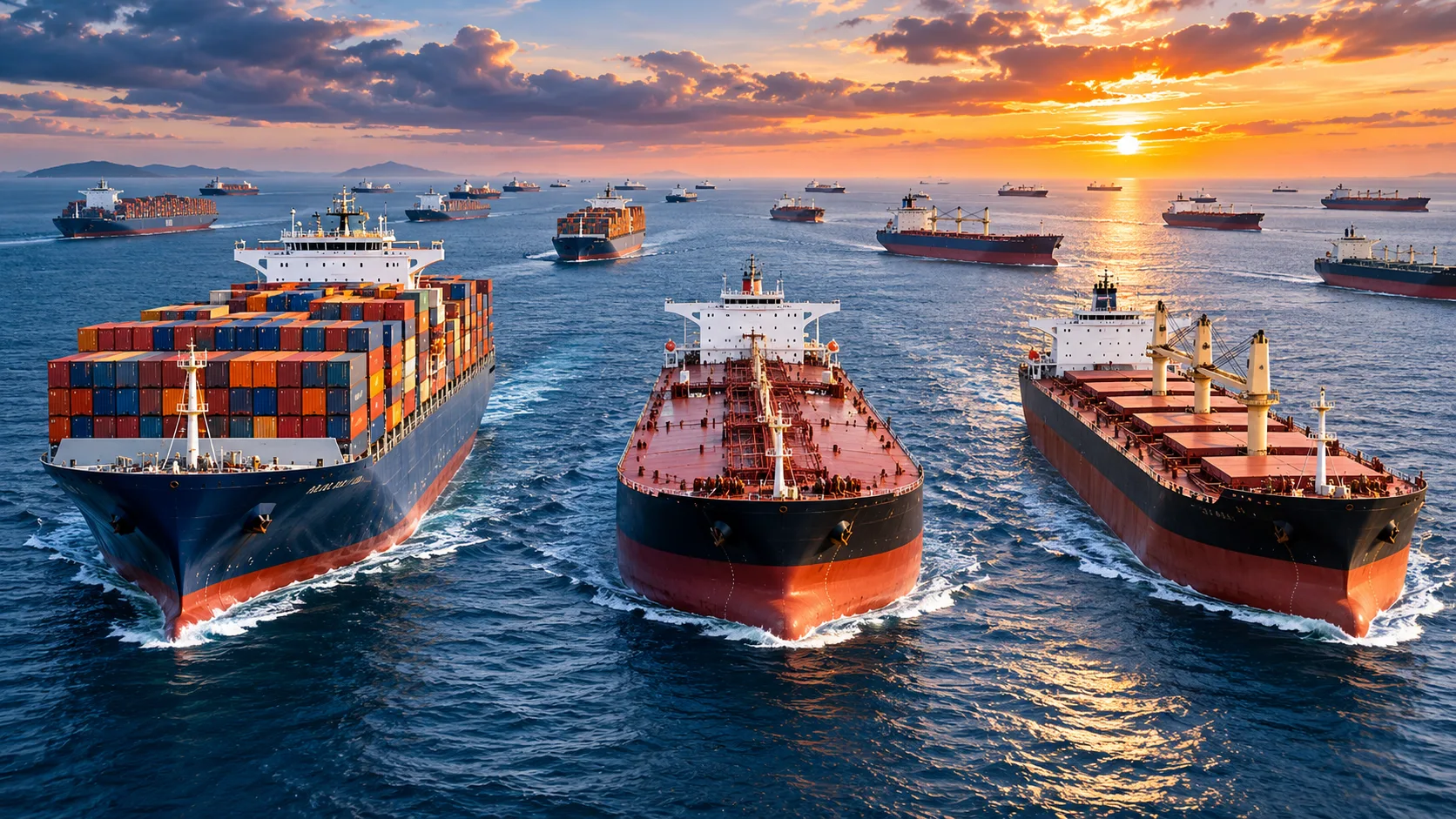
Across the global shipping industry, companies are committing capital to new vessels, expanding their fleets and preparing for a market that may look considerably different by the end of the decade. From container shipping giants to tanker owners and dry bulk operators, investment decisions made today are shaping the capacity that will become available between 2027 and 2030.
Yet the scale of these investments raises a fundamental question. Are shipowners responding to genuine long-term demand, replacing ageing vessels and preparing for stricter environmental requirements, or is the industry creating the conditions for another period of excess capacity?
The answer is unlikely to be the same across shipping sectors. Container carriers, tanker operators and dry bulk owners face different supply conditions, demand drivers and investment cycles. What appears to be a necessary fleet renewal programme in one market could create significant competitive pressure in another.
The distinction matters because newbuilding orders are placed years before vessels enter commercial service. By the time those ships are delivered, the market conditions that justified their construction may have changed substantially.
Container shipping: The largest capacity question
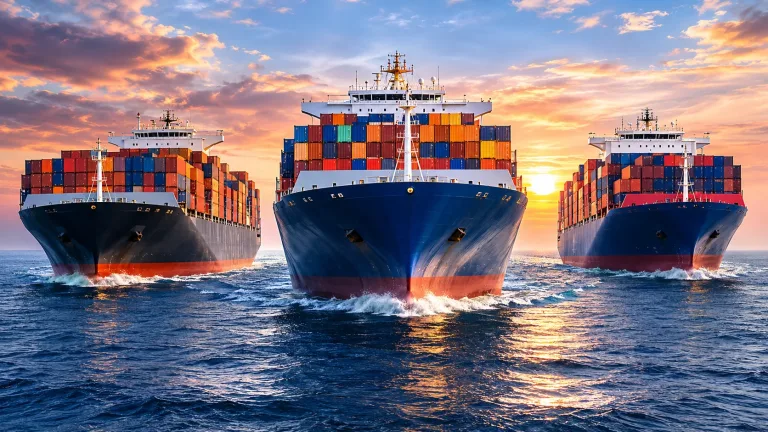
Container shipping provides one of the clearest examples of the tension between expansion and future market balance.
The industry’s largest carriers have accumulated substantial orderbooks, reflecting both competition for market share and the transition towards newer, more fuel-efficient vessels. However, these orders also represent capacity that will eventually need to be absorbed by global trade.
According to pelavox.’s analysis of the world’s ten largest container shipping companies, MSC held an orderbook of approximately 3.38 million TEU across 183 vessels in the fleet snapshot published in October 2026. Maersk followed with around 1.81 million TEU on order, while CMA CGM had approximately 1.65 million TEU.
COSCO Group’s orderbook was particularly significant relative to its existing fleet, representing approximately 51.3% of its operating capacity in the same snapshot. Hapag-Lloyd, by comparison, had an orderbook equivalent to around 20.3% of its fleet capacity.
These figures illustrate that the largest carriers are pursuing different fleet investment strategies. Some are expanding aggressively, while others appear more selective in their capacity commitments.
The difference becomes particularly important when considering the relationship between newbuilding deliveries and actual fleet growth. An orderbook does not automatically translate into an equivalent increase in operating capacity. Older ships may be recycled, chartered vessels may leave a carrier’s network, and deliveries may replace existing tonnage rather than expand the fleet.
Nevertheless, the combined scale of the largest carriers’ commitments creates an important question about future supply.
The United Nations Conference on Trade and Development highlighted this issue in its Review of Maritime Transport 2025. At the beginning of 2025, container ship capacity on order represented approximately 24.6% of the active fleet, a substantially higher proportion than in the dry bulk and oil tanker segments.
That figure is a historical benchmark rather than a measurement of the November 2026 orderbook. It nevertheless demonstrates that the container sector entered the current investment cycle with a significant pipeline of additional tonnage.
The strategic motivations behind expansion are also evolving. As pelavox. reported on MSC’s continued fleet development, the world’s largest container carrier has continued to emphasize growth and fleet modernization.
For MSC and its competitors, newer vessels can offer fuel efficiency, alternative-fuel capability and greater operating flexibility. They can also strengthen a carrier’s position in major trade corridors where vessel size and network coverage influence competitiveness.
But efficiency improvements do not eliminate the commercial consequences of excess capacity. If the industry introduces more effective vessel capacity than cargo demand requires, the resulting pressure on utilization and freight rates could outweigh part of the operating savings achieved through newer ships.
This is the central contradiction facing container shipping: investments designed to improve individual carriers’ competitiveness may collectively weaken the industry’s pricing environment.
Tankers: A different investment cycle
The tanker market presents a more complicated picture.
Unlike container shipping, where a relatively concentrated group of major carriers controls much of the operating capacity, tanker ownership is more fragmented. Investment decisions are influenced by oil demand, refinery locations, trade sanctions, fleet age, vessel availability and changing voyage distances.
Recent newbuilding commitments indicate that several tanker owners are preparing for future fleet requirements.
In November 2026, COSCO Shipping Energy announced contracts for ten new VLCC tankers, with deliveries scheduled for 2029 and 2030. The investment illustrates how major operators are committing capital to vessels that will enter service several years after the original decision.
Similarly, DHT Holdings expanded its VLCC orderbook amid stronger tanker earnings, linking fleet investment with expectations about future operating opportunities.
Such decisions can reflect confidence in the long-term demand for tanker transportation. They may also represent attempts to replace ageing vessels with ships that offer improved operating efficiency and greater commercial flexibility.
However, the risk profile differs from container shipping.
UNCTAD’s 2025 review placed the oil tanker orderbook at approximately 7.5% of the active fleet at the beginning of that year, considerably below the corresponding container shipping figure. The comparison suggests that tanker supply conditions were structurally different at that point in time.
That does not mean the tanker sector is protected from overcapacity. New orders placed after the reporting date, vessel recycling decisions and changes in oil trade patterns can alter the balance significantly.
A sustained period of strong tanker earnings can encourage owners to invest in additional ships. If those vessels enter service during a period of weaker oil demand or shorter trading distances, the market may face downward pressure on freight rates.
The reverse is also possible. If ageing vessels are removed from service, geopolitical restrictions continue to affect trade flows, or voyages remain unusually long, new deliveries may be absorbed without producing a major supply imbalance.
The critical issue is therefore not simply how many tankers are ordered, but how many additional vessels remain available after deliveries, recycling and changes in trading patterns are considered.
Dry bulk: Expansion meets uncertain commodity demand
Dry bulk shipping faces another set of challenges.
The sector depends heavily on the movement of iron ore, coal, grain, bauxite and other commodities. Demand for vessels is shaped not only by the quantity of cargo transported but also by the distances between producing and consuming regions.
Recent investment activity demonstrates that owners continue to see opportunities in modern dry bulk tonnage.
As pelavox. reported on A.E. Nomikos’ Kamsarmax newbuilding programme, the Greek shipping company has continued investing in vessels designed to serve the international dry bulk market.
Such orders can provide operational advantages, particularly when newer vessels replace older ships with higher fuel consumption and maintenance requirements.
However, the dry bulk market remains highly sensitive to changes in commodity trade.
A slowdown in industrial production, changes in Chinese raw material imports or shifts in coal consumption could affect demand for different vessel categories. Conversely, longer transport distances or stronger grain and mineral trade could support vessel employment even without dramatic growth in cargo volumes.
UNCTAD reported that the dry bulk orderbook represented approximately 10% of the active fleet at the beginning of 2025. Although below the container shipping figure, this still represented future capacity that would need to be accommodated by the market.
The relatively lower orderbook provides a different starting point, but it is not sufficient to establish that the sector faces limited risk.
Dry bulk shipping also contains several distinct vessel markets. Capesize vessels are heavily exposed to major iron ore and coal trades, while Kamsarmax, Panamax, Supramax and Handysize vessels serve different cargoes and routes.
As a result, an increase in newbuilding deliveries may have very different consequences across vessel classes.
A broad prediction of dry bulk overcapacity would therefore overlook important differences in fleet composition, commodity demand and trading patterns.
The more useful question is whether investment in each vessel category is consistent with expected cargo demand and the retirement of older ships.
LNG carriers: A reminder that not all orderbooks mean the same thing
The LNG shipping sector provides an additional perspective on the relationship between fleet expansion and market risk.
According to UNCTAD, the LNG carrier orderbook represented approximately 51.3% of the active fleet at the beginning of 2025, substantially exceeding the corresponding proportions for container ships, bulk carriers and oil tankers.
Such a large orderbook would ordinarily raise concerns about future vessel supply. However, LNG shipping has characteristics that make direct comparisons with other sectors difficult.
Many LNG carriers are ordered in connection with long-term gas supply arrangements, liquefaction projects and dedicated transportation requirements. Vessel construction may therefore be linked to infrastructure developments that take several years to complete.
This can provide greater visibility over future employment for some ships, although it does not eliminate market risk.
If LNG export projects are delayed, cargo flows change or vessels become available before sufficient transportation demand emerges, the market can still experience periods of excess capacity.
The LNG example demonstrates why orderbook size alone cannot establish whether a shipping sector is overinvesting.
The commercial commitments supporting the vessels, the timing of project developments and the structure of charter contracts are equally important.
The hidden variable: How shipping routes affect capacity
One of the most important uncertainties facing the global fleet is the relationship between vessel supply and trading distances.
The number of ships operating worldwide does not fully determine the amount of transportation capacity available to the market. A vessel travelling longer distances spends more time completing each voyage, reducing the number of journeys it can undertake over a given period.
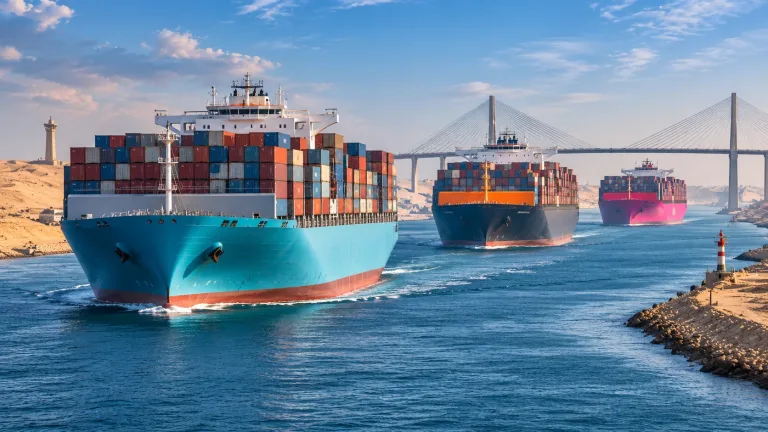
This became particularly important during disruptions affecting the Red Sea and Suez Canal.
Longer routes around the Cape of Good Hope increased voyage distances for many services, requiring additional vessels to maintain sailing schedules and reducing the effective supply of capacity.
UNCTAD’s maritime transport assessment reported that global maritime ton-miles increased by 5.9% in 2024, reflecting the impact of longer trading distances as well as changing trade patterns.
This distinction is central to understanding future overcapacity risk.
If vessels return more extensively to shorter routes, the same fleet could complete more voyages and transport more cargo over a given period. That would increase effective capacity even without the delivery of additional ships.
For container shipping, where major services operate according to fixed schedules, such a transition could release vessels that had previously been required to maintain longer rotations.
For tankers and bulk carriers, changes in trade geography could similarly affect vessel utilization and demand measured in ton-miles.
The implications are significant because newbuilding deliveries may coincide with changes in routing patterns.
A market that appears relatively balanced while ships are travelling longer distances could face greater supply pressure if voyages shorten at the same time as new vessels enter service.
However, shorter routes can also reduce fuel consumption, operating expenses and schedule disruption. The financial outcome would depend on whether these savings compensate for any resulting pressure on freight rates.
Fleet renewal or fleet expansion?
A central weakness in many discussions about shipping investment is the assumption that every newbuilding order represents additional supply.
In practice, shipowners order vessels for several reasons.
Some are replacing ageing ships that may become increasingly expensive to maintain or operate. Others are investing in fuel-efficient designs, alternative-fuel capability or vessels suited to particular cargo and infrastructure requirements.
There are also companies pursuing genuine fleet expansion to increase market share, enter new trades or secure long-term commercial contracts.
These motivations can overlap, but their implications for future capacity are different.
If a company orders ten new vessels and removes a similar amount of older tonnage from service, its effective fleet expansion may be limited. If it retains the older vessels and adds the new deliveries, the increase in available capacity could be substantial.
The distinction also matters at industry level.
Even when individual owners describe newbuilding programmes as fleet renewal, the overall market can experience supply growth if older ships remain commercially active for longer than anticipated.
Ship recycling is therefore an essential part of the overcapacity equation.
The timing of recycling depends on vessel age, maintenance costs, freight market conditions, regulatory requirements and the economics of operating older ships.
When freight rates are attractive, owners may have an incentive to keep ageing vessels in service. This can delay the removal of capacity at precisely the moment when new ships are entering the market.
Conversely, weaker earnings or higher compliance costs can accelerate recycling, partially offsetting the impact of new deliveries.
The balance between these forces will be critical to determining whether the current investment cycle produces sustainable fleet modernization or excessive capacity growth.
What could happen between 2027 and 2030?
The coming years present several possible outcomes for global shipping.
In a relatively supportive scenario, international trade continues expanding, new vessels replace ageing tonnage, and changes in cargo flows create sufficient transportation demand to absorb additional capacity.
Under those conditions, fleet investment could strengthen operational efficiency and help the industry meet future environmental and commercial requirements without causing a prolonged deterioration in freight rates.
A more challenging scenario would involve weaker cargo demand, slower commodity trade, delayed recycling and continued newbuilding deliveries.
If these developments coincide with shorter shipping routes, effective capacity could increase faster than transportation demand, placing pressure on vessel utilization and earnings.
The risk is particularly relevant to container shipping because of the scale of the orderbooks accumulated by major carriers.
Tankers and dry bulk vessels face different conditions, with future performance depending more directly on energy trade, commodity demand, fleet age and the distribution of vessel deliveries across individual categories.
The timing of deliveries is another crucial consideration. A vessel ordered in 2026 may not enter service until 2029 or 2030, making today’s investment decisions dependent on assumptions about market conditions several years into the future.
These uncertainties do not make fleet investment inherently excessive. They demonstrate why investment strategies should be evaluated against realistic demand scenarios rather than current freight earnings alone.
Is the industry preparing for growth or another downturn?
The current wave of shipbuilding investment reflects genuine structural changes in maritime transport.
Companies need more efficient vessels, greater operational flexibility and fleets capable of meeting evolving commercial and environmental requirements. In several sectors, replacing older tonnage is a necessary part of maintaining competitiveness.
Yet the industry’s history demonstrates that rational investment decisions by individual companies do not always produce a balanced market collectively.
When many owners respond to attractive earnings and growth expectations at the same time, the resulting deliveries can create supply pressure years later.
The evidence examined here suggests that container shipping deserves particular attention because of its substantial orderbook and sensitivity to changes in global network distances.
Tankers and dry bulk carriers face their own risks, but the available evidence does not support treating them as identical to container shipping or assuming that all sectors are approaching the same degree of overcapacity.
The decisive factors will be the pace of vessel deliveries, actual fleet recycling, cargo demand, trading distances and the ability of operators to deploy their capacity efficiently.
For investors, shipowners and charterers, the question is no longer simply whether shipping companies are building more vessels.
It is whether the market will still need all that capacity when the ships finally arrive.
The next shipping cycle may be defined less by the number of vessels ordered today than by the industry’s ability to distinguish necessary modernization from expansion that future demand cannot sustain.