PSA, DP World and APM Terminals: Who will shape the next generation of global ports?
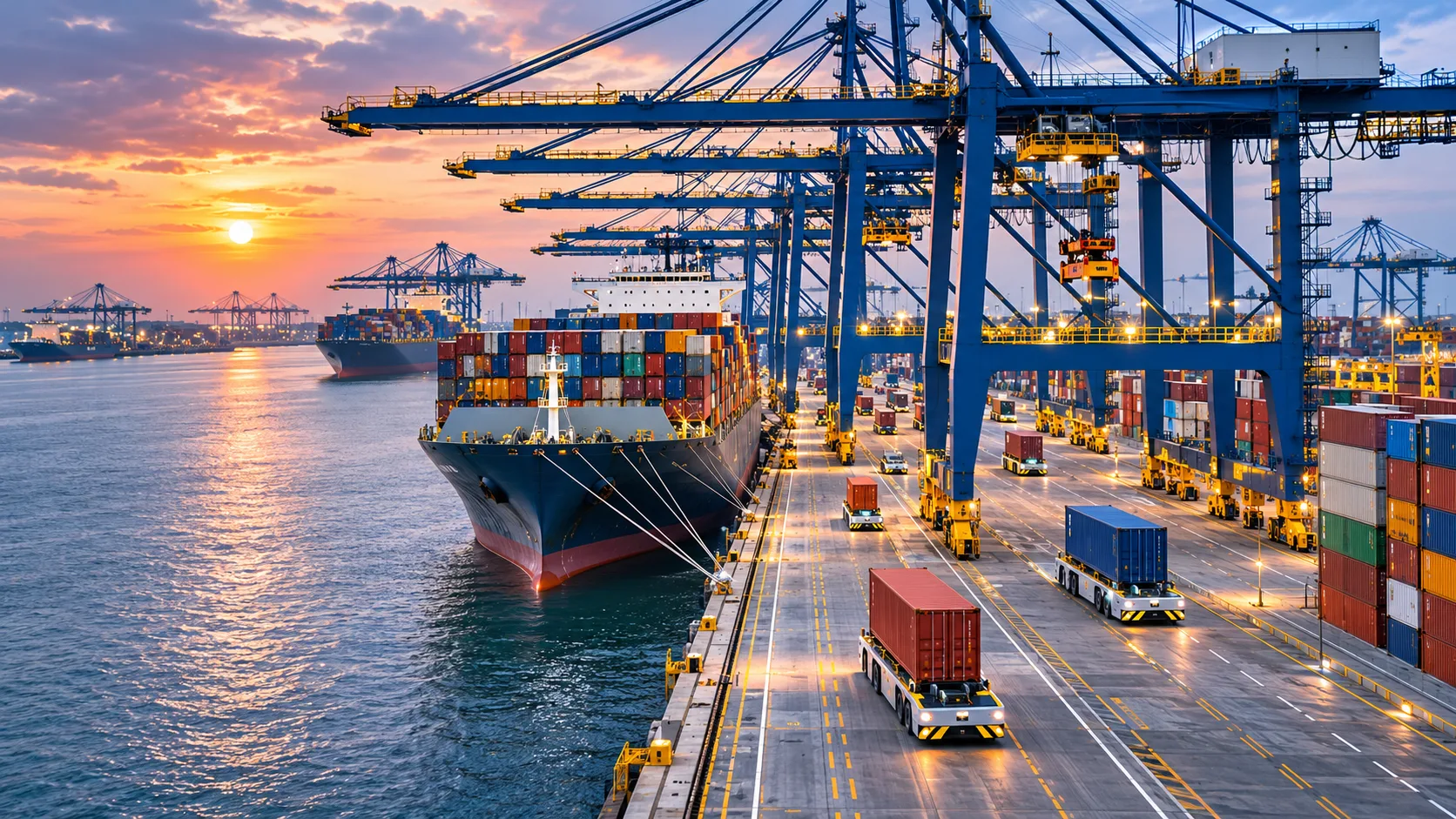
The global container terminal industry is entering a new investment cycle, with major operators committing capital to larger facilities, advanced automation and stronger connections between ports and inland logistics networks. The expansion is taking place against a changing maritime landscape, where shipping alliances, larger vessels and shifting trade patterns are redefining what makes a port competitive.
Three of the industry’s most influential operators are pursuing different approaches to this transformation. PSA International is developing a highly automated mega-port ecosystem in Singapore, DP World is expanding a geographically diverse network of trade gateways, and APM Terminals is combining terminal modernisation with strategic partnerships and closer alignment with container shipping networks.
Their latest investments highlight an important distinction. The next generation of port competition will not necessarily be decided by which operator builds the largest terminal or handles the greatest number of containers. Increasingly, it will depend on how effectively infrastructure, technology, shipping services and inland transport can operate as a connected system.
Developments announced in November 2026 provide a particularly useful starting point. PSA Singapore has begun construction of Tuas Port Phase Two, while DP World has expanded its investment programme in Mozambique and completed another stage of its terminal development in Ecuador. Meanwhile, APM Terminals is progressing with major projects in Europe, Asia and the Americas.
Together, these developments raise a wider strategic question: which terminal operating model is best positioned to capture the next phase of global trade growth?
PSA: Building a port ecosystem around automation and scale
PSA International’s development of Tuas Port represents one of the most ambitious long-term infrastructure projects in the container terminal industry.
On 20 November 2026, PSA Singapore announced the groundbreaking of Tuas Port Phase Two, the largest of the project’s four development phases by wharf length. The expansion will introduce 21 mega berths, 8.6 kilometres of wharf and a water depth of 23 metres, creating infrastructure designed to accommodate the world’s largest container vessels.
Operations are scheduled to begin progressively from 2028. Upon completion of the second phase, PSA plans to deploy close to 1,000 autonomous, AI-enabled Intelligent Guided Vehicles to support container movements across the terminal.
As pelavox. reported in its coverage of Tuas Port Phase Two, the development is intended to strengthen Singapore’s position as a global transhipment hub while integrating automated cargo handling with broader supply chain capabilities.
The significance of Tuas extends beyond its physical dimensions. PSA is attempting to build a port environment in which cargo handling, digital systems, terminal equipment and supply chain services are coordinated within a common operating framework.
This approach reflects the company’s broader Node to Network strategy, which aims to connect ports, logistics facilities and supply chain partners through an integrated network.
For a major transhipment hub such as Singapore, operational coordination is particularly important. Containers frequently move between different vessels rather than entering or leaving the country as final import or export cargo. The efficiency of those transfers can influence vessel turnaround times, connection reliability and the attractiveness of a hub to shipping lines.
Automation therefore offers potential advantages beyond reducing labour-intensive movements. When supported by reliable information systems, it can improve the predictability of container transfers, yard operations and equipment deployment.
PSA’s collaboration with Cisco, announced in October 2026, adds another dimension to this strategy. The companies are developing a proof of concept for an AI-powered observability and incident management platform at Tuas Port, intended to improve digital resilience and help identify operational disruptions.
The initiative illustrates an emerging challenge for highly automated terminals. As ports become increasingly dependent on connected systems, their ability to prevent, detect and manage technological failures becomes an important part of operational competitiveness.
PSA’s investment model is consequently based on a combination of physical scale, automation and digital integration.
However, the strategy also involves significant execution risks. Large automated terminals require complex systems integration, extensive testing and sustained investment before their full operational benefits can be realised. The announcement of additional berths and equipment does not, by itself, establish future utilisation levels or productivity improvements.
The commercial success of Tuas will ultimately depend on whether PSA can translate its infrastructure and technology investments into reliable services that remain attractive to shipping lines operating increasingly complex global networks.
DP World: Expanding gateways rather than relying on one mega-hub
DP World is pursuing a different geographical approach.
Rather than concentrating its latest developments around a single flagship terminal, the Dubai-based operator is investing across multiple markets where port capacity, vessel accessibility and inland transport infrastructure can influence regional trade growth.
In November 2026, the company announced an increase in its investment commitment at the Port of Maputo in Mozambique from US$165 million to US$200 million.
The expanded programme is intended to increase annual container handling capacity from 225,000 TEU to 650,000 TEU by the second quarter of 2027, exceeding the original target of 530,000 TEU.
The development, previously covered by pelavox., illustrates how DP World is positioning regional gateways to serve a wider geographical market.
Maputo’s commercial importance extends beyond Mozambique itself. Its connections with neighbouring markets, including South Africa, create opportunities for the port to serve inland industrial and agricultural supply chains.
DP World’s strategy includes the development of road and rail connections and the use of inland logistics infrastructure, including its hub at Komatipoort in South Africa.
The objective is not simply to increase the number of containers that can be handled at the quayside. It is to strengthen the commercial proposition of a port by improving its ability to move cargo between maritime services and inland destinations.
A similar approach is visible in Latin America.
On 17 November 2026, DP World announced the completion of the latest expansion of its Posorja terminal in Ecuador, extending its berth to 800 metres and increasing annual handling capacity to 1.4 million TEU.
The project forms part of an investment programme exceeding US$200 million and is supported by additional cargo-handling equipment, including an electric quay crane and hybrid rubber-tyred gantry cranes.
As pelavox. reported, the expansion is designed to improve the terminal’s ability to accommodate larger container vessels while supporting Ecuador’s international trade.
Posorja also demonstrates the importance of aligning port infrastructure with the characteristics of regional cargo demand. Ecuador’s agricultural and seafood exports require reliable refrigerated container facilities, making reefer connectivity and supporting electrical infrastructure commercially significant.
The distinction between Maputo and Posorja is instructive. Both involve capacity expansion, but their value depends on different regional trade patterns, inland networks and customer requirements.
DP World’s broader investment programme follows the same principle. In Peru, the company’s Callao terminal handled a record 200,000 TEU in October 2026, following previous infrastructure investment that increased annual capacity to 2.7 million TEU. The company is also pursuing a further proposed expansion, subject to the necessary concession approval.
In Brazil, DP World has been progressing with a terminal expansion at Santos, supported by additional electric cranes and infrastructure investment.
These developments suggest a strategy focused on building stronger positions across several trade gateways rather than depending exclusively on a small number of global transhipment centres.
That approach offers geographical diversification, but it also introduces complexity. Each terminal operates within a different regulatory, economic and infrastructure environment, while the pace of demand growth can vary substantially between markets.
DP World’s competitive advantage will therefore depend on its ability to combine local market knowledge with the financial and operational capabilities of a global terminal operator.
APM Terminals: Connecting terminal investment with shipping networks
APM Terminals represents a third approach, combining terminal infrastructure development with strategic partnerships and the wider commercial environment of container shipping.
As part of A.P. Moller–Maersk, APM Terminals occupies a distinctive position within the port industry. It operates terminals serving multiple shipping lines, while also belonging to a group with substantial interests in ocean transport and integrated logistics.
This ownership structure creates opportunities for coordination between shipping networks, terminal infrastructure and inland transport. At the same time, the operator must maintain commercially attractive services for a broader customer base.
A particularly important development took place at Maasvlakte II in Rotterdam.
In November 2026, Hapag-Lloyd completed its acquisition of a 25% stake in APM Terminals Maasvlakte II, following regulatory approval. APM Terminals retained operational control of the facility, while the investment strengthened Hapag-Lloyd’s long-term position at a major European terminal.
As pelavox. reported, the transaction is strategically relevant to the Gemini Cooperation between Maersk and Hapag-Lloyd.
Maasvlakte II is undergoing a substantial expansion that is expected to increase annual handling capacity to approximately 5.4 million TEU once completed. The development includes additional deep-sea berth infrastructure, container yard capacity, railway tracks and automated terminal equipment.
The project illustrates a model in which terminal investment is closely connected to the long-term requirements of major shipping networks.
For shipping companies, reliable access to terminal capacity can influence network planning, vessel schedules and the ability to maintain connections between mainline and feeder services.
For terminal operators, closer commercial relationships with shipping lines may provide greater visibility into future cargo flows and infrastructure requirements.
However, the presence of a carrier shareholder does not establish exclusive terminal access or guarantee particular cargo volumes. Terminal competitiveness continues to depend on operational performance, pricing and the ability to serve different customers effectively.
APM Terminals is also expanding beyond established European gateways.
In August 2026, the company broke ground on its Laldia terminal project in Chattogram, Bangladesh. The announced development involves an investment of US$550 million and is intended to add 800,000 TEU of annual handling capacity.
The project demonstrates APM Terminals’ interest in developing infrastructure in markets where additional port capacity could support industrial growth and international trade.
In Mexico, the company inaugurated the second phase of its Lázaro Cárdenas terminal in March 2026 and announced further investment for the next stage of expansion.
The existing facility reached a capacity of up to 2 million TEU following Phase Two, while the additional development is intended to strengthen the terminal’s position within regional and international supply chains.
These investments show that APM Terminals’ strategy is not limited to supporting the Gemini network or Maersk’s maritime activities. It also involves developing commercially competitive terminals across different markets.
Nevertheless, the relationship between terminal infrastructure and shipping network design remains an important strategic characteristic of the company.
The competitive advantage is moving beyond the quay
The three operators are pursuing different strategies, but their investments reveal a common direction.
Port competitiveness is becoming increasingly dependent on what happens beyond the physical transfer of containers between vessels and terminals.
Historically, major infrastructure investments were often assessed primarily through berth length, water depth, crane capacity and annual container handling capability.
Those factors remain essential. Larger vessels require adequate navigational access, sufficient quay infrastructure and equipment capable of handling substantial container exchanges.
However, infrastructure alone cannot guarantee that a terminal will operate efficiently or attract additional cargo.
A port must also provide dependable connections to other maritime services and inland transport networks. Delays in yard operations, gate movements, railway connections or container availability can undermine the benefits of additional quay capacity.
This is particularly important as shipping companies place greater emphasis on network reliability.
A terminal capable of handling a very large vessel may still become a source of disruption if its landside infrastructure cannot absorb concentrated cargo movements.
The investments being made by PSA, DP World and APM Terminals reflect different responses to this problem.
PSA is concentrating on automated coordination within a large, highly integrated port ecosystem. DP World is strengthening the relationship between regional gateways and inland logistics markets. APM Terminals is developing infrastructure that supports both wider customer demand and the requirements of major container shipping networks.
The approaches are not mutually exclusive. All three companies operate international terminal networks and invest in technology, capacity and logistics connectivity.
Their differences lie primarily in the emphasis placed on particular capabilities and the commercial contexts in which those investments are being made.
Automation: Competitive advantage or expensive necessity?
Automation has become one of the most prominent features of modern container terminal development.
Automated guided vehicles, remotely operated cranes, digital yard planning systems and AI-supported operational tools can potentially improve consistency, safety and the coordination of terminal activities.
PSA’s Tuas project demonstrates the scale at which these technologies can be incorporated into new infrastructure.
APM Terminals’ expansion at Maasvlakte II also reflects the growing importance of automation at major European gateways.
DP World’s investments, meanwhile, illustrate how technology upgrades can be introduced alongside capacity expansion at existing terminals, including the use of electric and hybrid cargo-handling equipment.
However, automation should not be treated as a universal solution.
Its economic value depends on terminal size, cargo characteristics, labour arrangements, operating patterns and the costs of implementation.
A large transhipment hub handling substantial and relatively concentrated container flows may have different automation requirements from a smaller regional gateway serving a diverse mix of import and export customers.
The most advanced technology is therefore not necessarily the most commercially effective option for every port.
The challenge for terminal operators is to determine where automation can deliver measurable improvements in productivity, reliability or cost performance without introducing disproportionate operational complexity.
Digital resilience is another critical consideration.
As terminal systems become more interconnected, disruptions affecting software, communications infrastructure or operational technology can have wider consequences for cargo handling.
PSA’s collaboration with Cisco reflects the growing importance of anticipating and managing these risks.
Future competition may therefore depend not only on the degree of automation achieved, but also on how reliably automated systems perform under demanding operating conditions.
The shipping alliance factor
The relationship between terminal operators and container shipping alliances is another important dimension of the competitive landscape.
Major shipping networks depend on ports that can support scheduled vessel calls, large container exchanges and efficient transfers between services.
Changes in alliance structures and service rotations can influence the distribution of cargo between competing terminals.
The Gemini Cooperation provides a clear example of how network design and terminal infrastructure can become strategically connected.
Maasvlakte II’s role within the cooperation, together with Hapag-Lloyd’s investment in the facility, demonstrates the importance of securing long-term infrastructure access at major maritime hubs.
However, alliance relationships are not the only factor determining terminal competitiveness.
Shipping lines continue to assess port costs, operational performance, cargo demand, geographic location and the availability of alternative gateways.
A terminal that becomes closely associated with a particular network may benefit from stronger commercial alignment, but it must also manage the risks associated with changes in shipping patterns.
For PSA, Singapore’s role as a major international transhipment centre makes connectivity across multiple carrier networks particularly important.
For DP World, the commercial challenge varies across its portfolio, with some terminals functioning as regional gateways and others serving major international shipping corridors.
For APM Terminals, the balance between carrier-related strategic relationships and broader customer access is especially relevant.
The ability to attract and retain shipping services will remain fundamental, regardless of the ownership structure.
Does greater capacity guarantee stronger returns?
The scale of announced investment across the terminal industry raises another question: whether new capacity will generate sufficient commercial returns.
The expansion of a container terminal can improve its ability to accommodate larger vessels, reduce congestion and support future cargo growth.
But additional infrastructure also creates long-term financial commitments.
Terminal developments often require substantial capital expenditure before new facilities generate revenue. Their performance can be influenced by trade growth, shipping network changes, concession arrangements and the availability of supporting infrastructure.
The projects discussed here are at different stages of development.
DP World’s Posorja berth expansion has been completed, although some additional equipment is scheduled to enter service later. Its Maputo capacity increase remains a future target.
PSA’s Tuas Port Phase Two has entered construction, with operations planned to begin progressively from 2028.
APM Terminals’ projects include facilities already operating, expansions under construction and greenfield developments that have not yet begun commercial operations.
These distinctions matter when assessing the scale and potential impact of investment.
Announced future capacity should not be confused with actual throughput, while planned investments should not be treated as completed expenditure.
It would also be misleading to rank the three companies solely by the individual project figures cited here. Their investments cover different markets, development stages and commercial objectives.
A more meaningful assessment would consider whether each operator can secure sufficient cargo demand, maintain operational reliability and generate returns that justify the capital committed.
Three strategies for the future of global ports
PSA, DP World and APM Terminals demonstrate that the next generation of port competition is developing along several different paths.
PSA’s strategy places considerable emphasis on the integration of large-scale infrastructure, automation and digital systems. Its development of Tuas Port offers the potential to strengthen Singapore’s position as a major global transhipment centre, provided the new facilities achieve the expected operational performance.
DP World is using investment to reinforce a geographically diverse network of trade gateways. Its projects in Mozambique, Ecuador and other markets demonstrate the importance of connecting port capacity with regional economic activity and inland transport infrastructure.
APM Terminals combines terminal modernisation with strategic commercial relationships and investments across established and emerging markets. Its position within the Maersk group and its partnership with Hapag-Lloyd at Maasvlakte II highlight the growing relationship between terminal infrastructure and container shipping network design.
None of these approaches guarantees market leadership.
The commercial environment will continue to be influenced by global trade patterns, shipping alliances, infrastructure constraints, technology costs and the ability of ports to adapt to changing customer requirements.
The more important conclusion is that container terminals are evolving from individual cargo-handling facilities into increasingly connected elements of global supply chains.
For shipping companies, cargo owners and logistics providers, the value of a port will depend on the reliability of the entire transport chain rather than the performance of the quay alone.
The operators that shape the next generation of global ports may not simply be those that build the largest terminals. They will be those that combine capacity, technology, connectivity and operational reliability into the most commercially effective networks.