Port of Lamu handles record container discharge from MV Hamouna
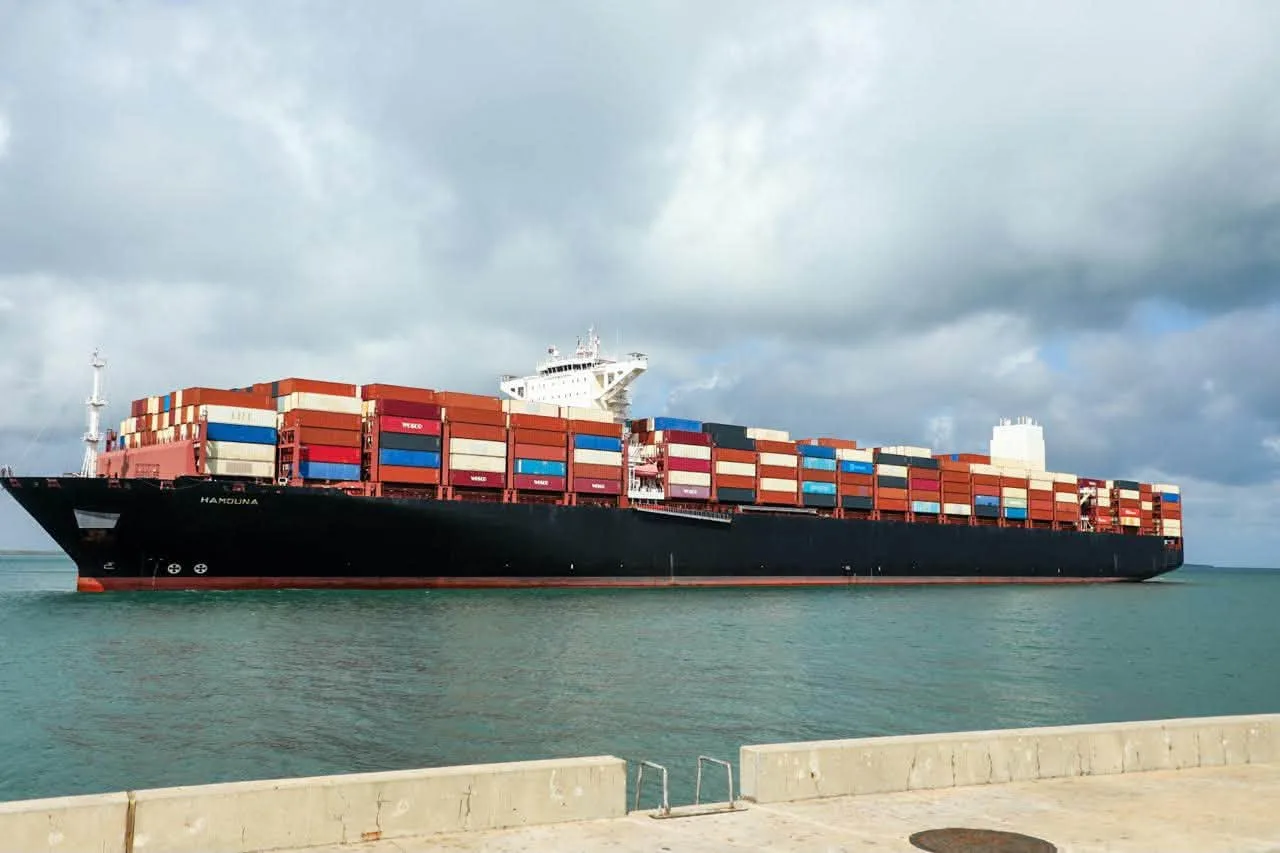
Kenya’s Port of Lamu has recorded a new operational milestone following the arrival of the container vessel MV Hamouna, with approximately 5,200 TEUs scheduled for discharge and subsequent transshipment to regional destinations.
The 366-metre-long vessel arrived carrying approximately 14,500 TEUs, demonstrating the port’s ability to accommodate large container ships and handle substantial transshipment volumes.
According to the Kenya Ports Authority (KPA), the call represents the first time a vessel has been scheduled to discharge more than 5,000 TEUs during a single port visit at Lamu.
The development highlights the port’s growing role within Kenya’s maritime infrastructure and its position along the Lamu Port-South Sudan-Ethiopia Transport (LAPSSET) Corridor.
Port of Lamu records major container handling milestone
The arrival of MV Hamouna represents a significant development for container operations at the Port of Lamu.
The vessel navigated approximately 14 nautical miles through the Eastern Channel before successfully berthing at the port.
Of the approximately 14,500 TEUs carried on board, around 5,200 TEUs were scheduled to be discharged at Lamu.
The containers are intended for onward transportation to different destinations using smaller feeder vessels, supporting the port’s role as a regional transshipment hub.
Kenya Ports Authority Managing Director Captain William Ruto described the vessel’s arrival as an important milestone for the port’s container handling operations.
“This is the first vessel to discharge over 5,000 TEUs at once. Even our Mombasa Port has not surpassed this figure, making Lamu Port the next frontier in the maritime industry,” said Ruto.
The statement identifies the volume scheduled for discharge as an unprecedented single-vessel operation for the port authority.
However, the announcement does not provide final figures confirming the number of containers actually discharged following completion of cargo operations.
The distinction is important because the reported 5,200 TEUs represent the planned discharge volume rather than a separately verified final throughput figure.
Deep-water infrastructure supports large vessels
The Port of Lamu’s deep-water infrastructure is a central factor in its ability to accommodate large container vessels.
According to KPA, the port’s berths have a depth of approximately 17.5 metres, providing the water depth required for vessels operating with substantial draughts.
The successful arrival of MV Hamouna follows several other calls by large container ships.
Earlier in 2026, the 369-metre MV Baltimore Express, operated by Hapag-Lloyd, also called at the port.
In August 2025, another Hapag-Lloyd vessel, MV Nagoya Express, measuring 335 metres, established what was then a vessel-size record at Lamu.
These calls demonstrate the port’s ability to receive vessels of different sizes within the large-container-ship segment.
While MV Hamouna is slightly shorter than MV Baltimore Express, its arrival is notable for the volume of containers scheduled for discharge.
The latest operation therefore highlights cargo handling activity rather than establishing a new record for vessel length.
Lamu strengthens its regional transshipment role
The planned discharge of approximately 5,200 TEUs is particularly relevant to Lamu’s development as a transshipment location.
Under the announced operation, containers discharged from MV Hamouna will be transferred to smaller feeder vessels for distribution to other destinations.
This arrangement allows larger container ships to discharge cargo at a regional hub, while smaller vessels provide onward maritime connections.
For Lamu, the operation supports the port’s positioning within regional shipping networks and its broader role along the LAPSSET Corridor.
The corridor is central to the port’s intended function as a gateway for regional trade and transport connections.
However, the Kenya Ports Authority announcement does not identify the final destinations of the containers or provide details of the feeder services involved.
It also does not disclose the total number of feeder vessels expected to participate in the transshipment operation.
As a result, the available information confirms the scale of the planned cargo transfer but does not establish its wider impact on regional shipping volumes.
Further maritime and logistics development
During the vessel’s arrival, Captain Ruto also referred to the planned Dangote East Africa Refinery project.
According to the port authority, the refinery development is expected to create additional opportunities for port operations and associated maritime and logistics services.
The announcement links the project to the broader development of economic activity around Lamu.
However, no specific cargo forecasts, investment figures or operational timetable for the refinery were provided in the statement.
The refinery reference therefore represents a potential future source of maritime and logistics activity rather than an immediate change in the port’s container operations.
The latest container vessel call remains the principal operational development reported by KPA.
As part of the traditional first-call ceremony, Captain Ruto presented a certificate and commemorative plaque to the vessel’s master, Captain M. Firoozi.
The arrival of MV Hamouna, together with previous calls by large container ships, reflects the continued use of Lamu’s deep-water facilities for major vessel operations.
With approximately 5,200 TEUs scheduled for discharge, the latest call marks an important step in the port’s development as a regional container transshipment hub.