Lloyd’s Register, Shell and GTT launch hybrid-electric LNG carrier study
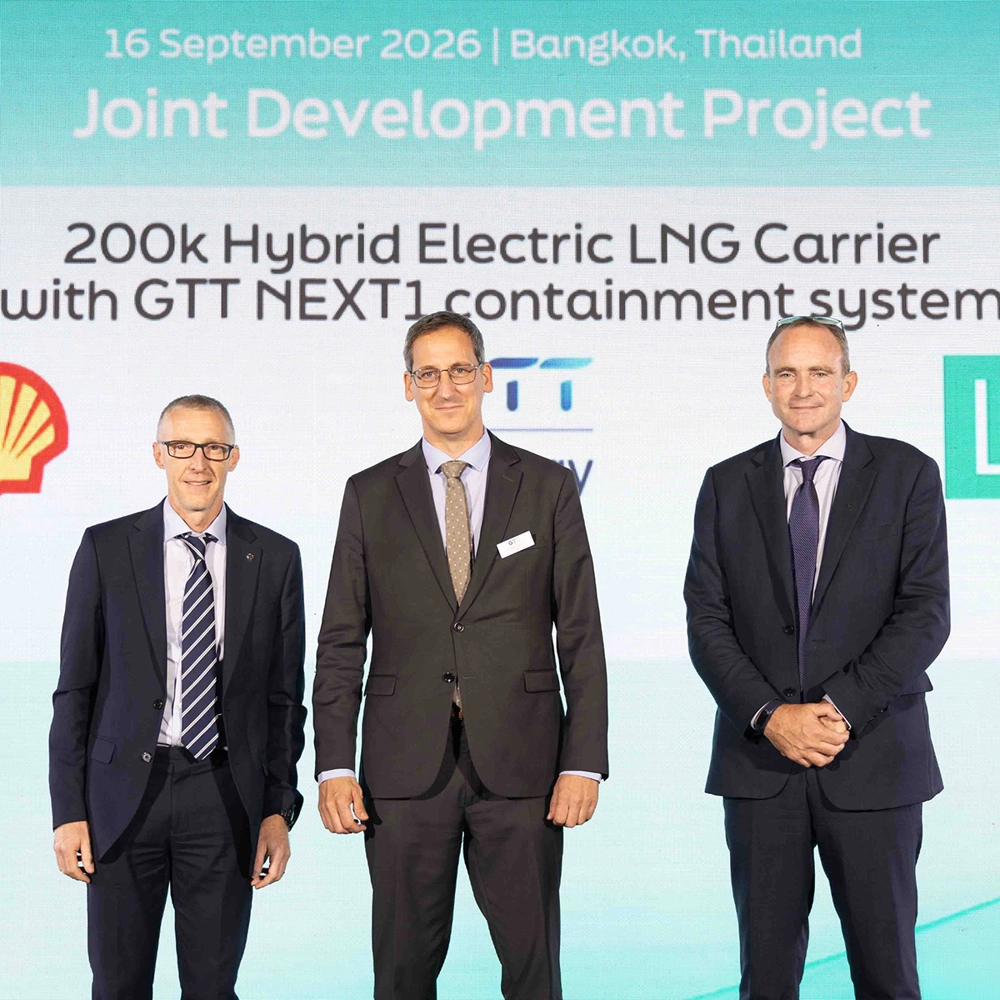
Lloyd’s Register (LR), Shell and GTT have launched a joint development project to examine a new LNG carrier concept combining hybrid-electric propulsion with advanced cargo containment technology.
The project will focus on a vessel with a proposed cargo capacity of 200,000 cubic metres, integrating GTT’s NEXT1 cargo containment system with a hybrid-electric propulsion arrangement.
The three companies will assess the technical feasibility, safety requirements and potential operating economics of the design, which remains at the conceptual development stage.
Hybrid propulsion and battery integration under review
The joint development project will examine the architecture of the proposed hybrid-electric propulsion system, including its redundancy arrangements and the integration of onboard batteries.
The partners will also carry out safety verification work to evaluate how the propulsion configuration could meet the operational requirements of LNG transportation.
Alongside the technical assessment, the project will examine the vessel’s potential economics using a total cost of ownership model.
This evaluation is intended to assess whether the proposed combination of propulsion and containment technologies could offer operational and economic advantages over alternative vessel configurations.
GTT’s NEXT1 cargo containment technology will be assessed as part of the overall vessel design, with particular attention to its integration into the larger-capacity LNG carrier concept.
Project to examine future LNG carrier requirements
The collaboration will also seek to establish technical requirements and guidance for the application of hybrid-electric propulsion to LNG carriers.
According to the project partners, the work is intended to improve understanding of the technology and its potential application in future LNG vessel designs.
The proposed 200,000 m³ capacity forms part of the study’s examination of larger LNG carrier configurations and their possible operational characteristics.
However, the companies have not announced a vessel order, shipbuilding agreement or timetable for commercial deployment.
The project remains focused on concept development and technical evaluation, with any subsequent vessel construction dependent on further decisions.