Maersk announces new fuel and congestion surcharges
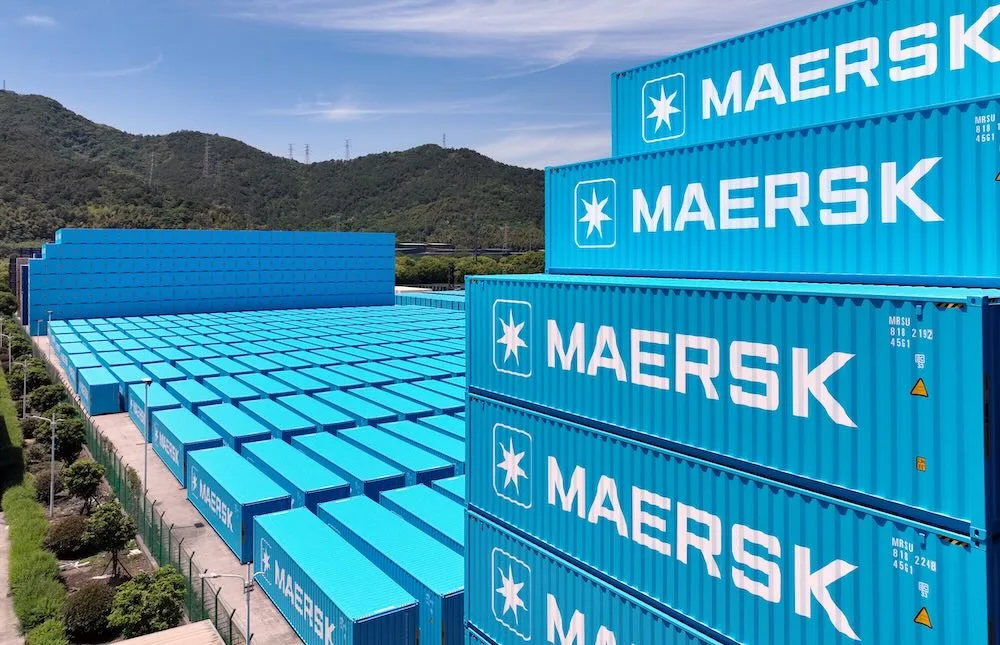
Maersk has announced changes to several freight and inland transport surcharges, including a temporary fuel surcharge adjustment in Greece and higher charges on selected routes connecting Asia, the Indian Subcontinent and Africa.
The announcements, issued between 8 and 9 October 2026, cover three separate measures scheduled to take effect from 12 October and during November.
The Maersk surcharge updates include a 15% truck fuel surcharge in Greece, revised congestion fees for shipments to Durban and an increase in the Emergency Contingency Surcharge (ECS) for cargo moving from the Indian Subcontinent to South Africa and the Indian Ocean islands.
The measures affect different transport services and trade corridors, with separate implementation dates and charging conditions.
Maersk fuel surcharge in Greece rises to 15%
Maersk will apply a 15% fuel surcharge to trucking services in Greece from 12 October 2026.
The company attributed the adjustment to developments in the Middle East and the resulting increase in fuel-related costs.
The measure is described as exceptional and will remain in place for as long as Maersk considers it necessary to recover the additional costs incurred.
During this period, the company will also change the way it reviews fuel surcharges.
Instead of its previous monthly assessment, Maersk will conduct weekly reviews and publish updated surcharge levels every Friday for the following week.
The company also confirmed that no adjustment trigger will apply during this temporary arrangement.
On customer invoices, the relevant charges will appear under two codes: Export Fuel Surcharge (EFS) and Import Fuel Surcharge (IFS).
The 15% rate applies to trucking in Greece. The announcement does not establish an equivalent percentage for ocean freight services.
Maersk said it would continue reviewing fuel-related costs separately in each country and adjust charges according to local circumstances.
Congestion fees increase for shipments to Durban
In a separate announcement dated 8 October, Maersk confirmed revised Congestion Fee Destination (CFD) charges for container shipments arriving at Durban, South Africa.
The adjustment applies to cargo originating from Far East Asia, the Indian Subcontinent and the Middle East.
Under the revised tariff, the congestion surcharge will be USD 450 per 20-foot container and USD 900 per 40-foot container.
The new rates will take effect on different dates depending on the country of origin.
For non-regulated countries and Vietnam, the effective date is 1 November 2026.
For shipments originating in South Korea and Taiwan, the revised charges will apply from 8 November 2026.
Revised Durban congestion surcharges
| Container size | New surcharge |
|---|---|
| 20-foot containers | USD 450 |
| 40-foot containers | USD 900 |
The amounts are charged per container.
Maersk’s announcement specifies the revised charges but does not provide the previous CFD tariff levels. Consequently, the exact increase compared with the earlier rates cannot be calculated from the information released.
The surcharge applies to the identified origin regions and the destination port of Durban.
Emergency Contingency Surcharge triples on S5S trade
Maersk has also announced an increase in its Emergency Contingency Surcharge for the S5S trade, covering shipments from India, Bangladesh and Sri Lanka to South Africa and the Indian Ocean islands.
The revised charge will take effect from 1 November 2026, based on the shipment’s Price Calculation Date (PCD).
The ECS will increase from USD 500 to USD 1,500 per container for both 20-foot and 40-foot dry equipment.
This represents an increase of USD 1,000 per container, equivalent to 200% above the previous surcharge.
S5S Emergency Contingency Surcharge
| Equipment | Previous ECS | New ECS | Increase |
|---|---|---|---|
| 20-foot dry | $500 | $1,500 | +200% |
| 40-foot dry | $500 | $1,500 | +200% |
According to Maersk, the revision follows an assessment of market conditions and network costs.
The carrier also referred to the continuing impact of conditions in the Red Sea and Gulf of Aden on shipping operations.
Although the published tariff table identifies dry containers, Maersk stated that the revised surcharge also applies to reefer, special equipment, out-of-gauge (OOG), non-operating reefer (NOR) and shipper-owned containers (SOC), unless otherwise specified.
The adjustment will apply to bookings with a Price Calculation Date on or after 1 November 2026.
Maersk noted that implementation remains subject to applicable regulatory approvals and notice requirements.
Different effective dates and charging conditions
The three announcements involve separate surcharge mechanisms and should not be treated as a single increase across Maersk’s network.
The Greek measure concerns fuel-related costs for trucking services, while the Durban adjustment applies to destination congestion charges.
The S5S revision concerns an emergency contingency surcharge on a defined ocean freight trade.
Their implementation dates also differ.
Summary of Maersk surcharge updates
| Measure | Scope | Effective date |
|---|---|---|
| Fuel surcharge | Trucking in Greece, 15% | 12 October |
| Congestion Fee Destination | Selected origins to Durban | 1 or 8 November |
| Emergency Contingency Surcharge | Indian Subcontinent to South Africa and islands | 1 November |
For the Greek fuel surcharge, Maersk will conduct weekly reviews rather than maintain its usual monthly review process.
The other two adjustments are linked to the relevant effective dates and tariff conditions published by the carrier.
For shipments subject to Price Calculation Date rules, the applicable surcharge may depend on the booking and transport arrangements.
Maersk has not announced a fixed end date for the exceptional fuel surcharge review arrangement in Greece.
The company said it would continue monitoring developments and adjust the relevant charges as conditions change.