Hapag-Lloyd completes acquisition of stake in Rotterdam’s Maasvlakte II terminal
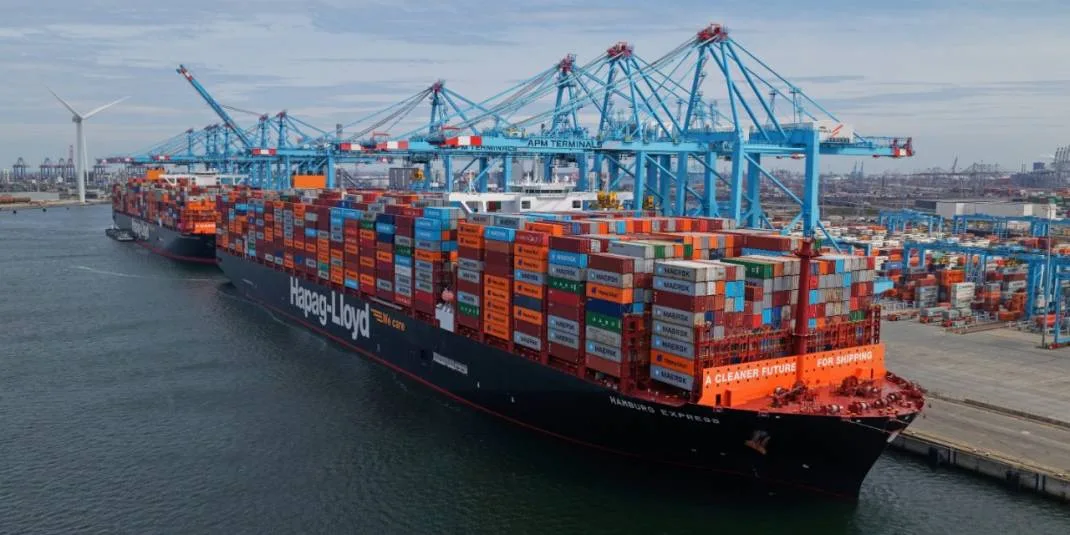
Hapag-Lloyd has completed the acquisition of a 25% stake in APM Terminals Maasvlakte II in the Port of Rotterdam, following unconditional approval from the relevant competition authorities.
The transaction strengthens the German container carrier’s terminal portfolio through Hanseatic Global Terminals (HGT), its terminals and infrastructure division, while securing long-term access to container handling capacity at one of Europe’s major automated port facilities.
The acquisition follows an agreement announced in August 2026 between Hapag-Lloyd and APM Terminals. With the regulatory approvals obtained and the transaction completed, the two companies will continue supporting the terminal’s development and ongoing expansion.
APM Terminals will retain operational control of Maasvlakte II, while Hapag-Lloyd’s participation establishes a direct ownership interest in a facility that plays an important role in the Gemini Cooperation between Hapag-Lloyd and Maersk.
Strategic investment in a key Gemini hub
Maasvlakte II serves as a major European hub for the Gemini Cooperation, making the terminal strategically important for the two carriers’ container shipping networks.
Through the investment, Hapag-Lloyd strengthens its position in Rotterdam while increasing its participation in port infrastructure supporting its liner operations.
The acquisition also aligns with the company’s wider strategy of expanding its global terminal portfolio under Hanseatic Global Terminals.
“We are very pleased to have completed this transaction and become a shareholder in Maasvlakte II,” said Dheeraj Bhatia, CTIO of Hapag-Lloyd AG and CEO of Hanseatic Global Terminals.
Bhatia said the investment would support the terminal’s continued growth and development while reinforcing Rotterdam’s position as a major European gateway.
For APM Terminals, the addition of Hapag-Lloyd as a shareholder supports the facility’s long-term development without changing its operating responsibilities.
Harold Kunst, Managing Director of APM Terminals Maasvlakte II, said the terminal would continue focusing on safe and reliable operations for all customers while expanding capacity and improving performance.
Expansion to increase annual handling capacity
APM Terminals Maasvlakte II is undergoing a major expansion that will increase its container handling capabilities through additional quay infrastructure, yard capacity and automation.
According to the previously announced project specifications, the expansion includes an additional 1,000 metres of deep-sea berth, bringing the terminal’s total deep-sea berth length to approximately 2,000 metres.
The development also incorporates additional container yard capacity, four new railway tracks and further automated equipment, including Automated Terminal Tractors.
Once the expansion is completed, the terminal is expected to reach an annual handling capacity of approximately 5.4 million TEU.
These improvements are intended to accommodate future cargo flows and strengthen the terminal’s role in the European container shipping network.
The additional rail infrastructure also supports connections between Rotterdam and inland markets, reinforcing the terminal’s position within wider European supply chains.
The projected 5.4 million TEU represents future annual handling capacity following the expansion, rather than the terminal’s current throughput.
Hanseatic Global Terminals expands its portfolio
Established in 2023, Hanseatic Global Terminals manages Hapag-Lloyd’s investments in terminals and port infrastructure.
The company aims to expand its global portfolio to approximately 30 terminal investments as part of its long-term strategy towards 2030.
The completed acquisition in Rotterdam strengthens its European presence and provides a direct investment in infrastructure closely associated with Hapag-Lloyd’s shipping network.
For Hapag-Lloyd, terminal ownership offers a means of supporting long-term infrastructure access and network planning, although the investment does not alter the terminal’s existing operational control or imply exclusive handling rights.
The transaction also highlights the growing importance of port infrastructure within container carriers’ broader strategies, particularly as shipping networks place greater emphasis on coordinated terminal operations and reliable connections with inland transport systems.
The financial terms of the acquisition have not been disclosed.
With the transaction now completed, Hapag-Lloyd and APM Terminals will continue their cooperation in developing Maasvlakte II, while the terminal remains under APM Terminals’ operational management.