Wallenius Wilhelmsen’s growth strategy: Can major contracts justify its fleet expansion?
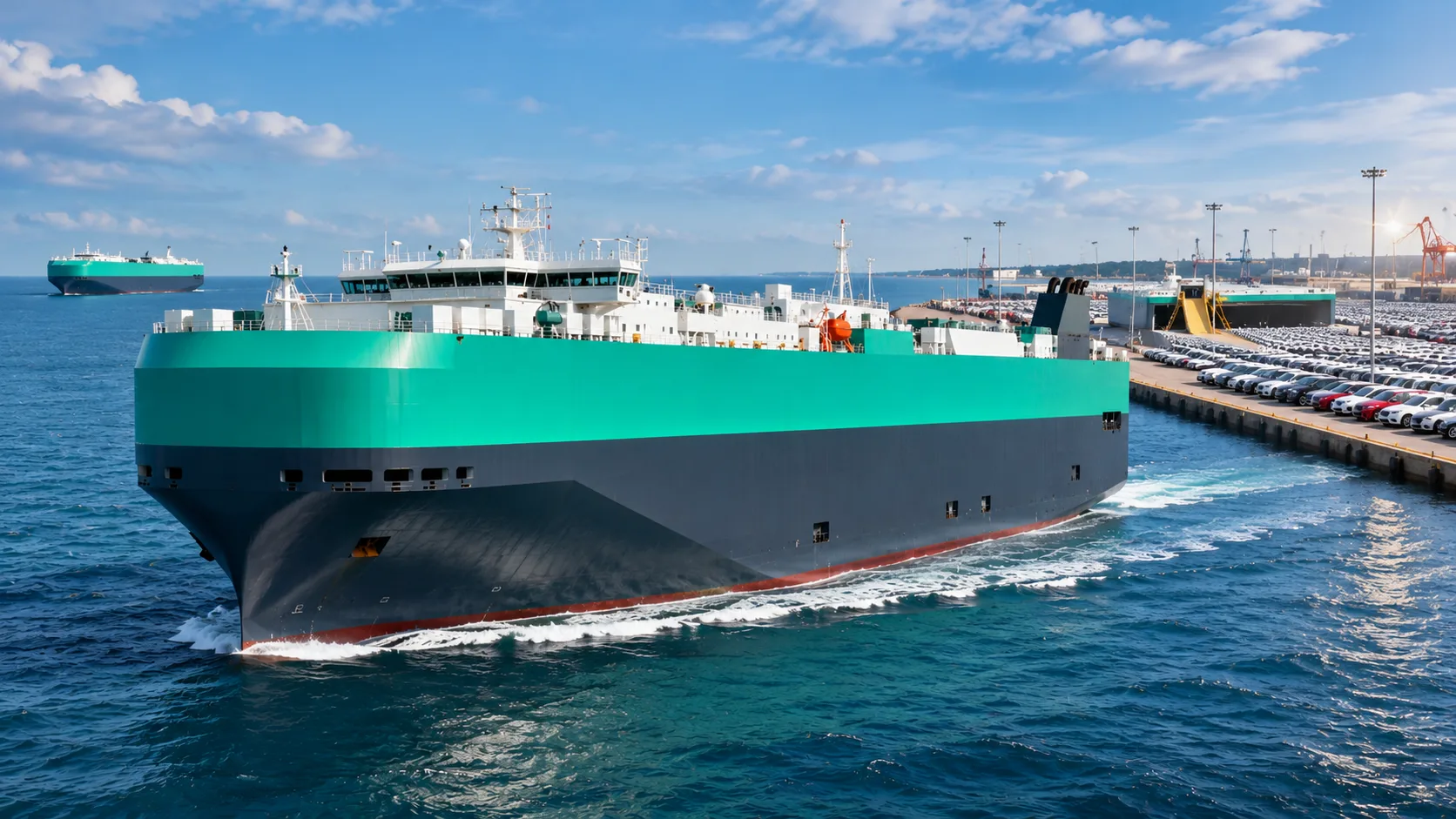
Wallenius Wilhelmsen is entering a new phase of fleet investment at a time when demand for vehicle shipping from Asia remains strong and major customers are seeking longer-term transport commitments. A series of significant contract awards, an expanded newbuilding programme and improving quarterly earnings suggest that the company is attempting to turn favourable market conditions into a more durable competitive position.
The strategy presents an important question for the global car carrier market. Can today’s strong contracting environment provide sufficient support for vessels that will enter service toward the end of the decade, when demand patterns, trade policies and available shipping capacity may look considerably different?
The answer depends on more than the size of Wallenius Wilhelmsen’s orderbook. Its long-term position will be shaped by the relationship between customer commitments, fleet economics, changing automotive trade flows and the ability to deliver integrated shipping and logistics services.
Contracts are becoming central to the strategy
Wallenius Wilhelmsen’s recent commercial announcements provide a clear indication of how it is positioning its business. On 29 October, the company disclosed two three-year agreements with a leading equipment manufacturer, covering shipping and logistics services with a combined value exceeding US$1 billion. The shipping component accounts for approximately US$950 million, while the logistics agreement is valued at close to US$100 million.
The company subsequently announced a separate three-year shipping agreement with a major Asian automotive manufacturer, valued at approximately US$700 million. That contract includes an option for a further two years, subject to mutual agreement, and incorporates a multi-fuel approach intended to accommodate the gradual introduction of alternative and lower-emission fuels.
Together, these agreements represent approximately US$1.7 billion in newly announced business. Their strategic importance extends beyond the headline value. They demonstrate the willingness of major industrial and automotive customers to secure transport arrangements over several years, giving Wallenius Wilhelmsen greater visibility as it plans future vessel capacity.
Nevertheless, the contracts should not be interpreted as a guarantee that the company’s entire fleet expansion will be commercially covered. The agreements have defined durations and commercial terms, while the latest additional newbuildings are scheduled for delivery from 2030. The difference between those time horizons remains an important consideration.
A stronger quarter, but the investment case extends further
The company’s third-quarter 2026 performance provides evidence of the current strength of its operating environment. Wallenius Wilhelmsen reported revenue of approximately US$1.4 billion, an increase of 7% from the preceding quarter, while adjusted EBITDA rose 19% to US$428 million. Net profit reached US$212 million, representing a 53% sequential increase.
Management maintained its full-year adjusted EBITDA outlook of approximately US$1.6 billion and reported that shipping capacity was fully committed for the remainder of 2026. Strong demand from Asia continued to support freight and charter rates, reinforcing the commercial conditions behind the company’s recent contract awards.
These figures help explain the confidence underpinning the expansion strategy. They also introduce a distinction between present profitability and future investment returns. Strong earnings in a favourable market can improve financial flexibility, but they do not establish the level of demand or freight rates that will prevail when the next generation of vessels enters service.
For Wallenius Wilhelmsen, the challenge is therefore to use the current market to strengthen its long-term position without assuming that today’s conditions will remain unchanged.
The Shaper Class expansion is a strategic commitment
The most visible expression of this strategy is the expansion of Wallenius Wilhelmsen’s Shaper Class fleet renewal programme. On 28 October, the company announced four additional firm dual-fuel Pure Car and Truck Carriers, together with options for up to eight more vessels.
The four firm vessels, ordered from Jinling Shipyard in Jiangsu, will each have capacity for approximately 9,900 car equivalent units and LNG dual-fuel propulsion. Deliveries are scheduled to begin in mid-2030, while the optional vessels are associated with potential deliveries in 2031 and 2032.
Including options, the wider fleet renewal programme now encompasses 26 vessels. If all the latest options are exercised, the capital expenditure associated with the expansion could reach approximately US$1.5 billion. Wallenius Wilhelmsen also raised US$300 million through a private placement in October to help finance the enlarged programme.
The investment is not simply a bet on carrying more vehicles. The Shaper Class design incorporates flexible cargo spaces, hoistable decks and strengthened ramps, allowing the vessels to handle different combinations of passenger cars, heavy equipment and other rolling cargo.
That flexibility matters because future demand may not develop evenly across vehicle categories or geographical markets. Ships capable of accommodating a broader cargo mix could give the operator more options when allocating capacity across its network.
However, flexibility cannot eliminate the financial consequences of excess capacity. If global vehicle shipping supply expands faster than demand, even more efficient vessels may face pressure on utilization and freight rates.
Asia’s automotive expansion changes the equation
The commercial backdrop to Wallenius Wilhelmsen’s investment programme is the continuing importance of Asian vehicle exports. The company has reported rising demand for shipping services originating in Asia, alongside stronger interest from customers seeking longer-term capacity.
This creates opportunities for operators with established global networks, particularly those capable of combining ocean transportation with vehicle processing, terminal services and inland distribution. For automotive manufacturers expanding their international sales, transport reliability and access to destination markets can become as important as the ocean freight rate itself.
Yet the same geographical concentration introduces risks. Changes in tariffs, industrial policy, import restrictions or consumer demand could alter the direction and volume of vehicle exports. A shift in where vehicles are manufactured or assembled could also change the balance of demand between established deep-sea routes.
Wallenius Wilhelmsen’s investment case therefore depends partly on the continued internationalization of automotive supply chains, but not necessarily on the uninterrupted growth of any single export market. Its global network and cargo flexibility may help it adapt, although the extent of that protection will depend on future trading conditions.
Why logistics and technology matter
Wallenius Wilhelmsen’s strategy extends beyond its ocean fleet. The company’s agreements with equipment manufacturers demonstrate the commercial value of offering both shipping and logistics services within a broader customer relationship.
This integrated approach may become increasingly important as vehicle manufacturers seek better coordination between production, ocean transportation, port handling and inland distribution. An operator that can manage several stages of the supply chain may be better positioned to secure long-term relationships and develop services that are less dependent on individual freight transactions.
Recent initiatives to strengthen connectivity across the company’s Ro-Ro fleet also fit within this wider direction. Improved vessel communications and digital capabilities can support operational coordination, although the financial benefits of such investments should not be assumed without measurable evidence.
The strategic opportunity lies in combining the physical advantages of a modern fleet with a more connected logistics network. Whether this produces a sustained competitive advantage will depend on service quality, execution and the company’s ability to convert operational improvements into stronger margins.
The risk of investing at the top of the cycle
Fleet expansion in shipping always involves a timing problem. Vessel orders are placed under one set of market conditions, but the assets may begin generating revenue several years later under another.
Wallenius Wilhelmsen’s decision to add vessels for delivery from 2030 reflects confidence in long-term demand and the benefits of replacing older tonnage with more efficient ships. The company is also using a combination of firm orders and options, preserving some flexibility over additional commitments.
Even so, the scale of investment increases the importance of capital discipline. Construction costs, financing conditions, fuel technology, fleet utilization and future charter market developments will all influence the returns generated by the new vessels.
The growing global orderbook for vehicle carriers is another consideration. Additional industry capacity could weaken the supply-demand balance if automotive trade growth slows or established shipping routes become more efficient.
This does not make Wallenius Wilhelmsen’s strategy inherently excessive. It means that the success of its investment programme must ultimately be assessed against the market conditions prevailing when the vessels are delivered, rather than the strength of the market at the time of ordering.
A stronger competitive position still needs to be demonstrated
Wallenius Wilhelmsen is pursuing a strategy that combines commercial commitments, fleet modernization and broader logistics capabilities. Recent contract awards provide evidence of customer demand, while its third-quarter results demonstrate the earnings strength supporting the current investment programme.
The company’s approach also suggests that competition in vehicle shipping is becoming increasingly dependent on more than available vessel capacity. Long-term customer relationships, cargo flexibility, fuel efficiency and integrated logistics networks could all influence which operators are best positioned to serve changing automotive supply chains.
However, the decisive test remains ahead. The newest vessel commitments extend into the next decade, beyond the initial duration of the recently announced major contracts. Future demand, the industry orderbook and the evolution of automotive trade will determine how effectively the additional capacity can be employed.
Wallenius Wilhelmsen has an opportunity to use today’s strong market to reinforce its position for the years ahead. The question is whether its investment discipline and commercial relationships will prove sufficiently resilient when the next shipping cycle arrives.