MOL secures long-term FSRU charter agreement with Deutsche ReGas
Mitsui O.S.K. Lines (MOL) has signed a long-term time charter agreement with Deutsche ReGas for the deployment of a floating storage and regasification unit (FSRU) at the Energie-Terminal Deutsche Ostsee in Mukran, Germany, strengthening the Japanese shipping group’s involvement in European LNG import infrastructure.
Under the agreement, an LNG carrier will be converted into an FSRU at Hudong-Zhonghua Shipbuilding in China, with Deutsche ReGas scheduled to begin chartering the vessel from MOL in 2028. The converted unit will be deployed at the LNG import terminal on Germany’s Baltic Sea coast.
The agreement represents a further expansion of MOL’s activities beyond LNG transportation into receiving and regasification infrastructure. According to the company, this will be its first FSRU conversion project developed on its own initiative for LNG deliveries to major gas networks, following earlier conversion projects undertaken in collaboration with partners for specific applications.
FSRU conversion and deployment
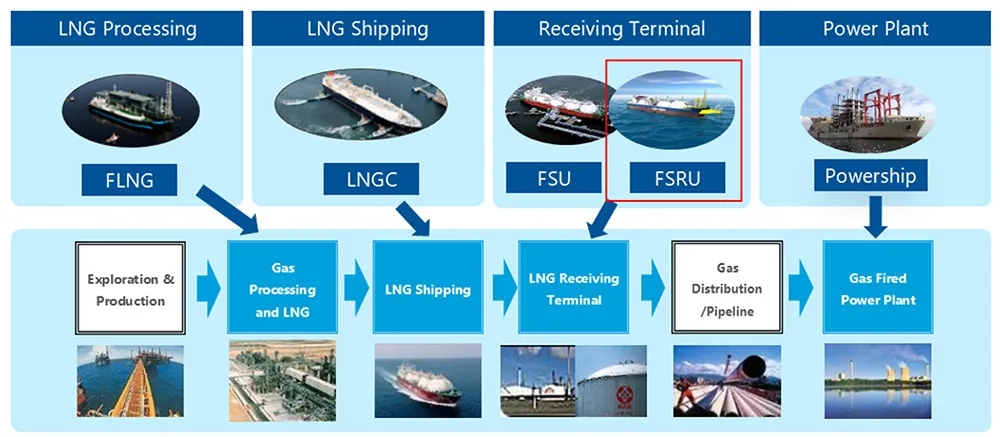
The planned conversion will equip the LNG carrier to receive, store and regasify liquefied natural gas before delivering natural gas to shore through pipeline infrastructure.
The FSRU will support operations at Deutsche ReGas’s Energie-Terminal Deutsche Ostsee, which provides LNG import capacity through the industrial port of Mukran. Deutsche ReGas expects the additional unit to help restore the terminal’s fully permitted capacity and provide greater flexibility for LNG imports.
The agreement establishes a long-term commercial relationship between MOL and Deutsche ReGas, although the companies have not disclosed the charter duration, financial terms, identity of the vessel selected for conversion or its planned regasification capacity.
MOL President and CEO Jotaro Tamura described the project as an important development in the company’s LNG infrastructure business and its cooperation with Deutsche ReGas and Hudong-Zhonghua Shipbuilding.
“The FSRU Project represents a major strategic milestone for MOL,” said Tamura.
Deutsche ReGas CEO Ingo Wagner highlighted the role of the Mukran terminal in Germany’s energy infrastructure and the company’s plans to restore its permitted operating capacity.
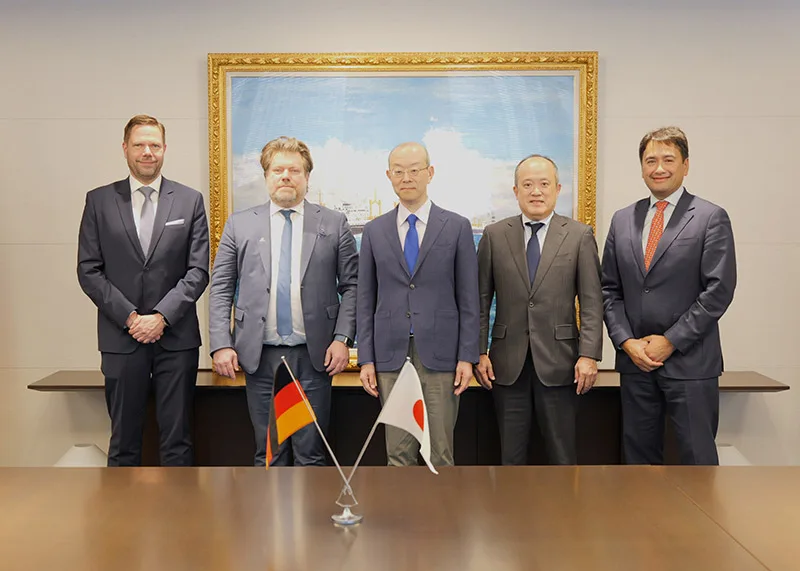
The agreement was marked by a ceremony in Tokyo on 29 October 2026, attended by representatives of MOL and Deutsche ReGas.
For MOL, the project forms part of its BLUE ACTION 2035 Phase 2 strategy, under which the company is expanding its participation in downstream LNG activities. The group identifies FSRU operations as a business capable of generating stable earnings alongside its established LNG shipping activities.
The planned deployment also reflects the continuing role of floating LNG infrastructure in Germany’s import network. Unlike conventional land-based regasification terminals, FSRUs combine marine storage and gas processing capabilities in a floating facility connected to shore.
The new unit is scheduled to enter the Deutsche ReGas charter arrangement in 2028, following completion of the conversion programme in China.