China moves to tighten technology and drone export controls
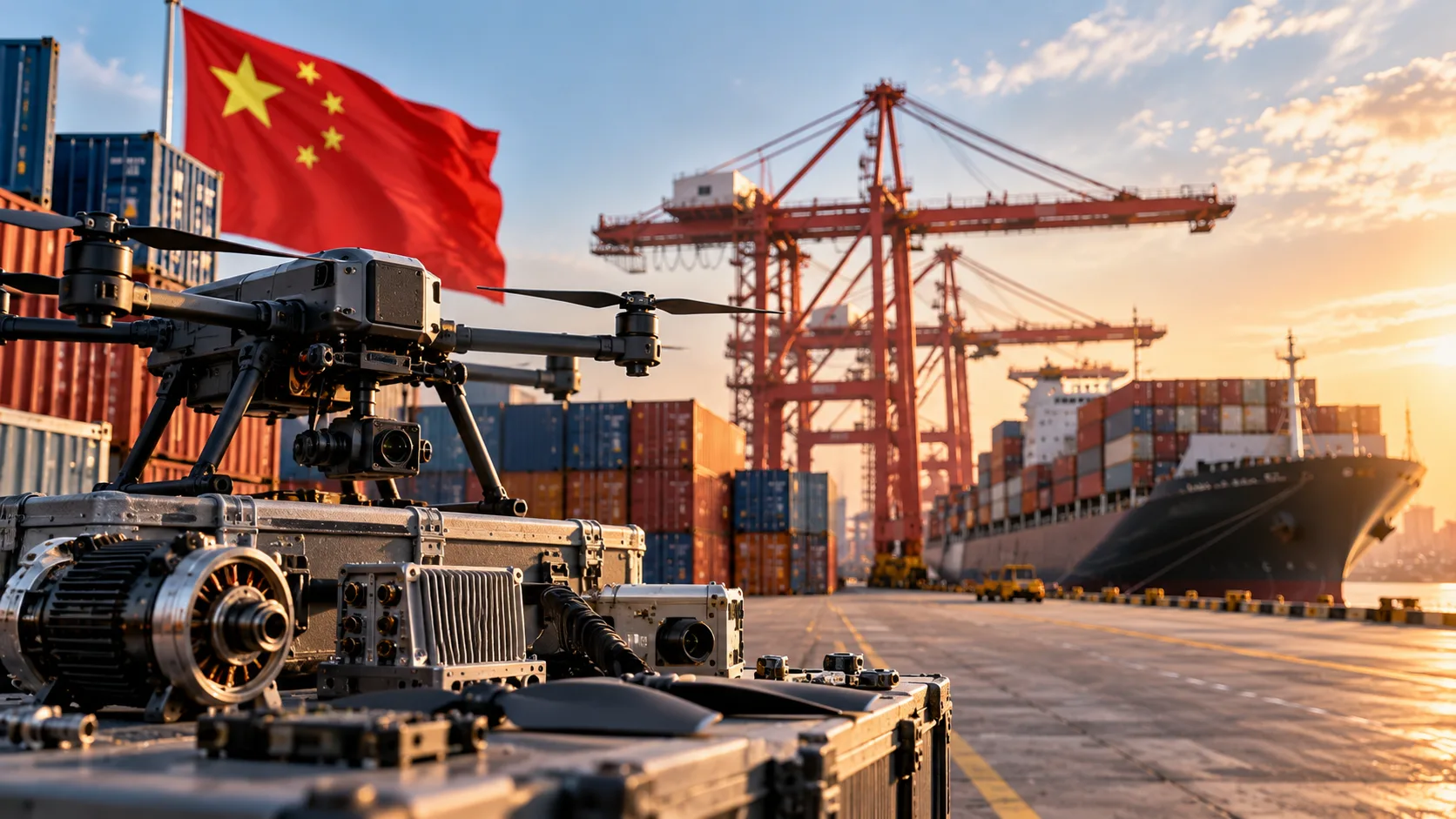
China has announced a series of proposed and updated export control measures covering advanced technologies, unmanned aerial vehicles and related equipment, introducing new compliance requirements for exporters and international supply chains.
The measures, announced by Chinese government authorities in October 2026, include proposed additions to the country’s Catalogue of Technologies Prohibited or Restricted from Export, alongside updated controls on specified drone technologies and components.
According to an October 22 regulatory update from global logistics provider Expeditors, the changes involve different implementation timelines, with some requirements already in effect and others scheduled to begin in November.
The announcements affect several technology-intensive sectors, including artificial intelligence, biomedical applications, photovoltaic equipment and unmanned aerial systems.
Proposed technology restrictions and immediate registration requirements
China’s Ministry of Commerce (MOFCOM) and Ministry of Science and Technology (MOST) have proposed adding 40 technologies to the country’s Catalogue of Technologies Prohibited or Restricted from Export.
The proposed additions cover 23 artificial intelligence-related technologies, five biomedical technologies and 12 photovoltaic technologies. They also extend to certain core equipment incorporating or using the technologies identified in the proposal.
The proposed amendments remain open for public comment until November 15, 2026, meaning the catalogue changes have not yet been finalised.
However, the announcement introduced an interim export pre-registration requirement that took effect upon publication. According to Expeditors, the requirement applies to specified technologies and also covers qualifying export transactions that have already begun but have not yet been completed.
This includes certain shipments currently in transit, creating an immediate compliance consideration for exporters handling affected technologies.
The distinction between the proposed catalogue amendments and the already applicable pre-registration requirement is particularly important for companies managing ongoing international transactions.
While the broader changes remain subject to consultation, exporters dealing with the specified technologies must account for the interim requirements described in the government announcement.
Updated controls on drones and related equipment
A separate announcement issued by MOFCOM, the General Administration of Customs and the Central Military Commission Equipment Development Department establishes updated export controls for specified unmanned aerial vehicles and associated technologies.
The measures cover certain drone engines, autopilots, communications equipment, motors, propeller blades and other related components.
They also include specified flight-control and autonomous-navigation technologies, software and equipment associated with unmanned aerial systems.
According to the regulatory update, the new controls will take effect on November 18, 2026, when the affected items will become subject to export authorisation requirements.
Exporters will also be required to provide relevant technical information in customs declarations, including for certain products with specifications close to those of controlled items.
China’s Dual-Use Items Export Control List is scheduled to be updated simultaneously with the implementation of these measures.
The requirements therefore extend beyond complete unmanned aerial vehicles to specified components and technologies used in their development and operation.
Implications for international supply chains
The announcements introduce additional regulatory considerations for businesses involved in exporting advanced technologies and equipment from China.
For the technologies covered by the proposed catalogue amendments, the immediate pre-registration requirement is relevant to both new export transactions and certain shipments already underway.
For UAV-related products, the November implementation date provides a separate timeline for exporters to assess whether their goods, components or technologies fall within the updated controls.
The requirement to provide technical information in customs declarations also makes product specifications an important element of export compliance, particularly where equipment has characteristics similar to controlled items.
The measures do not establish a general prohibition on all exports of artificial intelligence technologies, photovoltaic equipment or drones. Their application depends on the specific technologies and products identified in the relevant announcements.
Companies involved in affected supply chains will therefore need to distinguish between the proposed restrictions, the interim registration requirements already in force and the export authorisation rules scheduled to begin in November.
The latest announcements add to the regulatory framework governing China’s technology exports, with different obligations and implementation dates across the affected product categories.