British ports challenge EU carbon leakage claims over container growth

The British Ports Association argues that infrastructure investment, rather than avoidance of EU carbon pricing, explains much of the recent growth in UK container traffic.
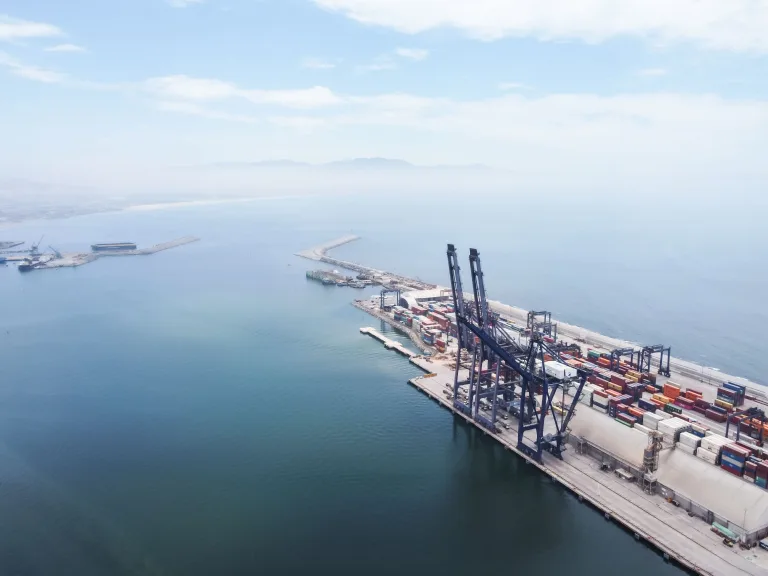
The British Ports Association (BPA) has challenged claims that the European Union’s Emissions Trading System (EU ETS) is diverting container traffic towards British ports, arguing that infrastructure investment and changes in shipping networks provide a more convincing explanation for recent growth.
In an analysis published on 15 October 2026, the association questioned conclusions drawn from Spain’s EU ETS Observatory, which has examined whether European carbon pricing is affecting the competitiveness of EU ports.
The BPA said increases in UK container throughput should not automatically be interpreted as evidence of carbon leakage, particularly where new terminal capacity has become available.
London Gateway investment highlighted
According to the BPA, approximately 85% of the growth in UK container volumes during 2025 was concentrated in London.
The association linked much of this increase to additional capacity at London Gateway, where a new berth representing an investment of approximately £350 million opened in late 2024.
The BPA argued that investment in deeper channels, new berths and container-handling infrastructure has strengthened the competitiveness of British ports.
It also noted that major continental European ports, including Rotterdam, Antwerp-Bruges and Hamburg, recorded growth during the same period.
These developments, according to the association, complicate claims that increasing UK market share necessarily reflects shipping companies avoiding EU emissions costs.
Debate continues over EU ETS and port competition
The EU ETS has introduced carbon pricing obligations for maritime transport, raising concerns among some European port stakeholders about potential changes in vessel routing and transshipment activity.
Spain’s EU ETS Observatory has examined these concerns, including the possibility that shipping activity could shift towards ports outside the EU regulatory framework.
The BPA disputes the interpretation of recent UK container traffic data as evidence of significant carbon leakage.
Mark Simmonds, Director of Policy and External Affairs at the British Ports Association, said infrastructure investment was improving the competitiveness of British ports and warned against introducing measures based on what the association considers insufficient evidence.
The BPA has urged the UK Government and European Commission to reassess the available data before pursuing measures that could affect competition between British and EU ports.
The association maintains that maritime emissions reduction policies should be supported by evidence distinguishing regulatory effects from ordinary commercial competition and infrastructure-led growth.
The views expressed in this article are the author's own and do not necessarily reflect those of pelavox.