Port of Long Beach sets new monthly container traffic record
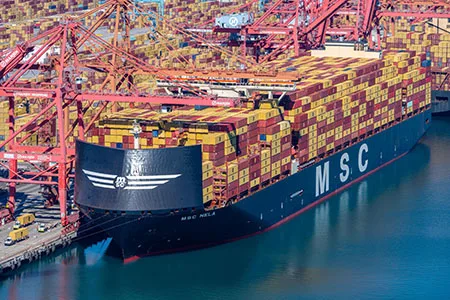
The California port handled nearly one million TEUs in September, supported by stronger imports and higher empty-container movements.
The Port of Long Beach recorded its busiest month on record in September 2026, handling 997,177 twenty-foot equivalent units (TEUs), an increase of 25% compared with the same month last year.
The result surpassed the port’s previous monthly record of 987,191 TEUs, established in October 2024, and marked the highest cargo volume in its 115-year history.
According to the port, the increase reflected changing cargo routing decisions by shippers amid elevated diesel costs, restrictions affecting Panama Canal access and uncertainty surrounding potential US-China trade developments.
Imports lead growth in container volumes
Loaded imports increased by 31.3% year over year to 509,390 TEUs in September, while loaded exports rose by 7.8% to 91,747 TEUs.
Empty-container movements also recorded substantial growth, climbing 22.1% to 396,040 TEUs.
During the first nine months of 2026, Long Beach handled 7,675,255 TEUs, representing an increase of 3.9% compared with the corresponding period in 2025.
The port also reported a monthly rail handling record at Total Terminals International, where 59,410 rail moves were recorded during September. These movements represented nearly half of the terminal’s total container volume, according to the port.
Extended terminal gates planned during bridge closure
Alongside the cargo figures, the Port of Long Beach announced additional measures intended to maintain freight flows during the planned closure of the Vincent Thomas Bridge at the neighbouring Port of Los Angeles.
The bridge is scheduled to close on 7 November as part of a 16-month deck replacement project.
Long Beach plans to introduce additional evening and Saturday terminal gates beginning in late October, providing more flexibility for trucking companies and cargo owners.
The extended-gate programme is expected to run for six weeks, excluding Thanksgiving week.
The initiative is being coordinated with marine terminal operators, the International Longshore & Warehouse Union and the Harbor Trucking Association.
Port officials said the measures are intended to support cargo movement and limit potential traffic disruption during the bridge works.