Wärtsilä to supply dual-fuel engines and thrusters for Delfin LNG project
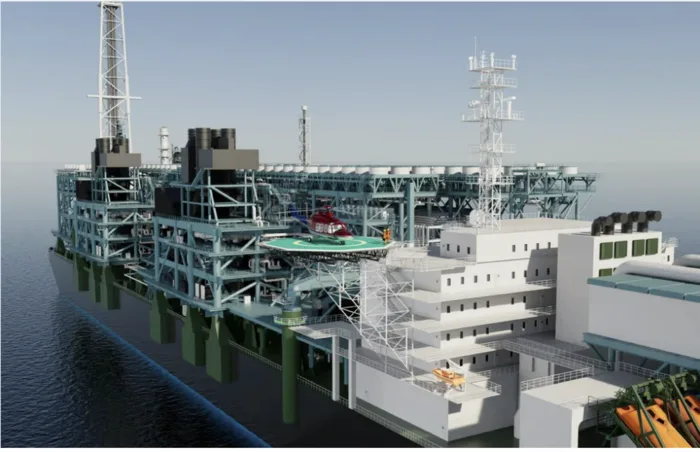
Wärtsilä has secured a contract to supply dual-fuel engines and specially designed propulsion equipment for the first floating liquefied natural gas (FLNG) vessel under construction at Samsung Heavy Industries for the US-based Delfin LNG project.
The order, announced on 5 November 2026 and booked by Wärtsilä in the second quarter of the year, covers three Wärtsilä 46DF dual-fuel engines, an exhaust gas treatment system and three custom-designed thrusters. Equipment deliveries are scheduled to begin in the third quarter of 2027, with the vessel expected to enter operation in early 2030.
The FLNG unit will operate approximately 40 nautical miles offshore Louisiana, where the Delfin LNG project is being developed to process, liquefy and export natural gas supplied through existing onshore and offshore pipelines.
Wärtsilä worked with the project partners during the front-end engineering and design phase to develop a propulsion arrangement suited to the operating requirements of the offshore facility.
Propulsion system designed for offshore LNG operations
The vessel will be equipped with three Wärtsilä 46DF dual-fuel engines and an advanced exhaust gas treatment system incorporating selective catalytic reduction (SCR) and Oxicat technologies.
The propulsion package will also include three specially designed inboard-mountable thrusters, which Wärtsilä describes as the largest it has ever produced. The company states that their dimensions would also make them the largest thrusters of their kind in operation worldwide.
The thrusters are designed to be removed and maintained from inside the vessel, reducing the need for external intervention and allowing maintenance activities to be carried out while other operations continue.
This arrangement is particularly important for the Delfin project because of its location in the Gulf of Mexico, where offshore facilities must account for tropical storms and hurricanes.
Unlike a permanently fixed liquefaction installation, the Delfin FLNG vessel is designed to disconnect from its mooring arrangement and move to a safer location when severe weather threatens the operating area.
Björn Axfors, Lead Engineer Hull & Marine at Delfin, said the ability to disconnect and relocate the vessel during hurricane warnings was a central requirement of the propulsion design.
The option to hoist the thrusters for internal maintenance ahead of hurricane season was also incorporated to support operational availability and the safety of personnel and assets.
Samsung Heavy Industries advances Delfin FLNG development
Samsung Heavy Industries is building the first FLNG vessel for the Delfin LNG project, which is intended to support the development of offshore LNG export capacity in the United States.
The Wärtsilä equipment forms part of the vessel’s marine propulsion and operational systems, supporting its ability to manoeuvre, relocate when necessary and maintain offshore operations.
Youngjin Jeong, Vice President of the Offshore Procurement Team at Samsung Heavy Industries, highlighted the cooperation between the companies during the engineering process and the importance of adapting the propulsion equipment to the project’s specific requirements.
The contract builds on Wärtsilä’s experience in dual-fuel engine technology and propulsion systems for demanding marine applications.
The integration of dual-fuel engines, exhaust gas treatment and specialised thrusters is intended to improve operating flexibility, fuel efficiency and environmental performance, although the announcement does not provide quantified fuel consumption or emissions reductions.
Equipment deliveries to begin in 2027
Wärtsilä expects to begin delivering the contracted equipment in the third quarter of 2027, ahead of the FLNG vessel’s planned entry into service in early 2030.
The project represents an application of marine propulsion technology in offshore LNG infrastructure, where vessels must combine processing and export functions with the ability to respond to changing environmental conditions.
Bernd Bertram, Vice President, Propulsion at Wärtsilä Marine, said the increasing interest in FLNG developments reflects demand for flexible infrastructure capable of bringing additional natural gas supplies to international markets.
The company has not disclosed the contract value or provided a detailed installation and commissioning schedule for the equipment.
The latest announcement adds to the supplier contracts supporting the development of the Delfin FLNG project and highlights the specialised propulsion requirements associated with offshore liquefaction vessels operating in hurricane-exposed waters.