Port of Riga to test resilient maritime communications under new partnership
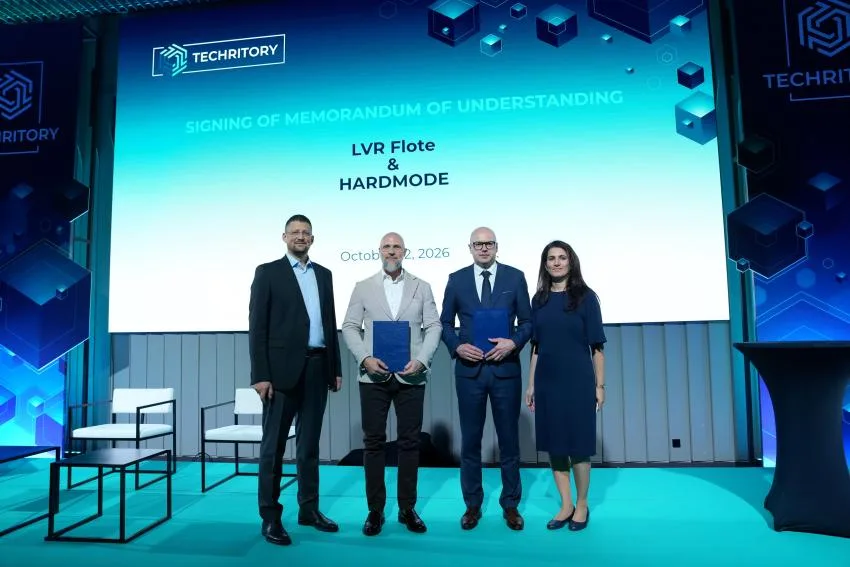
The Port of Riga is set to become a testing environment for resilient maritime communications technologies following the signing of a Memorandum of Understanding (MoU) between Latvian port services provider LVR Flote and connectivity technology company HARDMODE.
The agreement, signed during the Techritory Forum in Riga, establishes a framework for developing and testing secure communication solutions intended to support port operations under both normal and challenging conditions. The cooperation will focus on maintaining connectivity for critical infrastructure, particularly when conventional communication networks become unavailable or unreliable.
Under the partnership, the companies intend to conduct pilot projects in real port operating conditions, pursue joint research and development initiatives, and explore opportunities to commercialise successful solutions for use at other European ports.
Testing connectivity across critical port operations
The cooperation will examine how different communication technologies can operate together to provide more reliable connectivity across maritime infrastructure.
HARDMODE develops systems that combine multiple communication technologies, including mobile, non-terrestrial, tactical and narrowband networks. Its approach is designed to reduce dependence on any single communication channel by allowing alternative connections to support operations when one network is disrupted.
The company’s technology also incorporates decentralised communication architecture, enabling connected devices and infrastructure components to exchange information without relying exclusively on conventional commercial networks.
Potential applications at the Port of Riga include infrastructure monitoring, hydrographic surveys, navigation safety, maintenance activities and coordination between port service providers.
The partnership comes against the background of repeated Global Navigation Satellite System (GNSS) interference incidents in the Baltic Sea region, which have highlighted vulnerabilities affecting maritime navigation and port operations.
Artūrs Lindenbergs, Founder and CEO of HARDMODE, said that increasing digital connectivity across critical infrastructure also creates greater operational dependence on reliable communication systems.
According to Lindenbergs, the company’s approach combines multiple communication technologies with decentralised network architecture to support operations when individual connections become degraded or unavailable.
LVR Flote to provide real-world operating environment
LVR Flote, which provides technical port services and supports infrastructure maintenance and operations at the Port of Riga, will contribute operational expertise and practical requirements to the testing programme.
The company intends to assess how resilient connectivity technologies could support essential services during network disruptions, including hydrographic activities, infrastructure maintenance and coordination with other port stakeholders.
Kaspars Ozoliņš, Member of the Board of LVR Flote, said the cooperation would allow the partners to explore ways of maintaining technical port services during both routine operations and crisis situations.
The agreement also provides for the development of an open testing framework that could involve additional technology companies working on sensors, monitoring equipment, automation systems and digital port services.
Through this approach, the partners aim to evaluate how different technologies interact in a real port environment and whether they can support the operational requirements of maritime infrastructure.
Partnership could support wider European applications
Beyond the initial testing activities in Riga, LVR Flote and HARDMODE intend to explore international research and development opportunities and potential applications of successful technologies in other European ports.
The cooperation also has a cross-border dimension, as HARDMODE has connections with both Latvia and the Netherlands.
The partners see the Port of Riga as a potential testing location for technologies that could eventually support wider maritime and critical infrastructure applications.
However, the agreement remains at the development and testing stage. No completed deployment, commercial rollout, investment value or implementation timetable has been announced.
The partnership establishes a framework for future pilot activities, with their outcomes expected to inform whether the technologies can be adopted more broadly across port and maritime operations.