Maersk raises full-year outlook as higher freight rates lift quarterly earnings
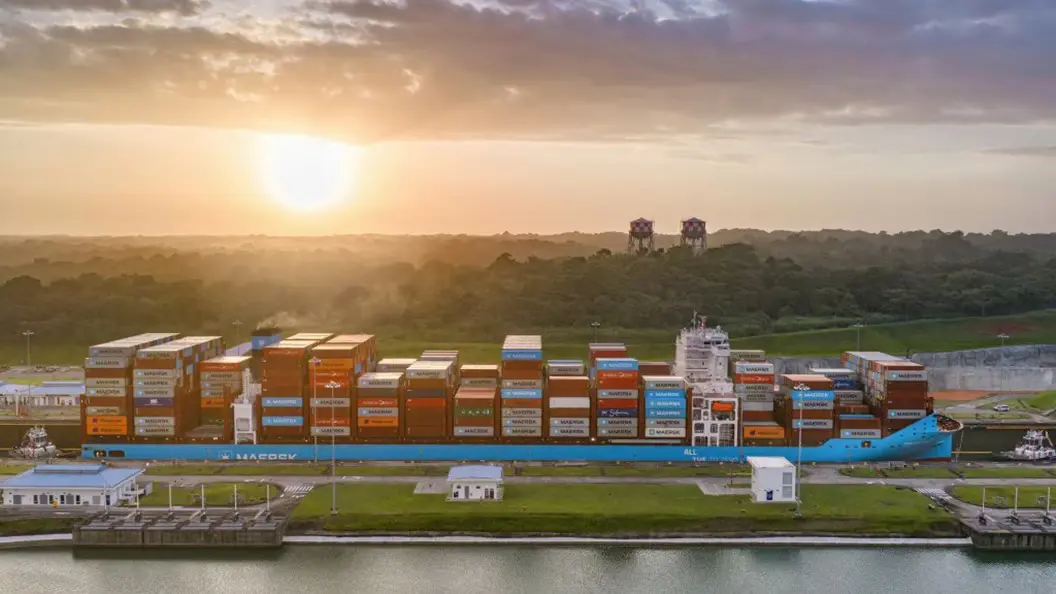
A.P. Moller–Maersk has raised its full-year 2026 financial guidance following a sharp increase in third-quarter earnings, as higher container freight rates and capacity constraints across global shipping networks strengthened the group’s financial performance.
Revenue rose 27.4% year on year to US$18.1 billion in the third quarter, compared with US$14.2 billion a year earlier. EBITDA increased to US$4.71 billion from US$2.69 billion, while operating profit (EBIT) reached US$3.27 billion, compared with US$1.28 billion in the corresponding period of 2025.
Net profit increased to US$3.05 billion from US$1.10 billion, with the group’s EBIT margin improving to 18.1% from 9.0%. Free cash flow also strengthened to US$2.39 billion, compared with US$771 million a year earlier, supported by higher operating earnings.
The improved results prompted Maersk to raise its full-year underlying EBITDA guidance to US$14.0–14.5 billion, up from its previous forecast of US$10.5–12.5 billion. Underlying EBIT is now expected to reach US$8.0–8.5 billion, compared with the previous guidance of US$4.5–6.5 billion, while free cash flow is projected to exceed US$3 billion.
Ocean earnings surge as congestion supports freight rates
Maersk’s Ocean business accounted for most of the improvement, benefiting from stronger freight rates despite relatively stable cargo volumes.
Ocean revenue increased 37% to US$12.58 billion, while EBIT climbed to US$2.59 billion from US$567 million in the third quarter of 2025. The segment’s EBIT margin rose to 20.6%, compared with 6.2% a year earlier.
The average loaded freight rate increased 46% year on year to US$3,287 per forty-foot equivalent unit (FFE), against US$2,244 in the previous year. However, loaded volumes declined slightly by 0.8% to 3.37 million FFE, reflecting disruption to cargo flows and loading operations, particularly in Asia and the Middle East.
The operating environment was affected by the continued closure of the Strait of Hormuz, severe typhoons in East Asia and widespread port congestion. According to Maersk, average global port waiting times reached 16.6 hours at their peak in August, the highest level since January 2023.
These disruptions absorbed vessel capacity and contributed to higher freight rates. The Shanghai Containerised Freight Index increased by an average of 46% quarter on quarter during the period, according to the company’s market assessment.
At the same time, higher bunker prices and network adjustments placed additional pressure on operating costs. Ocean bunker costs rose to US$2.11 billion from US$1.55 billion, while total operating costs increased by 18%.
Vessel utilisation remained high at 96%, compared with 94% a year earlier, highlighting the continued pressure on available capacity.
Vincent Clerc, Chief Executive Officer of Maersk, said global trade had remained resilient despite geopolitical uncertainty and supply chain disruption, supported by demand from consumer markets and industrial investment.
He identified electrification, energy projects and the expansion of artificial intelligence infrastructure as important drivers of cargo flows, with demand exceeding available shipping capacity on certain routes.
Logistics and Services delivers double-digit growth
Maersk’s Logistics & Services division recorded revenue of US$4.49 billion, an increase of 13% from US$3.98 billion in the third quarter of 2025.
Operating profit rose 19% to US$259 million, while the EBIT margin improved to 5.8% from 5.5%, reflecting growth in forwarding and landside logistics alongside operational efficiency measures.
Landside activities made the largest contribution to revenue growth, supported by first-mile services and alternative landbridge transport solutions across the Gulf region, where disruptions to maritime routes created additional demand for inland connections.
Forwarding also performed strongly, with air freight and project logistics contributing to the division’s expansion. Air freight volumes increased 22% year on year to approximately 100,000 tonnes, while project logistics benefited from activity in renewable energy and automotive supply chains.
Contract Logistics continued to support growth within the Solutions business, including new customer implementations and increased demand for bundled logistics services.
The results indicate that Maersk’s integrated logistics operations continued expanding beyond ocean shipping, although the Ocean business remained the principal source of the group’s quarterly earnings increase.
Terminals achieves record revenue despite lower reported EBIT
Maersk’s Terminals division reported record quarterly revenue of US$1.52 billion, compared with US$1.45 billion a year earlier, supported by higher handling rates, storage revenue and cargo volume growth.
Terminal volumes increased 2.6% year on year, with Africa recording growth of 14% and Europe advancing 6.7%.
EBITDA increased to US$551 million from US$501 million, while the EBITDA margin improved to 36.3% from 34.6%.
However, reported EBIT declined to US$493 million from US$571 million. Maersk attributed the year-on-year comparison partly to an impairment reversal related to a terminal concession extension recognised in 2025. Excluding that effect, EBIT increased by 6.5%.
The company also progressed with port infrastructure investments during the quarter. APM Terminals began construction of the Laldia greenfield terminal in Chattogram, Bangladesh, which is expected to add 900,000 TEU of annual handling capacity.
In Brazil, APM Terminals Suape commenced commercial operations in September, initially adding capacity for up to 400,000 TEU annually to the Suape Port Complex.
Fleet renewal and full-year expectations
As part of its fleet renewal programme, Maersk placed orders for 26 dual-fuel container vessels, each with a capacity of 18,600 TEU and capable of operating on liquefied gas. Deliveries are scheduled between 2029 and 2030.
The company is also continuing its US$1 billion share buyback programme, with approximately US$841 million executed by the end of September 2026.
For the first nine months of 2026, Maersk generated revenue of US$46.82 billion, compared with US$40.66 billion in the corresponding period of 2025. EBIT reached US$5.18 billion, up from US$3.38 billion, while net profit increased to US$4.46 billion.
The revised full-year guidance reflects stronger third-quarter earnings and improved visibility for the remainder of 2026. It assumes global container market volume growth of approximately 4% for the year.
The results highlight the financial benefits Maersk has captured from higher freight rates and tight effective vessel capacity, even as disruptions continue to increase operating costs and affect service reliability.
While the group has strengthened its earnings outlook, future performance remains sensitive to freight rate movements, bunker prices and developments affecting global maritime trade routes.