Maersk–APM secures concession for Tanger Med 3 container terminal
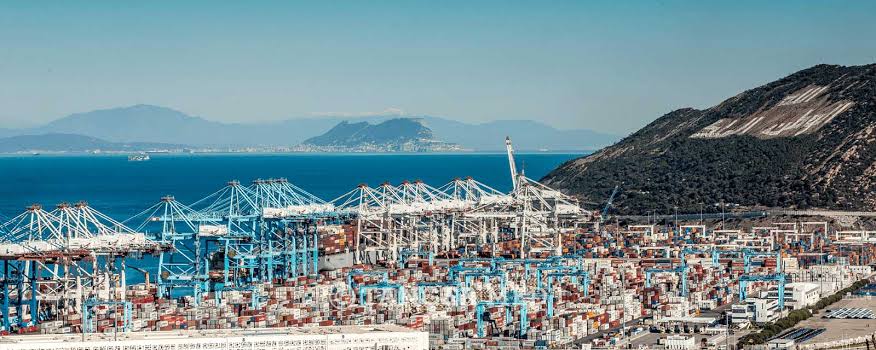
A concession agreement has been signed with Maersk–APM for the development of a new container terminal at Tanger Med 3, marking another stage in Morocco’s expansion of its port infrastructure.
The agreement was confirmed by Morocco’s Royal Cabinet following a meeting chaired by King Mohammed VI in Rabat on 28 October. The meeting examined plans for the Tanger Med expansion alongside preparations to bring the first container terminal at Nador West Med into operation.
Tanger Med 3 will be developed west of the existing Tanger Med 2 facilities, with construction expected to begin shortly. The project includes 1,200 metres of quay infrastructure and is designed to provide additional annual handling capacity of 4.5 million containers, supported by planned investment of 8 billion Moroccan dirhams.
The development is part of a wider programme that also includes the ongoing expansion of Tanger Med’s passenger and roll-on/roll-off facilities and plans for an eastern extension of Tanger Med 2.
According to the Royal Cabinet, the combined projects could eventually increase the Tanger Med complex’s total annual container-handling capacity to 20 million containers, potentially placing it among the world’s ten largest container ports.
Nador West Med approaches first terminal opening
Morocco is also preparing to begin operations at the first container terminal of the Nador West Med port and industrial complex. Its initial phase is expected to enter service within days of the announcement, while the terminal is ultimately designed to accommodate 3.5 million containers annually.
A second container terminal, with planned annual capacity of 1.8 million containers, is scheduled to begin operations in April 2027. The two container terminals account for 8 billion dirhams in private investment.
Across the broader Nador West Med development, public and private investment has reached 54 billion dirhams. The complex combines port facilities with industrial and logistics infrastructure, alongside planned installations for energy products, dry bulk and general cargo.
The energy component includes hydrocarbon handling facilities, a storage area with potential capacity of four million cubic metres and an LNG terminal designed to process up to five billion cubic metres annually.
Nador West Med’s industrial zone is already operational, with one factory in production and three others under construction. The project is expected to support 14,000 direct jobs and 20,000 indirect jobs in the short term.
Transport connections are also being developed to serve the complex, including the Selouane–Nador West Med railway, the Guercif–Nador West Med motorway and improvements to surrounding roads.
The two port developments form part of Morocco’s wider efforts to expand maritime handling capacity and strengthen connections between its ports, industrial areas and inland transport networks.