Dynagas LNG Partners reports higher EBITDA as charter backlog reaches $700 million
Dynagas LNG Partners LP reported adjusted EBITDA of $30.1 million for the third quarter of 2026, an increase of 9.2% from $27.6 million a year earlier, supported by higher charter revenues and full fleet utilisation.
The LNG carrier owner recorded net income of $18.6 million, broadly unchanged from the corresponding quarter of 2025, while voyage revenues increased 13.1% to $44.0 million. Adjusted net income rose 29.3% to $18.4 million, compared with $14.2 million in the previous year.
The company’s six-vessel fleet achieved 100% utilisation during the quarter, with its average time charter equivalent rate increasing to $75,027 per day from $67,094 in the third quarter of 2025.
As of 20 November, Dynagas reported an estimated contracted revenue backlog of $700 million, with an average remaining contract duration of 4.2 years.
Long-term LNG charters support revenue visibility
The improvement in quarterly performance was supported by the first full quarter of employment for Clean Energy under its new charter with Rio Grande LNG, which commenced on 30 April 2026.
Arctic Aurora also began a new time charter with Rio Grande on 15 September, securing employment until at least August 2033.
With both vessels now chartered to Rio Grande, alongside existing agreements with SEFE and Yamal Trade, Dynagas reported full contracted fleet coverage for the remainder of 2026 and throughout 2027. Contracted coverage for 2028 stood at approximately 65%.
The company’s higher revenues also reflected increased variable charter hire under operating expense pass-through arrangements, improved revenue-earning days and a ballast bonus following the redelivery of Arctic Aurora by Equinor.
Vessel operating expenses increased to $8.9 million from $8.1 million, primarily due to higher crew, repair and maintenance costs. Net interest and finance costs declined 30.8% to $3.7 million, partly reflecting lower debt and borrowing costs.
Stronger cash position and reduced financial liabilities
Dynagas generated $35.0 million in operating cash flow during the third quarter, compared with $26.5 million in the corresponding period of 2025.
At the end of September, the company held $79.9 million in cash, up from $41.0 million at the end of 2025. Outstanding financial liabilities stood at approximately $245.6 million after the repayment of $33.1 million during the first nine months of the year.
Following the reporting period, Dynagas completed the redemption of two million Series A preferred units on 12 November for an aggregate consideration of $50.0 million.
The transaction reduced the outstanding Series A preferred units to one million and is expected to lower annual preferred distributions by $4.5 million.
For the first nine months of 2026, Dynagas reported net income of $51.9 million, compared with $45.9 million a year earlier. Adjusted EBITDA stood at $82.0 million, marginally below the $82.4 million recorded in the corresponding period of 2025.
Russian LNG sanctions create uncertainty for two vessels
Despite the company’s substantial contracted revenue backlog, Dynagas highlighted continuing regulatory risks affecting two of its LNG carriers, Yenisei River and Lena River, which are employed under long-term agreements with Yamal Trade.
The vessels are contracted until 2033 and 2034, respectively, and have been involved in transporting Russian-origin LNG to international destinations.
According to Dynagas, changes to United Kingdom sanctions regulations will restrict UK-based insurance providers from covering voyages involving Russian-origin LNG following the expiry of an applicable transitional exception on 1 January 2027, unless another exception or licence applies.
As of 20 November, the company had not secured replacement protection and indemnity or hull and machinery insurance for the two vessels, although discussions with alternative providers were continuing.
Dynagas warned that an inability to obtain suitable coverage could lead to charter disputes, off-hire claims, additional costs or potential contract termination.
The company also outlined risks associated with European Union and United States sanctions, while stating that it believes the current transportation arrangements under the Yamal charters qualify for an applicable EU exemption. It cautioned that this interpretation and the continued availability of the exemption are not guaranteed.
The two Yamal charters accounted for approximately 56% of Dynagas’ estimated contracted revenue backlog, highlighting the potential significance of any disruption.
The company stated that it continues to monitor regulatory developments and their possible effects on its charter agreements.
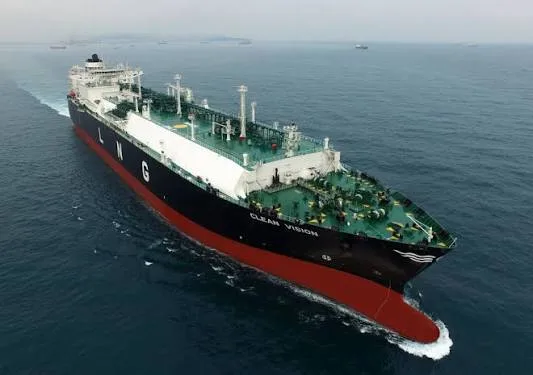
Dynagas currently operates six LNG carriers with an aggregate carrying capacity of approximately 914,000 cubic metres.