Norway expands Oslo–Bergen rail freight capacity as road tunnel restrictions begin
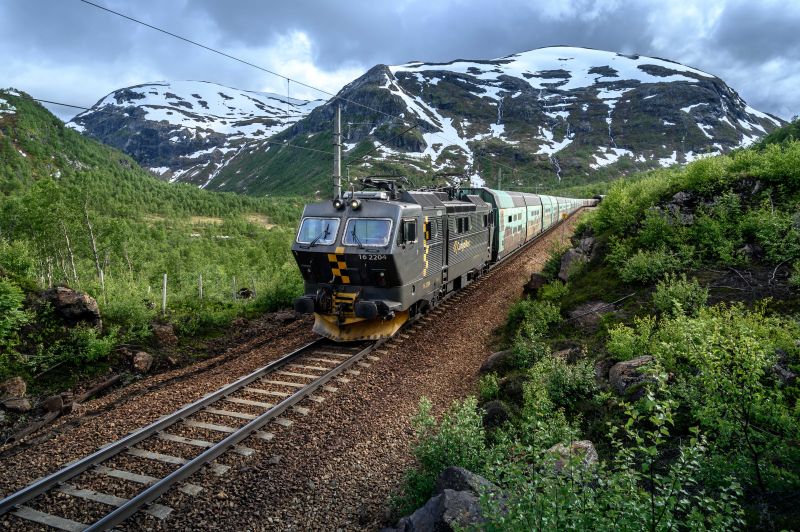
Norwegian rail freight operators OnRail and CargoNet are expanding transport capacity between Oslo and Bergen as extensive overnight closures begin at the Lærdal Tunnel, a major road connection between eastern and western Norway.
The changes are intended to support freight movements along one of Norway’s most important domestic logistics corridors, where rail already accounts for more than 60% of goods transportation between the two cities, according to the Norwegian Railway Directorate.
CargoNet is introducing longer freight trains from 16 November 2026, while OnRail has planned an additional daily train pair on the Bergen Line, increasing the combined rail freight offering to seven train pairs on weekdays.
The developments coincide with the start of a major upgrade programme at the 24.5-kilometre Lærdal Tunnel on the E16 highway, which will substantially restrict overnight road movements.
Rail operators increase freight capacity
OnRail’s expansion provides for a third daily train pair between Oslo and Bergen, allowing the operator to offer two evening departures and one daytime service in each direction.
The additional connection increases the operator’s transport offering along the Bergen Line, which links the Alnabru freight terminal in Oslo with the Nygårdstangen terminal in Bergen.
The Norwegian Railway Directorate previously confirmed that OnRail and CargoNet were responding to rising demand for rail freight capacity along the corridor.
CargoNet, meanwhile, is increasing the carrying capacity of its existing services rather than introducing additional departures.
From 16 November, the company will operate longer freight trains when required by demand, allowing additional cargo to be transported using established schedules.
A further operational adjustment will take effect on 14 December, when CargoNet will permit unloading at Oslo’s Alnabru terminal from 06:30 for train 5512, which departs Bergen the previous evening.
The earlier unloading arrangement is intended to improve access to arriving freight and support onward distribution activities.
Together, the two operators’ capacity measures provide additional transport options for businesses moving goods between Norway’s two largest metropolitan areas.
Lærdal Tunnel closures affect road freight
The rail capacity expansion coincides with the start of extensive maintenance and safety improvement works at the Lærdal Tunnel.
According to the Norwegian Public Roads Administration, Statens vegvesen, the tunnel will be closed from 18:00 to 06:00 each night, except Saturday night into Sunday, beginning on 16 November 2026.
The initial period of 12-hour closures is expected to continue until summer 2028, after which shorter overnight restrictions are planned as the upgrade progresses.
The works involve structural and safety improvements, including upgraded ventilation, emergency facilities and other tunnel infrastructure.
The restrictions will affect road transport planning between eastern and western Norway, particularly for freight operators relying on overnight movements.
Statens vegvesen has identified the Rv. 7 route across Hardangervidda as an important alternative, although winter weather can limit accessibility.
The authority has arranged for the Lærdal Tunnel to remain open when the Hardangervidda crossing is closed because of severe weather.
During daytime operations, motorists may also experience delays caused by temporary traffic controls within the tunnel.
Rail strengthens its role in domestic freight transport
The Oslo–Bergen corridor already has a relatively high share of rail freight compared with other domestic transport routes.
In March 2026, the Norwegian Railway Directorate reported that more than 60% of freight between the two metropolitan areas travelled by rail.
At the time, CargoNet reported freight volume growth of approximately 20% during the opening months of the year, reflecting increased demand for rail transport.
The capacity adjustments by CargoNet and OnRail provide an opportunity to accommodate additional freight during a period of reduced road accessibility.
However, the scale of any further shift from road to rail will depend on customer demand, available train capacity and operational conditions along the railway.
The developments highlight the importance of rail freight infrastructure in maintaining domestic supply chain connectivity while major road transport routes undergo prolonged upgrades.