d’Amico International Shipping strengthens earnings and net cash position
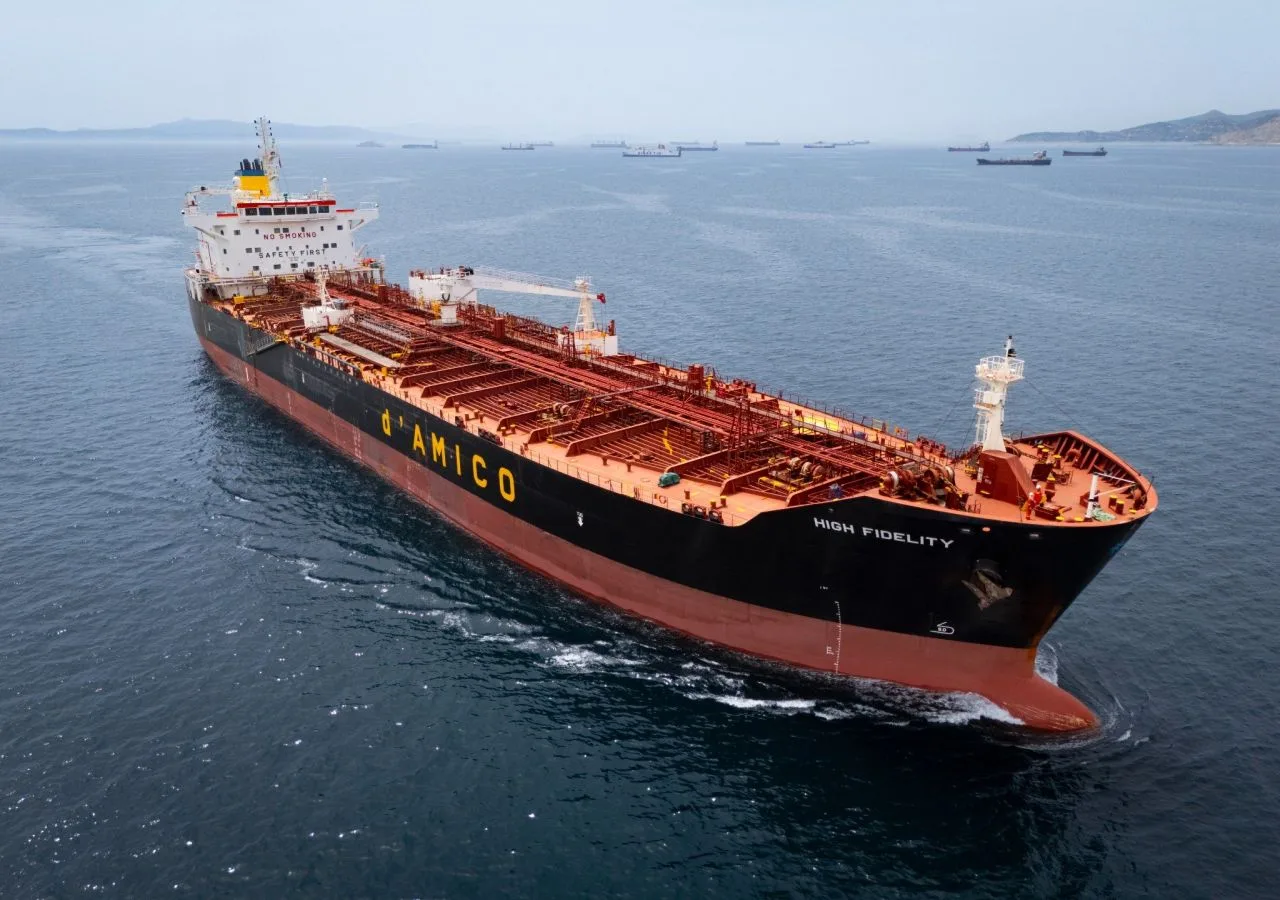
d’Amico International Shipping reported higher profitability for the third quarter and first nine months of 2026, supported by stronger product tanker freight rates and continued financial improvement. The Milan-listed company also confirmed an interim dividend and outlined further progress in its fleet renewal programme, which includes ten newbuilding vessels scheduled for delivery through 2029.
Net profit for the first nine months of 2026 reached US$107.2 million, compared with US$62.8 million in the corresponding period of 2025. Adjusted net profit, excluding vessel disposals and other non-recurring items, increased to US$101.6 million from US$67.1 million. EBITDA rose to US$145.9 million from US$112.5 million, while total net revenue increased to US$225.7 million.
For the third quarter, the company recorded net profit of US$27.8 million, compared with US$24.3 million a year earlier. Quarterly EBITDA reached US$40.2 million, slightly above the US$39.2 million reported in the same period of 2025, while time charter equivalent earnings remained broadly stable at US$67 million.
The company’s average daily spot TCE rate increased to US$41,094 during the first nine months, from US$23,473 in the previous year. Third-quarter spot earnings averaged US$34,940 per day, compared with US$25,502 in Q3 2025. Including both spot and time-charter employment, blended daily TCE averaged US$29,911 for the nine-month period, up from US$23,583.
Fixed-rate employment remained an important component of the company’s commercial strategy. Approximately 63.2% of available vessel days during the first nine months were covered by period contracts at an average daily TCE rate of US$23,402, providing a degree of earnings stability amid volatile freight market conditions.
Fleet renewal and financial position
d’Amico International Shipping continued implementing its fleet renewal strategy, with ten newbuildings representing an investment of approximately US$512.3 million. The programme comprises four LR1 product tankers scheduled for delivery in the second half of 2027 and six MR vessels expected to enter service in 2029.
The six MR newbuildings include two 40,000 dwt MR1 tankers contracted in December 2025 and four 50,000 dwt MR2 tankers ordered during the first quarter of 2026. The MR2 vessels were contracted with China’s Jiangsu New Yangzi Shipbuilding at US$45.4 million each. According to the company, the new vessels are designed to deliver improved fuel efficiency compared with its existing eco-fleet.
Fleet renewal also involved the disposal of older tonnage. The company sold the 2012-built MR tanker High Seas for US$27.6 million, completing delivery to its buyer in April 2026. Its sister vessel High Tide, also built in 2012, was sold for US$28.5 million and delivered to its buyer in early November.
As of November 5, d’Amico International Shipping controlled 27 vessels on the water, comprising six LR1, 15 MR and six Handysize tankers. Of these, 26 were owned and one was operated under a bareboat charter arrangement with a purchase obligation.
The company’s balance sheet strengthened during the reporting period, with a net cash position of US$56.6 million at September 30, compared with net debt of US$27.4 million at the end of 2025. Cash and cash equivalents reached US$265.4 million, while operating cash flow for the first nine months amounted to US$136.6 million.
The board approved an interim gross dividend of US$0.3360 per share, representing an aggregate distribution of approximately US$40 million. Payment is scheduled for November 18, 2026, with November 16 set as the ex-dividend date.
Product tanker market outlook
The company attributed much of the freight market volatility during 2026 to geopolitical developments in the Middle East, particularly disruptions to oil flows through the Strait of Hormuz. While crude oil exports from the region recovered substantially during September, refined-product shipments remained below pre-conflict levels, affecting cargo availability and tanker deployment.
In its market commentary, d’Amico noted that stronger crude tanker earnings had encouraged some LR2 vessels to shift towards dirty cargo trades, reducing available capacity for clean petroleum products. The company also highlighted the effects of Russian refinery disruptions, sanctions and changing trading routes on global product tanker demand.
Looking ahead, the company identified recovering refined-product exports and continued trading inefficiencies as potential sources of freight market support. However, accelerating newbuilding deliveries and weaker oil consumption remain important risks, with the future balance between fleet supply and transport demand dependent partly on developments in the Middle East.
Carlos Balestra di Mottola, Chief Executive Officer of d’Amico International Shipping, said the company’s modern fleet, financial position and capital allocation strategy provided a foundation for navigating future market cycles while maintaining investment and shareholder distributions.