MOL, Sharp and IOM complete solar panel delivery project in Kenya
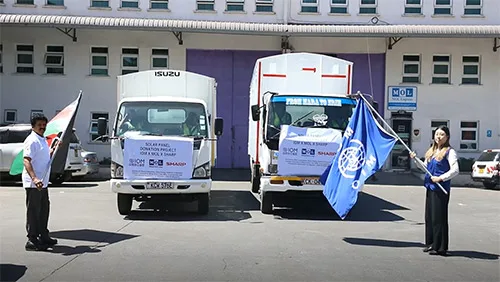
Mitsui O.S.K. Lines (MOL), Sharp and the International Organization for Migration (IOM) have completed a joint initiative to deliver and install solar power equipment in vulnerable communities in Kenya, using an international multimodal logistics operation supported by environmental attribute certificates.
The project involved the donation of 420 solar panels manufactured by Sharp, which were installed in Tana River County in coastal Kenya and Mandera County in the country’s northeast. The installations are intended to improve access to electricity for communities affected by flooding, displacement and other humanitarian challenges.
MOL provided the international transport services free of charge, combining container shipping, rail and road freight to move the equipment from Sharp’s warehouse in Sakai, Osaka, to the MOL Logistics warehouse in Nairobi.
A ceremony held in Tana River County on 29 October 2026 marked the implementation of the project. According to MOL, the solar equipment installed in that area will provide electricity to approximately 130 households.
Multimodal transport connects Japan and Kenya
The logistics operation began at Sharp’s Sakai warehouse in Japan, with MOL coordinating the international movement of the donated equipment through several transport modes.
Container shipping, rail and trucking were used to deliver the panels to Nairobi, where MOL Logistics supported the Kenyan distribution stage. The equipment was subsequently transported to the beneficiary communities for installation.
The project demonstrates how established commercial logistics networks can be used to support humanitarian deliveries, particularly in regions where infrastructure and access to essential services are limited.
Tana River County has experienced recurrent flooding that has displaced households, while communities in Mandera County face challenges associated with drought, flooding and conflict.
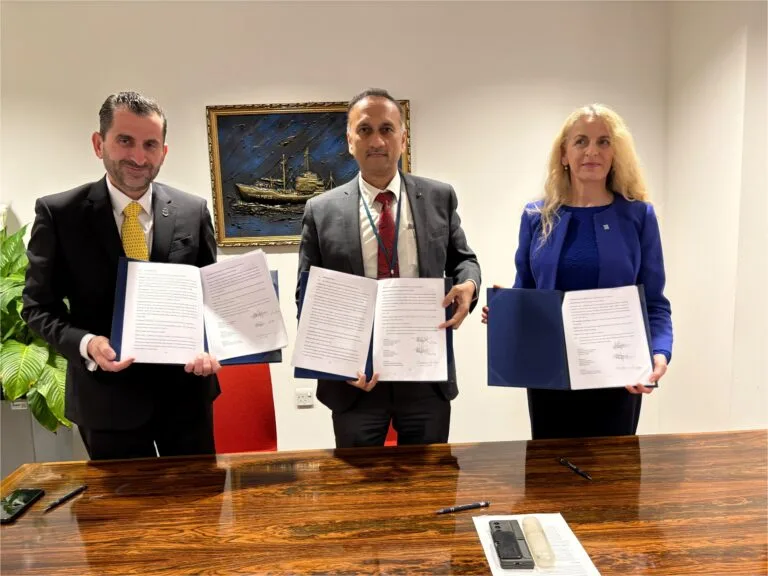
The collaboration builds on an agreement reached by MOL, Sharp and IOM during the Tokyo International Conference on African Development in August 2025.
Environmental certificates cover transport modes
Alongside the physical movement of the equipment, MOL arranged environmental attribute certificates covering the maritime, rail and road transport components of the logistics operation.
These certificates represent environmental characteristics associated with lower-carbon transport activities, allowing the shipper to make documented claims under the relevant accounting framework.
For the project, MOL worked with Swedish low-carbon fuel supplier Energifabriken i Sverige AB, Swiss climate project developer Sentinel Earth AG and Dutch environmental attribute certificate provider Carboninsets B.V.
The certificates were issued through the 123Carbon registry, extending the environmental attribute arrangement across all three transport modes.
MOL is also working with classification society ClassNK on greenhouse gas emissions calculations and reporting, including efforts to obtain third-party verification.
The use of certificates does not necessarily mean that the particular ships, trains and trucks carrying the solar panels physically operated with zero emissions. Rather, the arrangement links the transport service to documented lower-carbon environmental attributes.
Kenya remains a strategic market for MOL
The project also reflects MOL’s broader presence in East Africa, where the group provides maritime transport, freight forwarding and warehousing services.
In 2023, MOL expanded its regional logistics activities through cooperation with GCS Velogic and the launch of its first warehouse operation in Africa, located in Kenya.
The company has identified the Indian Ocean region, extending from East Africa towards Southeast Asia, as a priority area under its BLUE ACTION 2035 management strategy.
The completed solar project combines MOL’s transport network with Sharp’s renewable energy equipment and IOM’s humanitarian operations, supporting electricity access for displaced and vulnerable communities.
While the installation of the donated panels has been confirmed, the companies have not disclosed the project’s financial value or quantified greenhouse gas reductions associated with its transport arrangements.