TORM reports stronger earnings and raises annual guidance
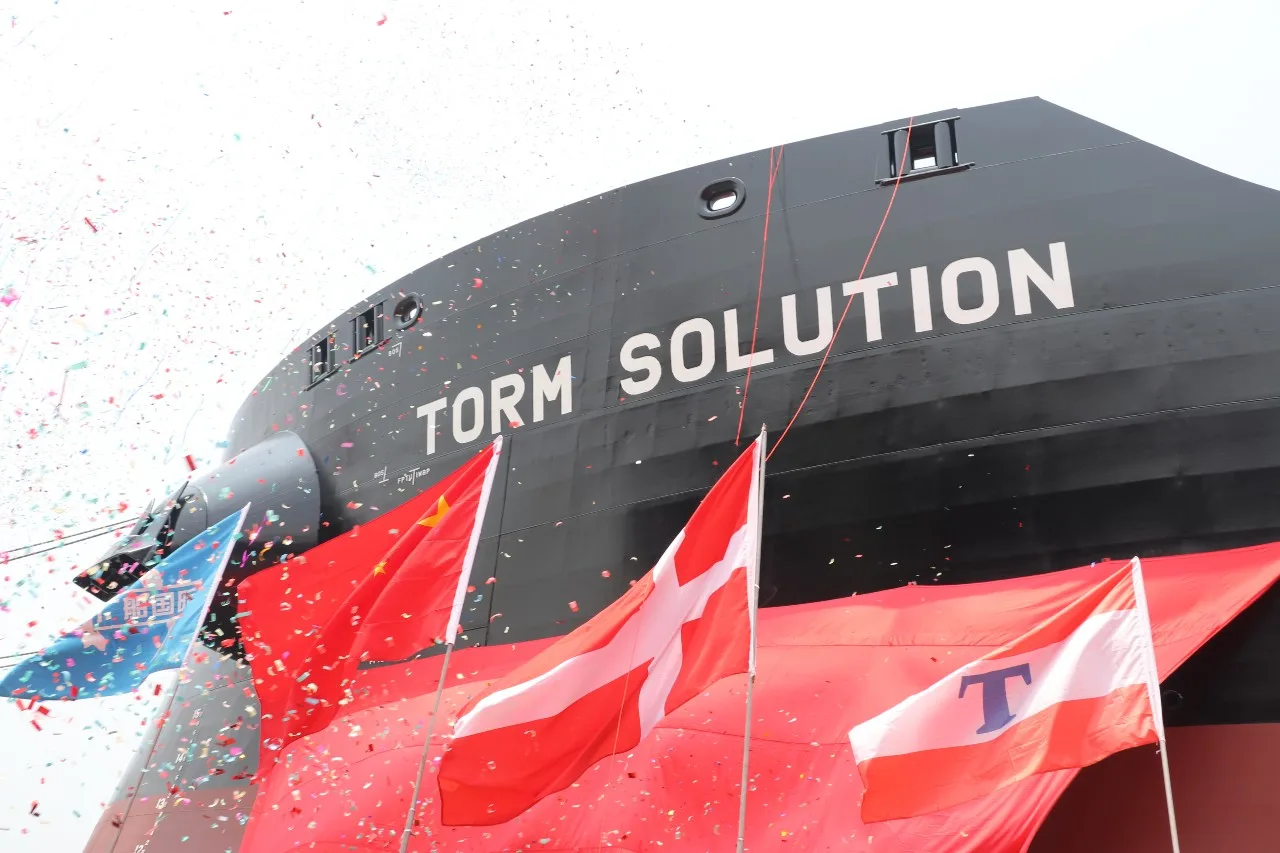
TORM reported a sharp increase in third-quarter 2026 earnings as strong product tanker freight rates, changing global oil trade patterns and higher fleet activity supported its financial performance. The company also raised the lower end of its full-year guidance and continued investing in new vessels to renew and expand its fleet.
The product tanker operator generated time charter equivalent (TCE) earnings of US$353 million during the quarter, compared with US$236 million in the corresponding period of 2025. EBITDA increased to US$274 million from US$152 million, while net profit rose to US$199 million from US$78 million a year earlier.
Fleet-wide average TCE rates reached US$40,102 per day, compared with US$31,012 per day in the third quarter of 2025. Available earning days also increased to 8,799 from 7,859, reflecting a larger operating base.
The LR2 segment achieved average TCE rates of US$52,575 per day, followed by US$38,667 per day for LR1 vessels and US$36,137 per day for MR tankers. Return on invested capital increased to 26.3% from 13.8%, while basic earnings per share reached US$1.94.
For the first nine months of 2026, TORM recorded TCE earnings of US$1.15 billion, compared with US$659 million in the same period last year. EBITDA increased to US$891 million from US$414 million, while net profit reached US$660 million, compared with US$199 million in the corresponding period of 2025.
Tanker market conditions and fleet investment
According to TORM, freight markets benefited from continued disruption to global oil trade flows associated with the conflict involving the United States and Iran. Following the breakdown of a temporary ceasefire in July, increased reliance on shuttle tanker and ship-to-ship operations for Persian Gulf exports created logistical inefficiencies and absorbed tanker capacity.
The company also identified constrained product exports from the Middle East and Russia, strong export activity from the United States and Asia, and the movement of LR2 vessels into crude-related trades as factors supporting freight rates.
“Favorable market conditions, healthy transportation demand, and strong execution contributed to a strong third quarter,” said Jacob Meldgaard, CEO of TORM.
TORM continued its fleet renewal programme during the period, selling the 2007-built LR1 tanker TORM Venture and the 2008-built MR tanker TORM Laura. Following these disposals, its operating fleet comprised 95 vessels at the end of September, excluding vessels on order.
After acquiring six MR resale vessels in the second quarter, TORM ordered six MR newbuildings during the third quarter and subsequently exercised options for two additional MR vessels. Following the end of the quarter, the company entered into agreements for eight LR2 newbuildings through a 50/50 joint venture structure and secured options for another two MR newbuildings.
These investments establish a pipeline of vessel deliveries extending through 2030. The company said its fleet renewal strategy is intended to improve operating efficiency and support its long-term position in the product tanker market.
Based on broker valuations at 30 September 2026, TORM’s operating fleet had an estimated market value of US$4.33 billion, compared with US$2.86 billion a year earlier. Consolidated net asset value reached US$4.06 billion, equivalent to US$39.60 per share.
Dividend distribution and revised outlook
TORM’s Board of Directors approved an interim dividend of US$1.35 per share for the third quarter, representing an expected total distribution of approximately US$139 million. The payment corresponds to 75% of quarterly net profit excluding non-recurring items and is scheduled for 2 December 2026.
The company raised the lower end of its full-year TCE earnings guidance to US$1.75 billion from US$1.70 billion, while maintaining the upper end at US$1.90 billion. Its EBITDA forecast was similarly revised to US$1.35 billion–US$1.50 billion, compared with the previous range of US$1.30 billion–US$1.50 billion.
As of 28 October, TORM had secured employment for 53% of its fourth-quarter earning days at an average TCE rate of US$78,419 per day. LR2 vessels had 68% coverage at US$112,150 per day, while LR1 and MR vessels had secured 38% and 49% of their earning days at US$106,271 and US$59,722 per day, respectively.
For the full year, 88% of expected earning days had been fixed at an average rate of US$50,487 per day. The remaining 4,060 earning days were still exposed to freight market movements, with TORM estimating that a US$1,000-per-day change in rates would affect EBITDA by approximately US$4 million, all else being equal.
The revised guidance reflects the company’s strong contracted coverage entering the final months of 2026, although its remaining open earning days continue to expose results to changes in tanker freight rates.