Hapag-Lloyd and Maersk shift Indian Ocean Service to Suez route
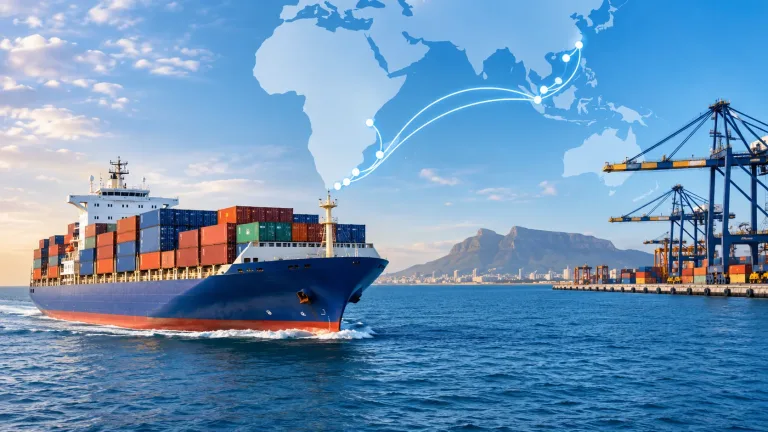
Hapag-Lloyd and Maersk have announced that the Gemini Cooperation’s Indian Ocean Service (IOS), designated ME1 by Maersk, will return to the Red Sea and Suez Canal route instead of sailing around the Cape of Good Hope.
The decision follows an assessment of the security situation in the Red Sea and represents another step in the carriers’ gradual transition towards trans-Suez operations. The service connects India with Northern Europe, including major ports in Germany, the Netherlands and the United Kingdom.
The revised routing is scheduled to take effect in November 2026, beginning with the Atlanta Express, voyage 644W, departing Salalah on 4 November. The eastbound Savannah Express, voyage 644E, is also scheduled to adopt the revised route from Tangier, although the carriers have published slightly different estimated departure dates.
Hapag-Lloyd lists 12 November for the Savannah Express, while Maersk specifies 13 November. The announced dates remain subject to operational conditions.
Updated Indian Ocean Service rotation
According to Maersk’s service advisory, the ME1 will operate the following rotation:
Mundra – Nhava Sheva – Salalah – Suez Canal – Tangier – Rotterdam – Wilhelmshaven – Hamburg – London – Algeciras – Tangier – Suez Canal – Salalah – Mundra.
The change replaces the longer diversion around southern Africa with a more direct maritime connection through the Red Sea and Suez Canal.
Both carriers expect the revised route to improve transit efficiency for cargo moving between India and Europe. However, neither announcement provides specific revised transit times or quantified voyage savings.
The return to the Suez route follows earlier network changes across the Gemini Cooperation. In September 2026, Maersk and Hapag-Lloyd announced the transition of the AE5, AE11, AE12 and ME2 services away from the Cape of Good Hope routing, building on other Gemini services already operating through the Suez corridor.
The ME1/IOS adjustment therefore forms part of a broader, phased restructuring of the cooperation’s shipping network rather than an isolated operational decision.
Security conditions remain central
Despite the routing changes, Maersk and Hapag-Lloyd have emphasised that further adjustments will depend on security developments in the Red Sea and the wider Middle East.
The carriers said they would continue monitoring the regional situation, with the safety of crews, vessels and customers’ cargo remaining a primary consideration.
The latest decision establishes a revised operating route for the Indian Ocean Service but does not constitute an unconditional commitment to maintaining Suez transits regardless of future security developments.
For customers using the service, the immediate operational implications concern the two announced transition sailings and the replacement of the Cape of Good Hope passage with the shorter trans-Suez corridor.