Washington’s new lever against Beijing
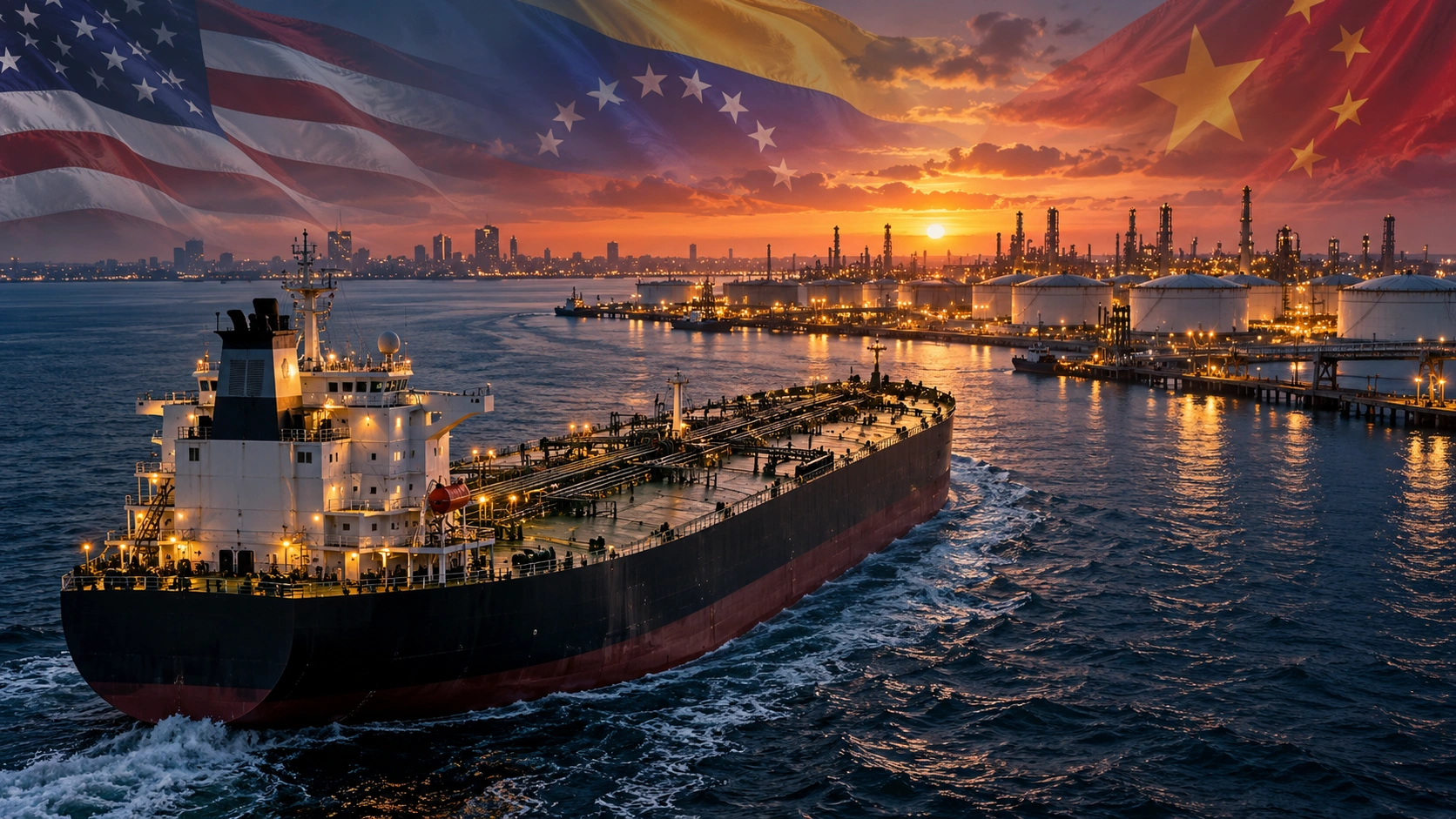
The first NABEP cargo shows the US turning sanctions and sea power from blocking oil flows to directing them, giving it a real but limited lever in its rivalry with China.
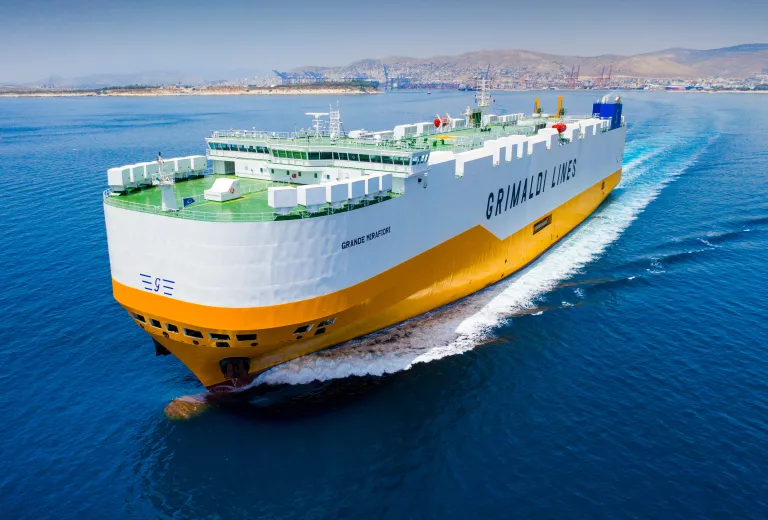
On 27 October, two tankers carrying one million barrels of Venezuelan crude docked at Corpus Christi.
It was the first cargo under the August agreement between the Trump administration and North American Blue Energy Partners, and the oil will be sold to refineries run by ExxonMobil and Citgo. The shipment is small.
What matters is who now decides where Venezuelan oil goes, and who no longer receives it.
From denial to direction
The deal completes a shift in US maritime practice. Washington began by blocking oil flows, seizing shadow tankers in the Caribbean and blockading Iranian ports. It now directs them.
Under NABEP’s terms, the Pentagon’s Office of Strategic Capital takes a 35% stake, and the US can buy 20% of output at cost and holds the right of first refusal on the remaining 80%.
The same approach runs through the licensed Russian diesel trade and the conversion of sanctioned tankers into a “good-guy fleet.”
With Hormuz near closure, Atlantic barrels also have strategic value. They reach Texas in about a week, compared with more than a month from the Gulf.
A trade turned around
The change in direction is stark. In 2024, more than half of Venezuela’s 768,000 barrels per day of crude exports went to China, often carried by shadow tankers and relabelled as Malaysian.
By September 2026, exports had reached 1.08 million barrels per day, with 629,000 going to the US, 253,000 to India and 86,000 to Europe.
China no longer appeared among the destinations. Short, compliant routes to the US Gulf have replaced dark, long-haul flows to Asia.
Where the lever bites
The leverage over China is real, but it works through three channels rather than through volume.
The first is control of sales: through its right of first refusal, Washington can approve, price or withhold any China-bound cargo, which turns Venezuelan crude into a bargaining chip, much like the suspended port fees.
The second is financial. Five of the fields moving to NABEP are joint projects with Chinese firms.
Chinese lenders are also still owed an estimated US$10–12 billion under oil-for-loans deals that no longer receive barrels.
The third is precedent: Beijing’s model of lending against future oil has been overturned by force in the Western Hemisphere, and every indebted Latin American government will take note.
With Iran also under US blockade, China’s independent refiners have lost both of their main sources of discounted heavy crude within a year.
Where it stops
The limits are equally clear. Venezuela supplied only about 4–4.5% of China’s seaborne oil imports, and refiners can replace it at a higher price.
Russian barrels remain an alternative, partly because Washington itself has eased restrictions on them.
China’s diversification into coal chemistry, electrification and new supply routes has reduced its exposure to any single supplier.
Venezuela had just two active drilling rigs in August, against the roughly 50 it will need by 2028.
And a concession awarded without competitive bidding, over oil taken from a deposed government, invites legal and political challenge. Beijing can afford to wait.
The verdict
Control over where Venezuela’s oil ships gives Washington moderate, not decisive, leverage.
Its value lies in three things: denying China a source as part of a wider effort, holding a sales valve it can trade, and setting a precedent that weakens China’s lending model.
Combined with the Iran blockade, the shrinking Atlantic space for the shadow fleet and pressure on Panama’s ports, it forms a Western Hemisphere energy perimeter.