Port of Brunswick advances Ro-Ro expansion as automotive trade grows
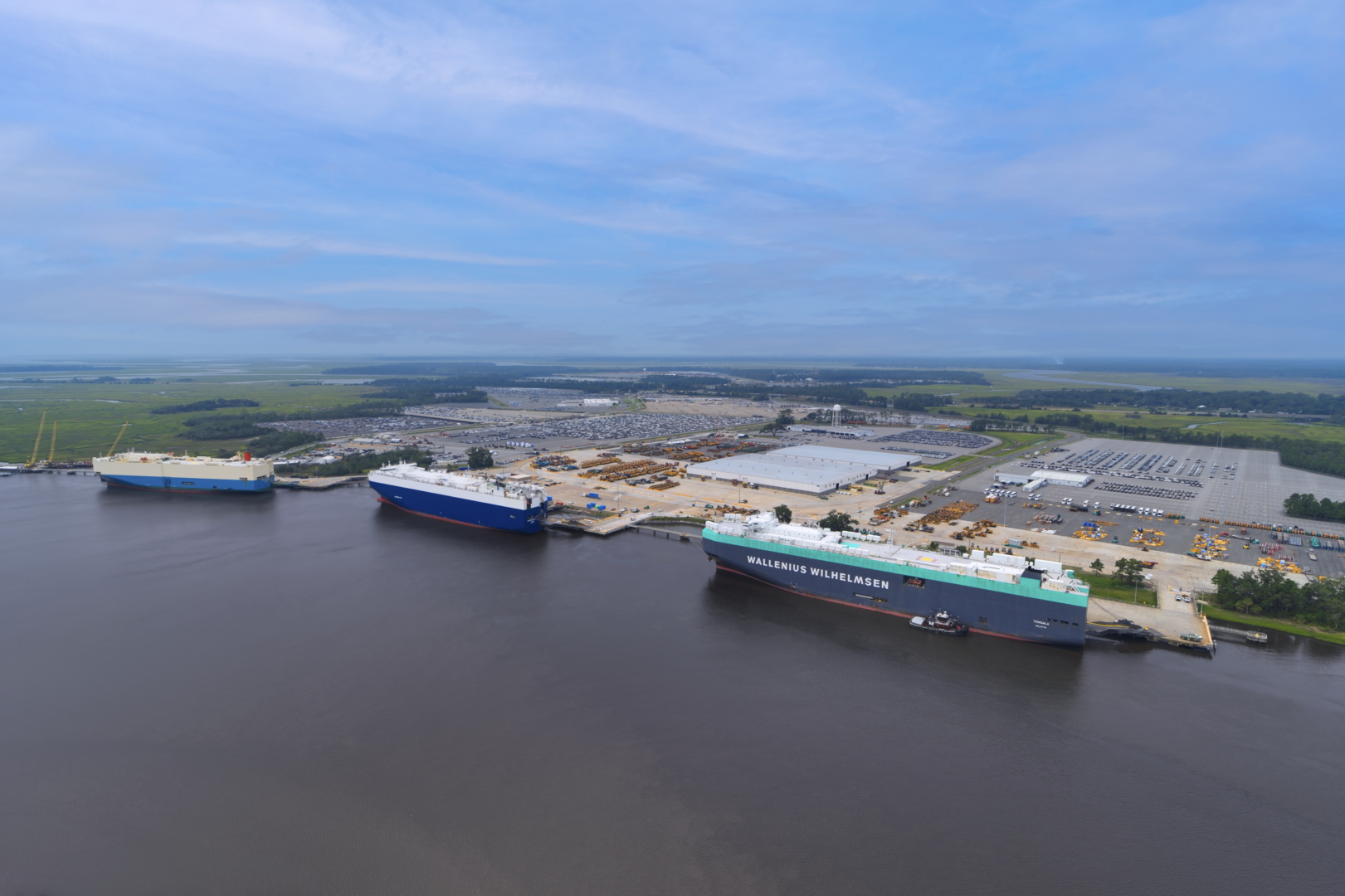
The Port of Brunswick in Georgia is progressing with the expansion of its Roll-on/Roll-off infrastructure, as the Georgia Ports Authority (GPA) prepares to accommodate larger vehicle carriers and support the region’s expanding automotive manufacturing and logistics sector.
Construction of a fourth Ro-Ro berth at Colonels Island Terminal is now 60% complete, with the facility scheduled to enter service in December 2027. The port’s three existing vehicle berths handled 50 vessels during October 2026, reflecting the scale of shipping activity at one of the United States’ principal automotive gateways.
The additional berth is designed to increase vessel-handling capacity, support faster turnaround times and accommodate the latest generation of larger Pure Car and Truck Carriers (PCTCs), including vessels capable of transporting more than 10,800 car equivalent units (CEU).
The project forms part of GPA’s continuing infrastructure development programme, which includes a $100 million investment in the fourth berth and wider improvements to automotive handling and inland transportation capacity.
Automotive manufacturing strengthens port demand
During its annual State of the Port of Brunswick event on 10 November, the Georgia Ports Authority highlighted the relationship between the state’s expanding automotive manufacturing industry and demand for maritime vehicle transportation.
Georgia has attracted investment from several international automakers, including Hyundai, Kia, Rivian and Audi, strengthening the state’s position within the North American automotive production and distribution network.
Hyundai Motor Group’s manufacturing complex in Ellabell, approximately 30 miles west of the Port of Savannah, is expected to support 8,500 jobs by 2031. The project has also attracted 22 suppliers to nearby locations, adding to the region’s automotive supply chain.
Kia has operated its manufacturing facility in West Point, Georgia, since 2009, while Rivian is developing a new electric vehicle plant at Stanton Springs North. The Rivian project represents a planned investment of $5 billion and is expected to create 7,500 long-term jobs by 2030.
Audi has also announced plans for its first US manufacturing facility near Macon, Georgia, involving an intended investment of $4 billion. Construction is scheduled to begin in 2027, with production planned for the early 2030s.
The Georgia Ports Authority identified these developments as part of a broader expansion in vehicle manufacturing and distribution activity across the state. Other automotive brands, including BMW, Mercedes-Benz and Volvo, use the Port of Brunswick for finished vehicle shipments and processing.
The port also serves the movement of heavy machinery, including construction and agricultural equipment, adding another source of demand for Ro-Ro shipping services.
Additional berth and inland connectivity
The fourth berth is expected to increase operational flexibility at Colonels Island Terminal, allowing the port to handle more vehicle carriers while improving vessel scheduling and reducing potential delays associated with berth availability.
Brunswick’s existing infrastructure combines dedicated Ro-Ro berths with vehicle processing facilities, storage areas and rail connections serving automotive manufacturers, distributors and dealerships across the southeastern United States.
Recent rail improvements at Colonels Island have doubled the Southside Railyard’s weekly capacity from five to ten trains, supporting an increase in the port’s overall annual rail-handling capacity from approximately 150,000 to more than 340,000 vehicles.
The Port of Savannah also supports the state’s automotive industry through containerised shipments of vehicle parts and components. According to GPA, Savannah handles approximately 40 vessel calls and 15,000 truck gate transactions per week and day, respectively, alongside 42 double-stack train services per week from its Mason Mega Rail facility.
Georgia Ports Authority CEO Griff Lynch said the organisation’s investment programme is intended to strengthen the competitiveness of the state’s international supply chains and support further industrial development.

The authority has outlined a self-financed infrastructure investment programme of nearly $5 billion over the next decade, covering both the Port of Brunswick and the Port of Savannah. In addition to the fourth Ro-Ro berth, the programme includes plans for five additional large-vessel container berths in Savannah.
The continuing development of Brunswick’s automotive facilities reflects the growing importance of dedicated vehicle-handling capacity as automakers expand production in the southeastern United States and adjust their international supply chains.
With the fourth berth scheduled for completion in December 2027, the port is preparing for additional vehicle carrier calls and the operational requirements of larger PCTCs, while reinforcing its role in US automotive imports and exports.