ITF joins ISF Verify to expand digital seafarer certification
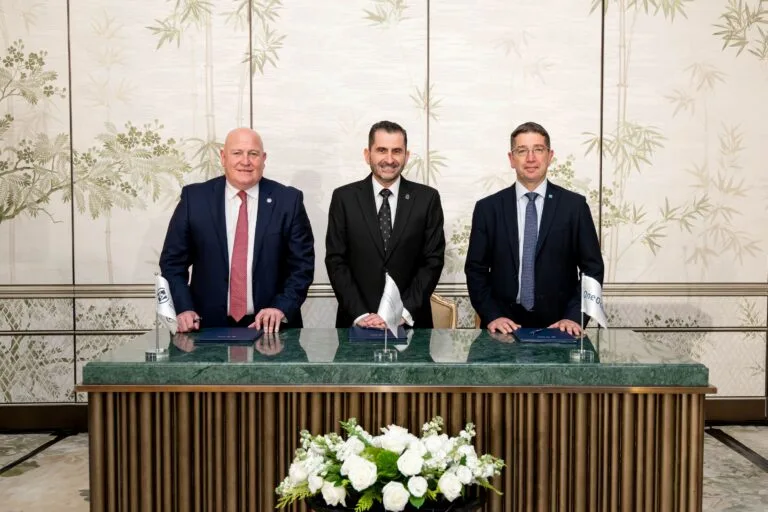
The International Transport Workers’ Federation (ITF) has joined the ISF Verify initiative, bringing seafarer representation into an international project aimed at simplifying the issuance, sharing and verification of maritime certificates.
The agreement, announced on 17 November 2026 during Hong Kong Maritime Week, was signed with the International Chamber of Shipping (ICS) and Lloyd’s Register OneOcean.
The cooperation will support the project’s development and potential adoption through the ITF’s network, which reaches approximately one million seafarers across more than 100 countries.
The ITF’s involvement follows recent developments involving India and the Philippines, two major seafarer-supplying nations participating in efforts to establish interoperable digital certification systems.
Seafarer representation added to digital certification project
ISF Verify is a cloud-based platform developed by ICS and Lloyd’s Register OneOcean to support the transition from paper-based certificates to digital verification.
The platform is designed to connect maritime administrations, shipping companies, port state control authorities and individual seafarers, allowing authorised parties to verify certification information through existing national systems.
Rather than maintaining a central database of certificates, ISF Verify is intended to connect directly with issuing administrations through real-time queries. Certificate records remain under the control of the relevant national authority.
The system also allows seafarers to decide who can access their personal certification information and to withdraw that access. The planned mobile application will provide seafarers with free access to their certificates.
Under the new cooperation, the ITF and its inspectorate will contribute feedback from seafarers to help shape the platform’s development and practical implementation.
Stephen Cotton, General Secretary of the ITF, emphasised that digital certification should reflect the needs of maritime workers.
“Digitalisation must work for seafarers – and that means ensuring that seafarers’ voices are heard,” said Cotton.
The cooperation will also support communication about ISF Verify through the participating organisations’ international networks.
India and Philippines provide foundation for wider adoption
The ITF’s participation follows India’s decision earlier this month to join ISF Verify through a cooperation agreement involving its maritime administration, ICS and Lloyd’s Register OneOcean.
The Indian initiative will examine how the country’s existing certification infrastructure can connect with ISF Verify while maintaining national control over certificate records.
The platform has also completed a proof-of-concept programme with the Philippines’ Maritime Industry Authority (MARINA), establishing a foundation for further technical integration.
According to the ICS, India and the Philippines are among the countries representing approximately 30% of the global seafarer workforce covered by the project’s recent cooperation initiatives.
However, these developments do not mean digital certificates have already been deployed to all seafarers in those countries.
Similarly, the ITF’s network of approximately one million seafarers represents potential outreach rather than confirmed registration on the platform.
Thomas A. Kazakos, Secretary General of the ICS, said the project aims to establish a trusted method of verifying maritime qualifications while respecting national regulatory responsibilities.
The latest agreement broadens the project’s institutional participation by adding direct input from seafarer representatives as work continues towards wider international implementation.
No specific timetable for a global roll-out or number of newly registered users was disclosed.