Globus Maritime returns to profitability as dry bulk earnings strengthen
Globus Maritime Limited reported improved financial performance for the third quarter and first nine months of 2026, supported by higher dry bulk charter earnings and stronger operating cash flow.
The Nasdaq-listed shipping company recorded third-quarter revenue of $15.1 million, compared with $12.6 million in the corresponding period of 2025, representing an increase of 20%. Net income rose to $4.0 million from $0.7 million a year earlier, while adjusted EBITDA increased to $9.2 million from $5.5 million.
The improvement reflected stronger conditions in the dry bulk freight market. Globus Maritime achieved an average daily Time Charter Equivalent (TCE) rate of $19,416 during the quarter, compared with $15,133 in the third quarter of 2025, an increase of 28%.
For the nine months ended 30 September 2026, the company reported revenue of $42.0 million, up 36% from $30.8 million in the previous year. Net income reached $9.1 million, reversing a net loss of $2.6 million in the corresponding period of 2025, while adjusted EBITDA increased to $24.5 million from $10.7 million.
The average daily TCE rate for the nine-month period rose by 54% to $18,277, compared with $11,886 a year earlier. Net cash generated from operating activities reached $24.4 million, compared with $4.7 million in the first nine months of 2025.
The company’s fleet utilisation remained high, reaching 98.2% during the third quarter and 98.7% over the nine-month period. Average daily vessel operating expenses declined to $5,338 in the quarter from $5,841 a year earlier.
Fleet expansion and market outlook
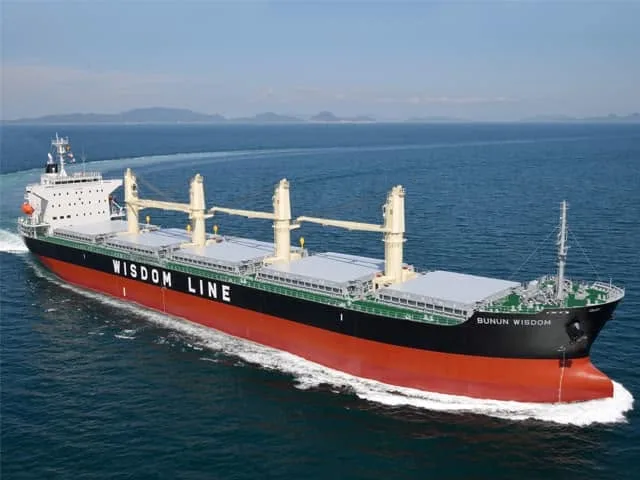
Globus Maritime also completed its Japanese newbuilding programme following the delivery of two Ultramax bulk carriers, GLBS Olympia on 4 September and GLBS Thalia on 26 October 2026.
Both vessels were built by Nihon Shipyard and have a carrying capacity of approximately 64,000 dwt each. Their delivery increased the company’s fleet to 11 dry bulk carriers, comprising six Kamsarmax and five Ultramax vessels, with a combined capacity of 808,622 dwt.
Following the completion of the programme, Globus Maritime has no remaining capital commitments under shipbuilding contracts. The company said it continues to evaluate opportunities for further capital deployment while maintaining its focus on financial discipline.
The company operates primarily in the spot and short-term charter markets, seeking to benefit from changing freight conditions across the Atlantic and Pacific basins.
Management noted that geopolitical developments affecting the Persian Gulf, Red Sea and Black Sea continue to influence shipping patterns, insurance costs and vessel operations. However, Globus Maritime reported no significant impact on its operations, financial position or performance during the first nine months of 2026 from the geopolitical developments assessed in its financial statements.
As of 30 September 2026, the company’s cash and cash equivalents, including current restricted cash, stood at $36.9 million, compared with $28.7 million at the end of 2025. Total debt and finance liabilities amounted to $129.7 million, compared with $109.2 million at the end of the previous year.
The latest results reflect a period of improved vessel earnings for Globus Maritime, alongside the completion of its fleet renewal investments and continued exposure to short-term dry bulk freight market conditions.