Costamare Bulkers reports stronger earnings following fleet reshaping
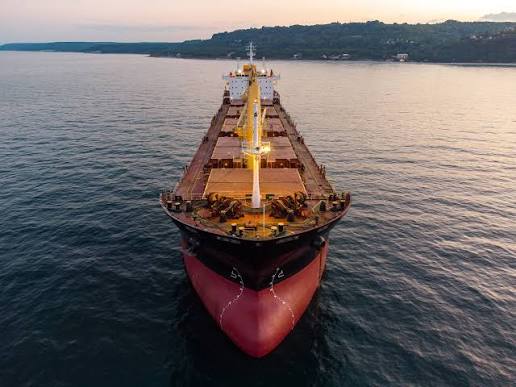
Costamare Bulkers Holdings Limited reported higher third-quarter earnings despite a substantial decline in voyage revenues, reflecting changes to its dry bulk operating platform following its agreement with Cargill and measures to reduce operating expenses.
According to the company’s financial results released on November 12, 2026, net income increased to $16.6 million in the third quarter from $7.4 million a year earlier. Adjusted net income reached $12.4 million, compared with approximately $0.5 million in the corresponding period of 2025, while total voyage revenues declined to $131.5 million from $222.9 million.
The company attributed the revenue decline partly to the significant downsizing of its operating platform following the agreement with Cargill International signed in late 2025. Third-quarter net income also included a gain of approximately $2.5 million from the sale of the Supramax Bermondi and net gains of $7.7 million on derivative instruments, including unrealised gains.
For the first nine months of 2026, Costamare Bulkers recorded net income of $31.7 million and adjusted net income of $34.6 million, with total voyage revenues reaching $354.6 million. The company did not provide comparable nine-month figures for 2025 because it became an independent publicly traded entity following its separation from Costamare Inc. in May 2025.
Owned fleet records higher charter earnings
The company’s owned dry bulk fleet achieved an average time charter equivalent rate of $17,550 per day during the third quarter, compared with $14,016 a year earlier. Fleet utilisation declined to 94.8% from 98.4%, while daily vessel operating expenses increased to $6,161 from $5,899.
As of November 10, Costamare Bulkers owned 29 dry bulk vessels with an aggregate capacity of approximately 2.6 million dwt. Of these, 24 were employed under period charters, while the company also operated 32 third-party chartered-in vessels through its CBI platform, primarily in the Kamsarmax and Panamax segments.
Following the transfer of its legacy trading portfolio to Cargill, the company has concentrated its operating platform on shorter-duration employment, retaining flexibility to adjust its chartering strategy. Gregory Zikos, Chief Executive Officer of Costamare Bulkers, said the company was now operating a Kamsarmax-focused trading platform, with most of its chartered-in vessels employed under short-term fixed-rate agreements.
Based on the existing employment of the owned fleet, management estimates that approximately 80% of available days in the fourth quarter of 2026 and 52% in the first quarter of 2027 will be covered by vessels operating under fixed-rate charters, including contracts converted from index-linked arrangements.
Refinancing strengthens financial flexibility
Costamare Bulkers has signed commitments for new loan facilities totalling $133 million, secured by 18 vessels in its existing fleet. The proposed financing arrangements are intended to refinance all existing loan obligations, reduce borrowing costs and extend debt maturities from late 2029 to between the fourth quarter of 2031 and the first quarter of 2032.
The refinancing remains subject to final documentation. Upon completion, the number of unencumbered vessels in the company’s fleet is expected to increase from three to eleven, providing additional flexibility for future fleet investments.
At the end of September, Costamare Bulkers reported total liquidity of $358.2 million, including available undrawn financing facilities. Cash and margin deposits exceeded outstanding debt by approximately $141.7 million, leaving the company in a net cash position.
The company also completed the disposal of the 2009-built Supramax Bermondi during the third quarter as part of its fleet renewal strategy. Management indicated that its balance sheet position would allow it to consider further investment opportunities while maintaining flexibility in a volatile dry bulk market.
Costamare Bulkers’ latest results reflect a smaller operating platform following the Cargill transaction, alongside improved owned-fleet charter earnings and a refinancing programme intended to support its longer-term financial position.