Mitsubishi Shipbuilding secures WinGD approval for ammonia fuel technology
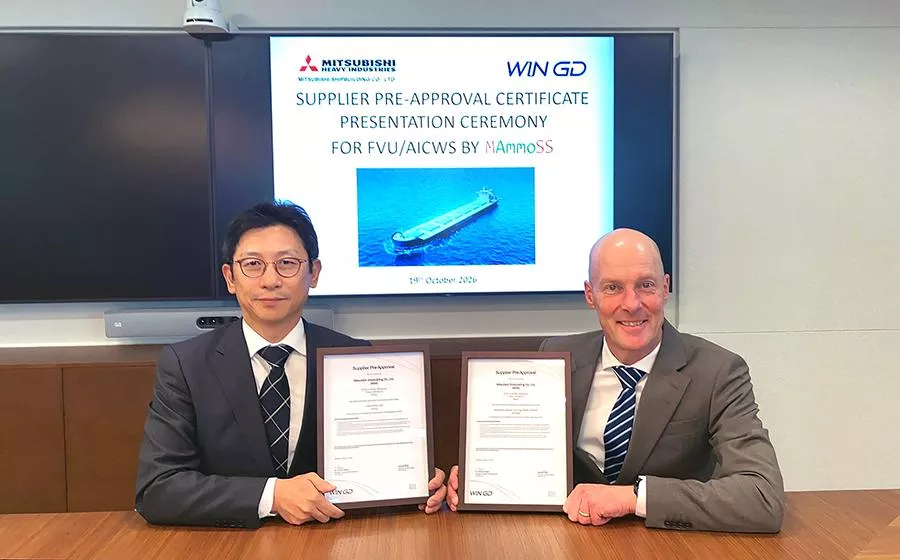
Mitsubishi Shipbuilding has secured Supplier Pre-Approval from Swiss marine engine developer WinGD for key components of its MAmmoSS ammonia fuel handling system, marking a further step toward the commercial deployment of equipment for ammonia-powered vessels.
Announced on November 9, 2026, the approval covers the Fuel Valve Unit (FVU) and Ammonia Injector Cooling Water System (AICWS), both designed for integration with WinGD’s X-DF-A ammonia-fueled, low-speed two-stroke marine engine. According to Mitsubishi Shipbuilding, this is the first Supplier Pre-Approval of its kind granted to a Japanese company.
The development follows a memorandum of understanding signed between Mitsubishi Shipbuilding and WinGD in 2023 and the completion of the basic design for an ammonia fuel supply system in 2024. The latest approval follows technical assessments covering Mitsubishi Shipbuilding’s development, design and manufacturing capabilities, quality assurance arrangements and project execution processes.
The company now intends to pursue the commercial introduction of the FVU and AICWS, although no specific market launch date or vessel installation contract was announced.
Integration with WinGD ammonia engines
MAmmoSS, the Mitsubishi Ammonia Supply and Safety System, combines an Ammonia Fuel Supply System, an Ammonia Gas Abatement System and integrated control equipment. Its architecture comprises a core package that can be used across different engine licensors and customised components designed for individual engine platforms.
The newly approved FVU and AICWS form part of the customised package for WinGD’s X-DF-A engine. The FVU manages ammonia fuel supply and shut-off functions, while also supporting the removal of residual ammonia from fuel lines using inert gas.
The AICWS circulates an ammonia solution through the system to neutralise and remove residual ammonia and provide cooling for the fuel injection valve during oil-fueled operation.
According to Mitsubishi Shipbuilding, integrating these components with the MAmmoSS core package allows them to be managed through a central control unit rather than separate device controllers. The company expects this arrangement to simplify system operation and maintenance.
Shin Ueda, President of Mitsubishi Shipbuilding, described the approval as an important outcome of the companies’ technical cooperation and a step toward wider adoption of ammonia-fueled vessels.
Benny Hilström, Executive Vice President of WinGD, said the decision reflected Mitsubishi Shipbuilding’s technical capabilities and quality management systems, adding that the companies intend to continue their cooperation in developing the ammonia-fueled vessel market.
Ammonia is being developed as an alternative marine fuel because it does not produce carbon dioxide during combustion. However, its overall environmental performance depends on how the fuel is produced, while toxicity, safe handling and potential emissions of other pollutants remain important technical considerations.
The approval expands Mitsubishi Shipbuilding’s ammonia-related equipment portfolio as shipowners, engine manufacturers and shipyards continue developing the systems required for the commercial use of ammonia as a marine fuel.