China expands scheduled rail freight operations as traffic rises 22.5%
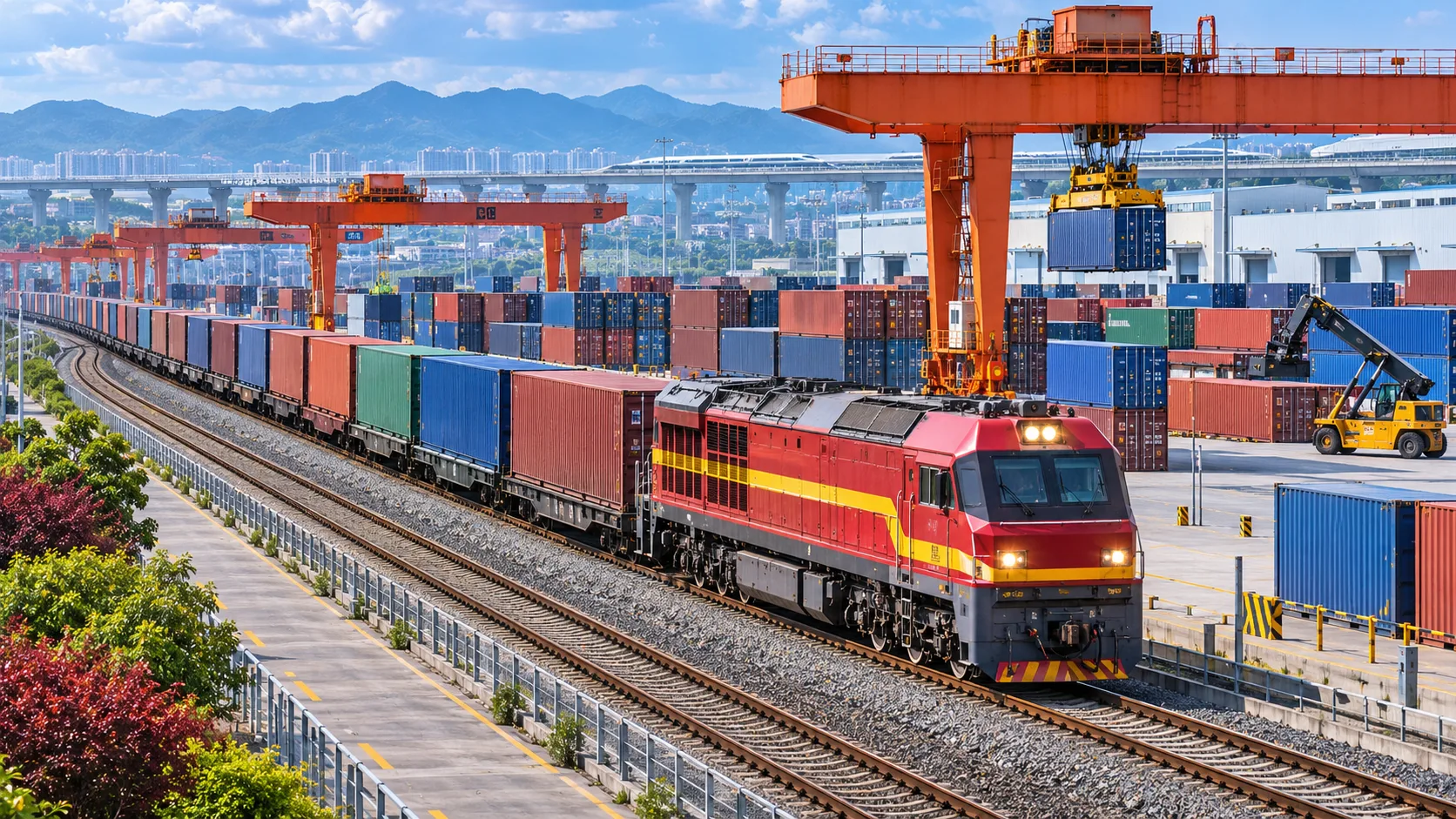
China recorded a 22.5% increase in scheduled domestic interregional freight train operations during the first ten months of 2026, as the country’s railway network expanded regular freight services and introduced new international connections.
According to figures released by China State Railway Group on 15 November, approximately 41,900 scheduled domestic freight trains operated between January and October, transporting 45.92 million tonnes of cargo, an increase of 37% compared with the corresponding period in 2025.
The growth in scheduled freight services significantly exceeded the increase in overall railway cargo volumes, which reached 3.42 billion tonnes, up 1.1% year on year.
The figures reflect an expansion of fixed-timetable rail freight operations, alongside new services connecting Chinese industrial and logistics centres with Central Asia, Russia and Southeast Asia.
Scheduled freight services record strong growth
China State Railway Group has continued developing scheduled freight trains operating on predefined routes and departure timetables, providing businesses with more predictable transportation arrangements.
During the first ten months of 2026, average daily railway wagon loadings reached approximately 189,200, representing a 1.8% increase compared with the previous year.
Intermodal transportation also recorded growth, with rail–road freight volumes reaching 385 million tonnes, an increase of 48.4%, while containerised rail–sea intermodal transport expanded by 8.9%.
The figures indicate that scheduled and intermodal railway services are growing more rapidly than the broader freight market, as railway operators introduce additional transport products and strengthen connections between inland logistics centres and international trade corridors.
New services connect China with Uzbekistan and Russia
Recent international developments include the introduction of a scheduled automobile transportation service from Zhengzhou to Tashkent, Uzbekistan.
The inaugural X9074/3 train departed Zhengzhou International Land Port on 21 October, carrying 290 vehicles manufactured by Chinese automakers, including BYD and Chery.
The service operates through the Horgos border crossing, where vehicles are transferred to railway equipment compatible with the wider-gauge Central Asian network.
According to information published by the Zhengzhou Municipal People’s Government, the route operates once weekly, with an expected transit time of approximately 15 days to Tashkent.
The train uses specialised automobile-carrier wagons, each capable of accommodating between nine and eleven vehicles, supporting the development of regular rail export services for China’s automotive industry.
Another international connection was introduced on 5 November, when China Post launched a scheduled rail freight service between Zhengzhou and Moscow.
The inaugural train transported approximately 33,100 cross-border e-commerce parcels weighing 4.8 tonnes, including clothing, footwear, bags and toys.
Operating through the Manzhouli border crossing, the weekly service offers a reported mainline transit time of 12 to 14 days.
The railway connection complements an existing road-based service between Zhengzhou and Russia, providing additional transport capacity for e-commerce shipments.
China–Laos railway gains additional freight connection
International rail freight development has also extended to Southeast Asia.
On 2 November, Shunchi Logistics, a company associated with Lanzhou New Area’s commercial investment group, launched its first cross-border container train from Zhongchuan North railway station in Gansu province to Vientiane South in Laos.
The service travels through the Mohan border crossing and uses the China–Laos Railway, carrying freight in containers owned by the logistics company.
Shunchi Logistics intends to develop regular operations along the corridor, strengthening rail freight connections between northwestern China and Southeast Asian markets.
Domestic intermodal services are also expanding. On 3 November, China Railway Xi’an introduced a scheduled container connection between Xi’an International Port and the Yangtze River Delta.
The inaugural X9726 train carried 40 containers of polyvinyl chloride, with the service operating twice weekly and connecting Xi’an with eleven destination stations across Jiangsu and Zhejiang provinces.
China–Europe rail services continue expanding
International railway traffic continued growing during the January–October period.
China–Europe freight train operations reached approximately 18,600, an increase of 14.6% year on year, according to China State Railway Group.
China–Central Asia services recorded approximately 12,100 departures, representing growth of 1.9%.
The figures underline the continuing importance of international railway connections for Chinese exporters, particularly manufacturers and logistics companies seeking scheduled transportation alternatives across Eurasia.
Alongside network expansion, China has introduced new technical requirements for the railway transportation of lithium batteries.
The National Railway Administration’s TB/T 30074—2026 standard, which entered into force on 1 November, establishes technical requirements for transporting lithium batteries by rail.
Together, the expansion of scheduled freight services, new international routes and updated technical regulations reflect China’s continued efforts to develop its railway logistics network and broaden the range of goods transported by rail.