PSA Singapore begins construction of Tuas Port Phase Two
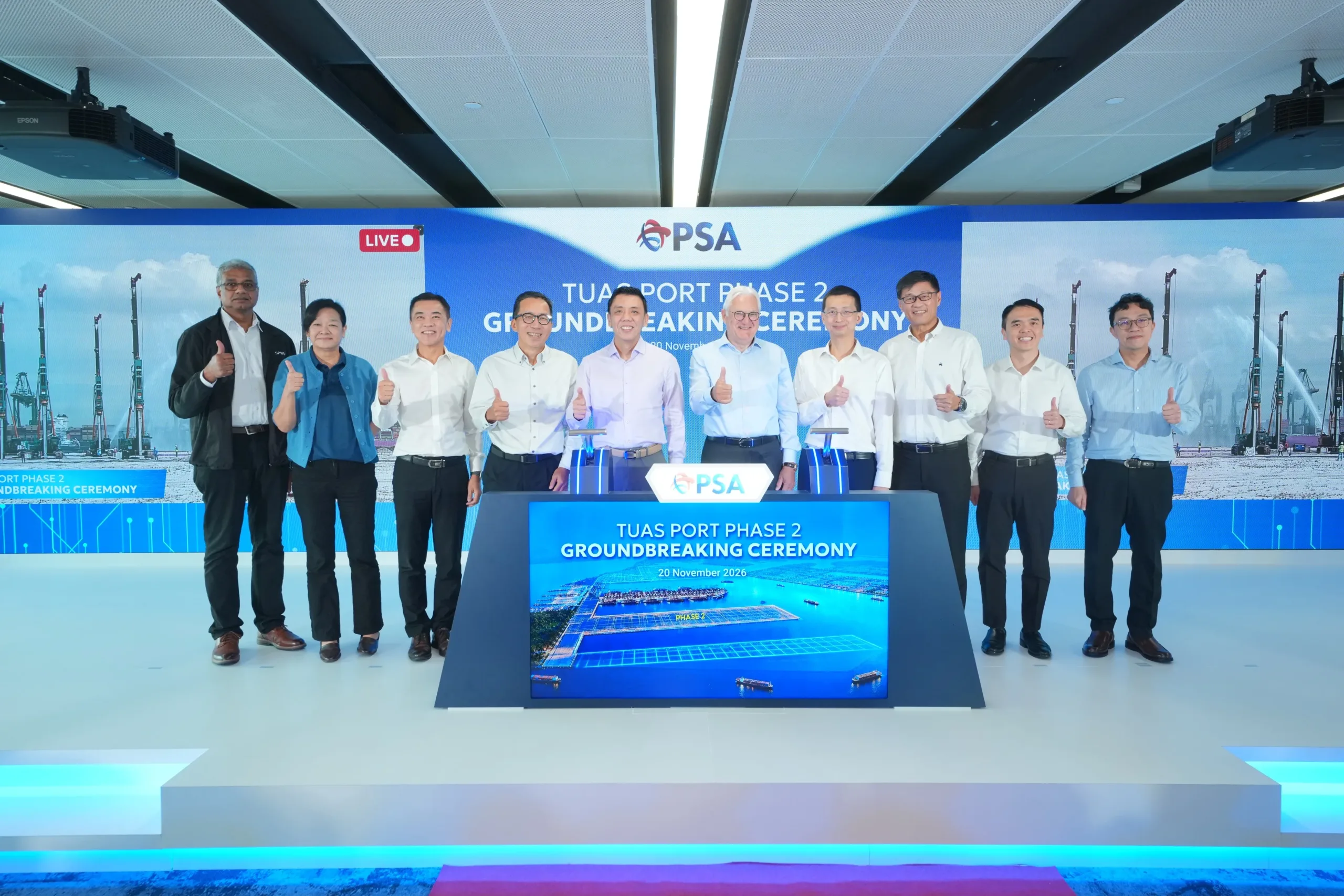
PSA Singapore has broken ground on the second phase of Tuas Port, advancing the development of what the company describes as the world’s largest fully automated container terminal.
The construction milestone, announced on 20 November 2026, marks the start of the largest of Tuas Port’s four development phases by wharf length. The expansion will introduce 21 mega berths, supported by new automated terminal infrastructure designed to accommodate the world’s largest containerships.
Operations at Phase Two are scheduled to begin progressively from 2028, as Singapore continues developing Tuas Port into a major container transhipment and logistics hub.
Phase Two to add 21 mega berths
The second phase will provide approximately 8.6 kilometres of wharf with a water depth of 23 metres, allowing the terminal to accommodate large container vessels and support future changes in international shipping demand.
According to PSA Singapore, Phase Two represents the largest of the port’s four development stages in terms of wharf length. The additional infrastructure is intended to expand container handling capabilities and strengthen Singapore’s position within global trade networks.
The project forms part of the longer-term development of Tuas Port, which is being designed around integrated terminal operations, automation and connections to the wider supply chain.
“Global trade continues to evolve amid shifting supply chains and changing market dynamics. PSA must continue to invest in the capabilities and connectivity needed to remain relevant and create value for decades to come,” said Peter Voser, Group Chairman of PSA International.
Voser said the development reflects the group’s commitment to strengthening Singapore’s role in global trade through investment in port infrastructure and operational capabilities.
Automated vehicles and AI systems planned
Automation will form an important part of the second phase, with PSA planning to deploy close to 1,000 autonomous, AI-enabled Intelligent Guided Vehicles (IGVs) upon completion.
The vehicles will be used to transport containers across the terminal, supporting cargo movement between handling areas and other port facilities.
PSA intends to integrate these systems with digital platforms and terminal operating processes to improve coordination, operational reliability and safety.
The development will also be connected to broader supply chain capabilities, including the PSA Supply Chain Hub @ Tuas, as the group seeks to strengthen links between maritime operations and inland logistics activities.
“With Phase Two, we will continue to bring scale, automation and intelligence to enable more coordinated and efficient terminal operations,” said Ong Kim Pong, Group CEO of PSA International.
The expansion forms part of PSA’s Node to Network strategy, which focuses on connecting ports, logistics facilities and supply chain partners through an integrated operational network.
Tuas Port development strengthens Singapore’s transhipment network
Tuas Port is being developed as a consolidated, highly automated container terminal intended to support Singapore’s long-term role as an international maritime and logistics centre.
PSA Singapore handled 44.5 million TEUs in 2025 and maintains connections with approximately 600 ports worldwide, providing extensive access to international shipping services.
The Phase Two development is intended to build on this connectivity by combining additional deep-water berths with automated cargo handling and integrated digital systems.
The company expects the infrastructure to support more coordinated flows of containers and information across maritime and land-based supply chains.
While PSA has confirmed the number of planned berths, wharf length and automation capabilities, it has not disclosed a specific investment value or additional annual TEU handling capacity for Phase Two in the announcement.
With construction now underway, the project moves towards its planned progressive operational launch from 2028, forming another stage in the development of Singapore’s future container port infrastructure.