Econowind reports over 170 VentoFoil units sold as wind propulsion expands
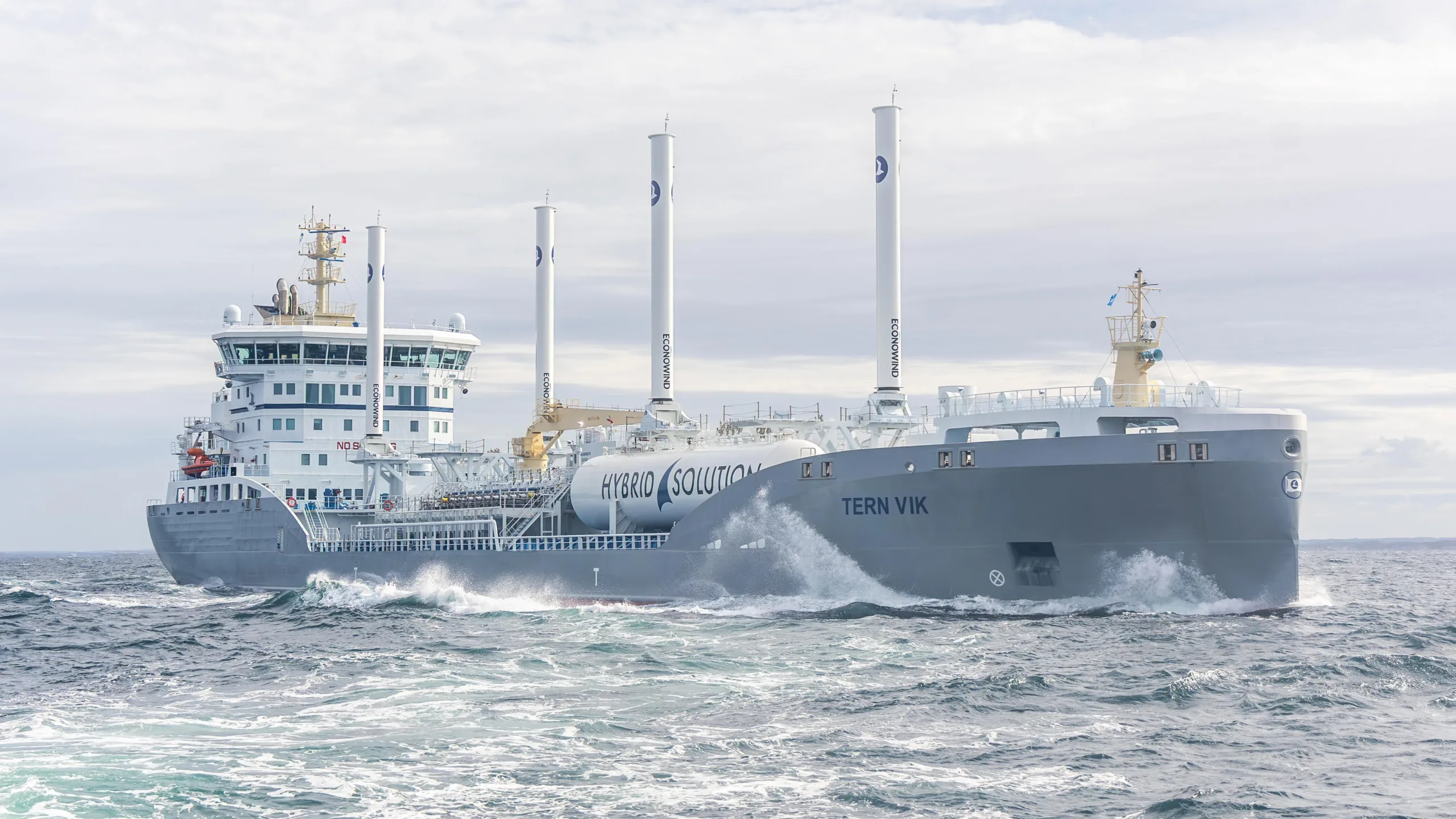
Dutch wind-assisted propulsion specialist Econowind has reported sales of more than 170 VentoFoil units worldwide as the company marks ten years of operations and prepares to expand production of its wind propulsion systems for commercial shipping.
Founded in 2016 by Frank Nieuwenhuis in collaboration with ship design company Conoship International, Econowind has developed its technology from experimental prototypes into commercially available systems designed to supplement conventional ship propulsion and reduce fuel consumption.
The company announced the milestone on 19 November 2026, highlighting growing interest in wind-assisted propulsion as shipowners face volatile fuel prices and increasing pressure to reduce greenhouse gas emissions.
From early prototypes to commercial wind propulsion
Econowind’s initial development work focused on compact vertical wings designed to generate additional thrust using wind energy. Early experiments involved wooden prototypes mounted on vehicles, followed by trials intended to assess whether the concept could be applied to commercial vessels.
The transition to onboard applications presented several technical challenges. Initial installations required manual operation, while smaller wings delivered limited fuel savings on larger ships.
Econowind subsequently introduced automated bridge controls capable of responding to changing wind conditions and tilting mechanisms that allow the wings to be lowered during cargo handling or adverse weather.
These developments contributed to the company’s 3-series VentoFoil, which has become its best-selling product.
According to Econowind, more than 170 VentoFoil units have now been sold to shipping companies worldwide. The figure reflects cumulative sales rather than the number of vessels currently operating with the technology.
Gavin Allwright, Secretary General of the International Windship Association (IWSA), identified Econowind as one of the companies at the forefront of commercial wind propulsion deployment.
“What has changed most over the past decade is perception: shipping now sees wind not as a romantic throwback, but as a 21st-century toolbox of commercial solutions,” said Allwright.
Larger VentoFoils target deepsea shipping
Econowind is preparing to expand its manufacturing capacity and roll out its 30-metre steel 5-series VentoFoil, developed for application on larger deepsea vessels.
The move reflects the company’s efforts to extend wind-assisted propulsion beyond its established installations and address the requirements of larger commercial ships.
VentoFoils are designed to generate supplementary propulsion from wind, reducing the load on a vessel’s main engine and potentially lowering fuel consumption under suitable operating conditions.
The commercial interest in such systems is also being influenced by European emissions regulations, including the EU Emissions Trading System and FuelEU Maritime, which create financial incentives for reducing shipping emissions.
Wind-assisted propulsion can be incorporated alongside conventional marine engines, hull optimisation measures and alternative fuels, without requiring ships to depend entirely on new fuel supply infrastructure.
However, the fuel savings achievable from individual installations depend on factors including vessel design, operating routes, wind conditions and system configuration. Econowind did not provide a fleetwide fuel savings figure or additional confirmed installation numbers in its anniversary announcement.
To mark its tenth anniversary, the company is releasing a series of ten stories featuring customers, shipyards and other maritime stakeholders involved in the development of its technology.
“This journey has been full of trials and learning by doing. It would not have been possible without the people behind Econowind and everyone who supported us along the way,” said Frank Nieuwenhuis, Founder of Econowind.
As the company enters its second decade, its focus on larger propulsion units and expanded manufacturing capacity reflects the continuing development of wind assistance as an option for reducing fuel consumption in commercial shipping.